
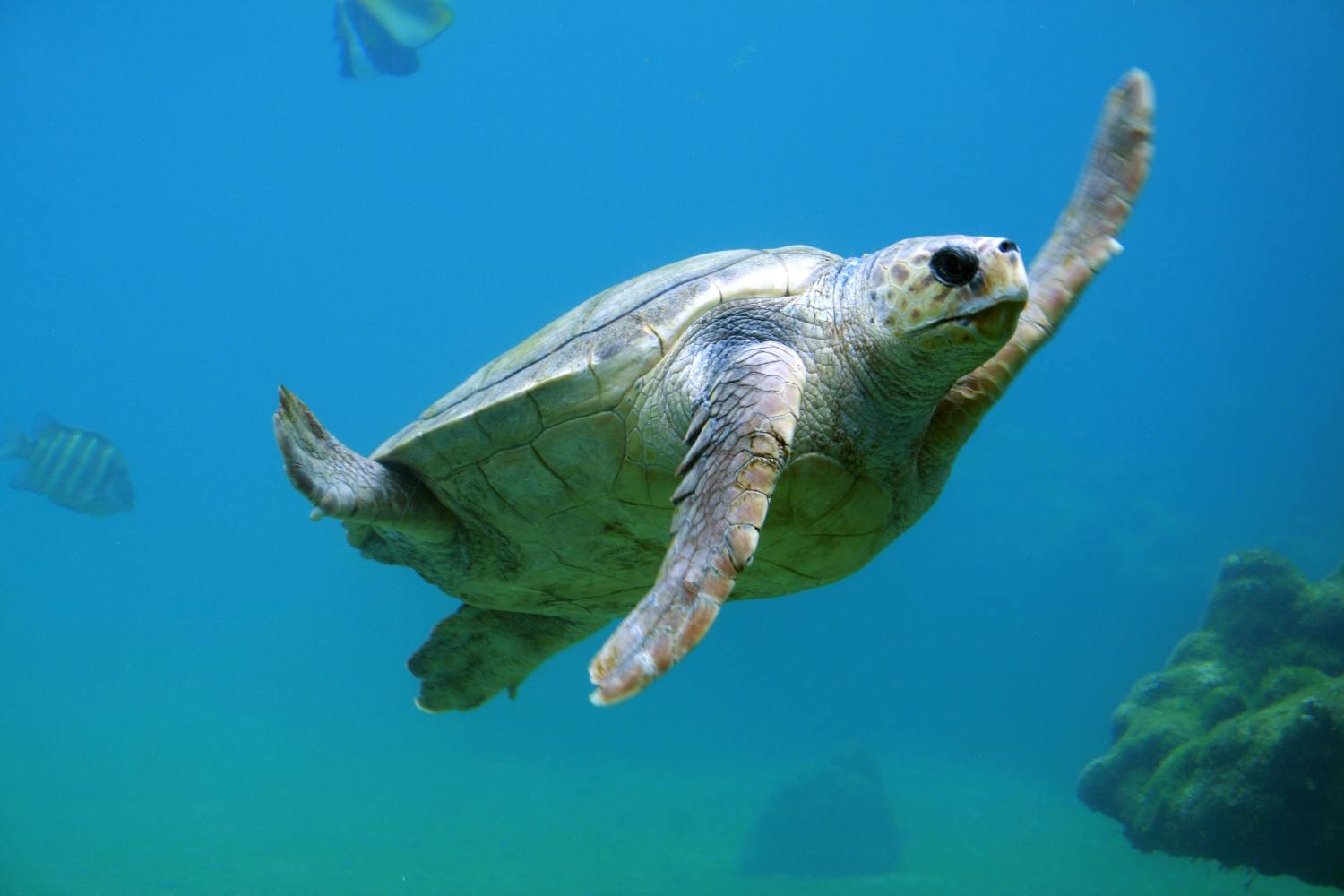
A dip in the Gargano sea has turned into a hospital experience for some holidaymakers. In Marina di Lesina, in the province of Foggia, Caretta caretta bites occurred against people in the water, an event that sparked immediate curiosity and concern among tourists. The episode prompted the technicians of Life Turtlenest – a European project co-financed by the European Union for the protection of sea turtles and coordinated by Legambiente – to analyze the situation.
Experts point out that these aggressive attacks are extremely rare events. The presence of these aquatic reptiles along the coasts of Italy, Spain and France is increasing due to the expansion of their breeding range and the increase in summer nesting. Consequently, the overlap between tourist attendance and the natural habitat of marine species is increasingly intense.
The hypotheses of the biologist Stefano di Marco
Why does a shy reptile decide to bite a bather? According to Stefano di Marco, project manager, it is not a real escalation of aggressiveness of the species, but rather an anomalous behavior attributable to individual specimens. There can be three main causes: a territorial defense reaction, conditioning linked to artificial feeding or simply an instinctive alarm gesture of a wild animal faced with a perceptible intrusion. The coexistence between humans and turtles therefore requires new practical rules for managing the coastal ecosystem.
Information and prevention signs for tourists
To avoid further accidents in the water, the fundamental priority is to disseminate adequate preventive information aimed at tourists and beach operators. The installation of information signs on Apulian beaches will help holidaymakers to recognize good practices in the event of a Caretta caretta sighting. Maintaining your distance and avoiding disturbing the animal allows you to safeguard a key element for marine biodiversity, while ensuring the full safety of those who frequent the beaches.
