
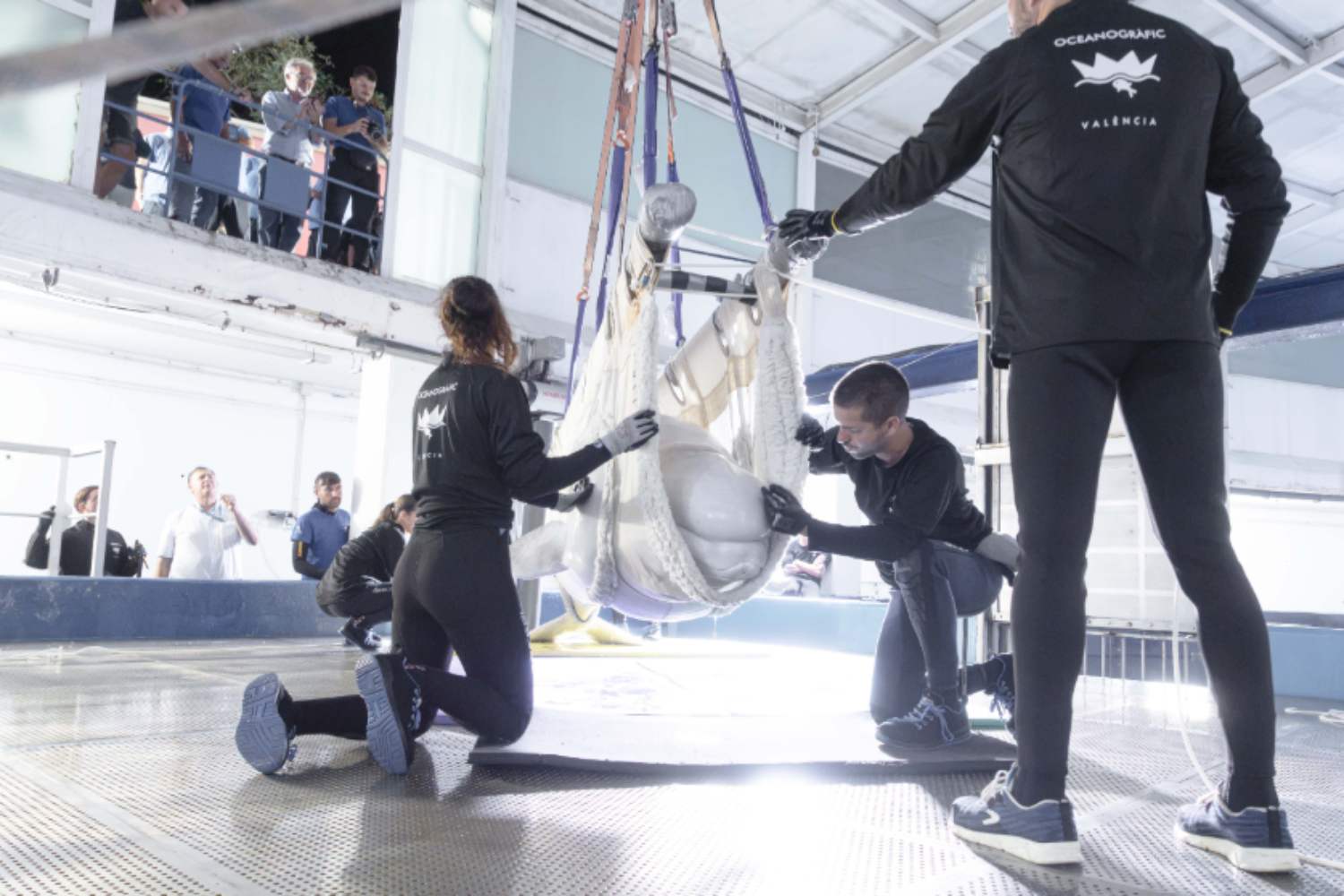
An impressive effort of international diplomacy and veterinary medicine has avoided a tragic epilogue for the last remaining cetaceans in the Canadian Marineland park, located in Niagara Falls, Ontario. The structure, closed to the public for over a year and officially put up for sale, had declared the drying up of financial resources for the support of the specimens, leading to the hypothesis of killing the animals.
To avoid euthanasia, the beluga whales Cleopatra and Jelly Bean, together with the dolphins Tsunami, Lida, Echo and Marina, were the protagonists of a seven-hour air transfer via charter flight from Toronto to Spain. Once landed, the six female specimens were transported by road to their new home at the Oceanogràfic aquarium in Valencia, where a specialized team manages 24-hour veterinary monitoring to aid acclimatization.
View this post on Instagram
The government’s stop to the transfer to China and the captivity law
The operation towards Spain represents the fifth phase of the evacuation plan from the Ontario facility, which became necessary following a complex institutional dispute. Marineland initially agreed to sell 30 beluga whales and four dolphins to a facility in China. The transaction was blocked directly by Fisheries Minister Joanne Thompson, who deemed the operation contrary to the 2019 legislation introduced by the Canadian parliament.
The law expressly prohibits the captivity, reproduction and exhibition of whales and dolphins on national territory. Faced with the ministerial veto and the consequent threat of the park resorting to culling in the absence of extraordinary public funds, an international consortium made up of American and Spanish aquariums intervened to take charge of the protection of the cetaceans.
An uncertain future for the cetaceans of Marineland, shocked by the death of Peekachu
The departure of Echo, Lida, Marina and Tsunami marks a historic moment for Canadian fauna: the four specimens in fact represented the last captive dolphins present in the entire country. At the same time, the transfer of the beluga whales Cleopatra and Jelly Bean is part of the largest resettlement plan ever carried out in the world for marine animals.
Other whales from the same facility have already been relocated to the United States at SeaWorld centers in San Diego and San Antonio, the Shedd Aquarium in Chicago and the Georgia Aquarium in Atlanta. Only six belugas currently remain at Marineland, and they are also close to being permanently transferred to specialized facilities on US soil. Rescued animals, yes, but destined for a future that is not at all different from their past: captivity in aquariums and dolphinariums.
And to make everything even more uncertain, and unfortunately dramatic, is the news of the death of Peekachu, a female beluga transferred to the Shedd Aquarium, which occurred due to dehydration after the vets found a decline in her diet. An epilogue that no one would have ever wanted but which demonstrates how the complex and traumatic transfers between artificial structures, although aimed at avoiding euthanasia, do not represent a real solution for the well-being of these cetaceans.
View this post on Instagram
