
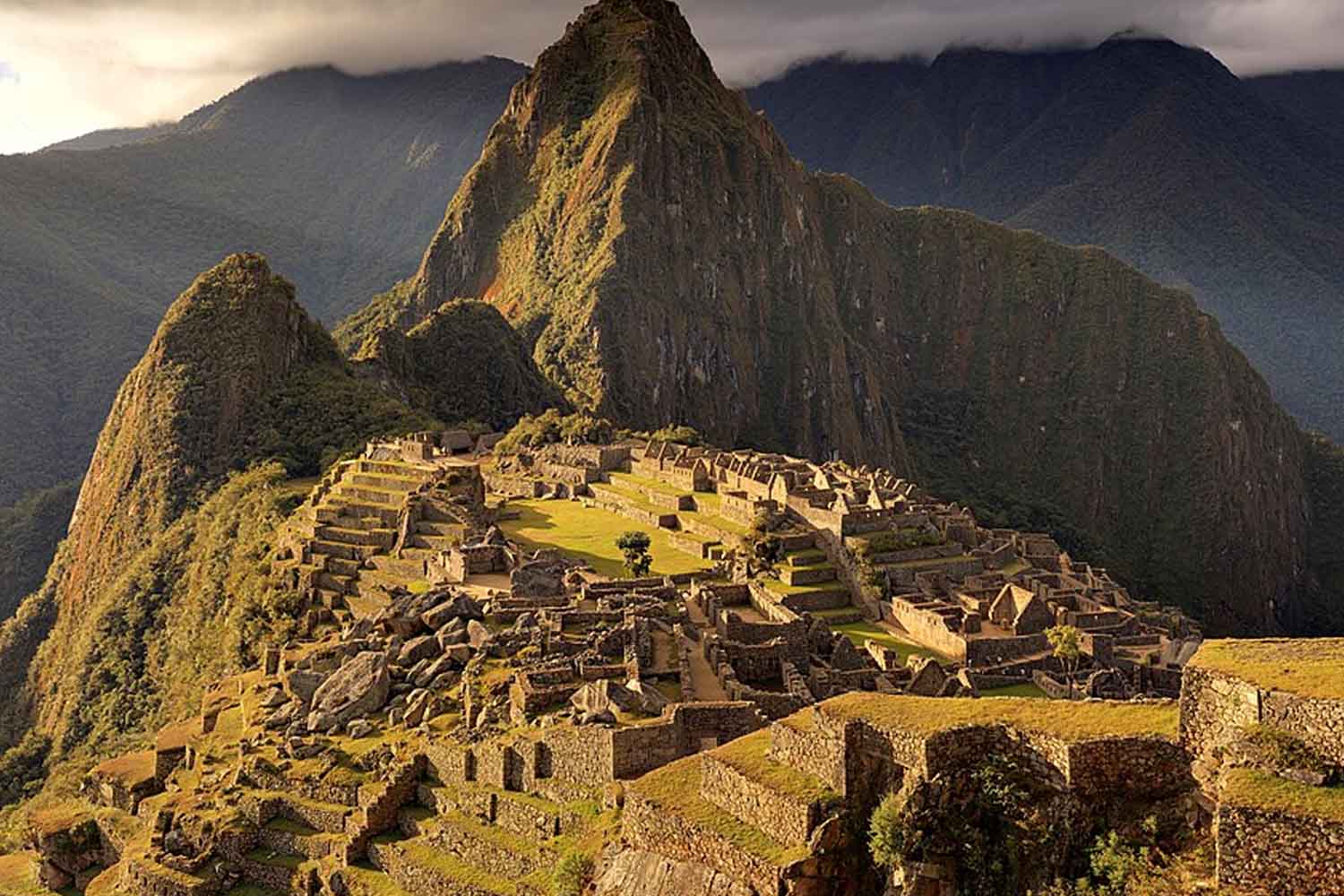
The Incas were already living in Machu Picchu around 1420. The problem is that, according to the chronology used by historians for decades, the ruler to whom the construction of the complex is attributed would not have come to power before 1438. Almost twenty years of difference, enough to call into question a historical reconstruction that now seemed consolidated. And Machu Picchu is just one of the places where dates have started to fail.
From Peru to Chile, passing through Ecuador and Argentina, the Carbon-14 analyzes are anticipating the presence of the Incas in territories that, according to traditional chronicles, would have been conquered only several decades later. Some findings suggest that imperial expansion was already underway in the first decades of the fifteenth century. Others open up the possibility of an even longer history, with conquests, resistances and agreements spread over multiple generations.
For over eighty years the main reference was 1438, the year in which Pachacuti assumed power, transforming the kingdom of Cusco into an empire. From that moment to the arrival of the Spanish conquistadors in 1532, just 94 years passed. An extraordinarily short period to build an extended dominion along a good part of the Andes mountain range.
This reconstruction dates back above all to the work of the American archaeologist John Rowe, who in the 1940s organized the information handed down by Spanish colonial chroniclers, attributing dates and conquests to the various sovereigns.
The problem is that the chronicles were written after the European conquest, based on previous testimonies and traditions. The Incas used the khipusystems of knotted ropes to record information, but they did not leave us a historical chronicle organized according to the European calendar. And the stories of the sovereigns, as often happens when businesses are handed down by those in power, could also have had some interest in distributing the merits differently.
The datings that anticipate the Inca conquests
The first serious doubts about traditional chronology had arrived well before the most recent research. Already in 2012 the archaeologist Dennis Ogburn, in a study published on Radiocarbonhad examined the dating of the site of Chamical, in southern Ecuador. The results suggested that the northward expansion began a decade or two earlier than the dates reported by historical sources.
The discrepancies were not limited to Ecuador. In 2017, Erik Marsh and three other researchers published a statistical modeling analysis of archaeological dates collected in Ecuador and Argentina. For Argentina’s Mendoza region, the model placed the start of Inca occupation between 1350 and 1440, with a probability interval of 95%.
The gap remains wide, therefore it would be incorrect to choose 1350 as the new certain date of the conquest. The result, however, indicated a potentially much older presence than the 1471 predicted by the traditional chronology for the southern expansion. In northern Chile, however, archaeologists have managed to narrow the uncertainty considerably.
A study published in Radiocarboncoordinated by Beau Murphy of the University of New Mexico, analyzed 34 carbon-14 dates from settlements founded by the Inca in the area of the upper Loa River. After excluding two anomalous results, the model placed the beginning of the imperial presence between 1401 and 1437with a median date around 1420.
The structures studied included administrative bases and settlements linked to mining activities. The Incas, therefore, seem to have organized control of this region well before the period indicated by the chronicles. And we are talking about territories about a thousand kilometers away from Cusco.
Machu Picchu was also already inhabited earlier than expected
To further complicate the calendar, one of the most well-known archaeological sites in the world has arrived. In 2021, a group of researchers led by Richard Burger, from Yale University, published analyzes of human remains from Machu Picchu in Antiquity.
The researchers examined bone and tooth samples belonging to 26 individuals recovered during the 1912 excavations. The new dates indicate that the complex was occupied from approximately 1420 until the period of the Spanish conquest.
Machu Picchu would therefore have come into operation at least twenty years earlier than reconstructions based on colonial texts suggested. This result alone does not allow us to establish when the empire was born. The dates of the human remains document the occupation of the site and must be interpreted in conjunction with archaeological and historical information. However, they make it difficult to continue to consider 1438 a valid starting point for all the political and territorial transformations attributed to Pachacuti.
Another investigation concerns Saqsaywaman, the large monumental complex that dominates Cusco, famous for its enormous zigzag stone walls. Here archaeologists are trying to reconstruct the different building phases and understand when the older structures gave way to the monumental constructions associated with imperial power.
The research team includes Julia Earle, from the Center for Andean Studies at the University of Warsaw, together with Peruvian and international archaeologists and specialists. The work, entitled Building Saqsaywaman: Absolute Chronology for Monumentality in the Inka Imperial Capitalis still under review for the journal Antiquity.
The advances on the constructions started around 1400 are interesting, but the full results are not yet available in a definitive scientific publication. The new dates will therefore have to be evaluated together with the methods used, the samples and the respective margins of uncertainty.
The Andean populations resisted much more than the news reported
The revision of the dates also changes another aspect of Inca history: the way in which the territories were conquered and governed. In traditional reconstruction, the empire expanded through a relatively rapid succession of military campaigns. Archaeological evidence reveals much less uniform situations.
In the Peruvian plateau, north of Lake Titicaca, many communities lived in fortified mountain settlements, called pukara. They were places built for defense, often on heights that were difficult to reach. Archaeologist Elizabeth Arkush, of the University of Pittsburgh, documented how these fortifications became particularly widespread between 1300 and 1450. With Sarah Kennedy she is also studying the relationships between the fortresses of the Colla populations and the Inca settlements, to better understand the forms taken by conquest and local resistance.
The presence of military structures and the different phases of occupation show a history that requires to be reconstructed territory by territory. Not all communities were incorporated at the same time, and imperial control could take different forms.
In Chile, even more concrete evidence of the conflicts has emerged. At the site of Iglesia Colorada, in the Copiapó valley, archaeologists Francisco Garrido and Catalina Morales have identified the remains of severed human heads, some perforated and probably used for display. In their study published in 2019 in Latin American Antiquity, the researchers interpret these remains as possible evidence of ritual practices linked to the display of imperial power over local populations. The conquest, evidently, could have had much more immediate consequences than a change of ruler.
The Copiapó valley itself, however, also tells a story of adaptations and negotiations. In a subsequent study published online in 2024, Garrido reconstructed three phases of Inca expansion: first the construction of roads and sanctuaries in the mountains, then the construction of administrative buildings in a local village and, subsequently, more limited interventions in other settlements, perhaps intended to foster diplomatic relations.
The empire could therefore resort to force, intervene directly in the organization of the villages or negotiate with the local authorities. The strategy changed according to the territories and circumstances.
Carbon-14 has not yet found a new birth date for the empire
Dating techniques now allow us to address questions that until a few decades ago were very difficult to resolve. Carbon-14 is used to estimate the age of organic materials, such as bones, seeds and charcoal. The measurements, combined with statistical models and updated calibration curves, can help narrow down historical ranges.
However, an important limitation remains: as the radiocarbon dating laboratory at the University of Oxford explains, the method measures the age of the organic material, which may be prior to its use in the archaeological context. A piece of burnt wood, for example, could come from a tree much older than the building in which it was found.
To reconstruct the history of the Inca expansion, therefore, well-identified samples, reliable archaeological contexts and comparisons between different sites are needed. Above all, we must distinguish the presence of objects of Inca culture from the actual political control of a territory. These are two pieces of information that can coincide, but not necessarily.
The results already published, however, make an imperial chronology rigidly concentrated in the 94 years following 1438 increasingly less convincing. The research is reconstructing a longer and more complex expansion, in which local populations played an active role, through resistance, alliances and forms of collaboration.
It remains to be established which rulers led the first conquests and how far back the origin of imperial power should be moved. For now there is no new universally accepted date. One thing, however, is already documented: in some Andean regions the Incas had built settlements and organized activities long before, according to the old calendar, they should have arrived there.
