
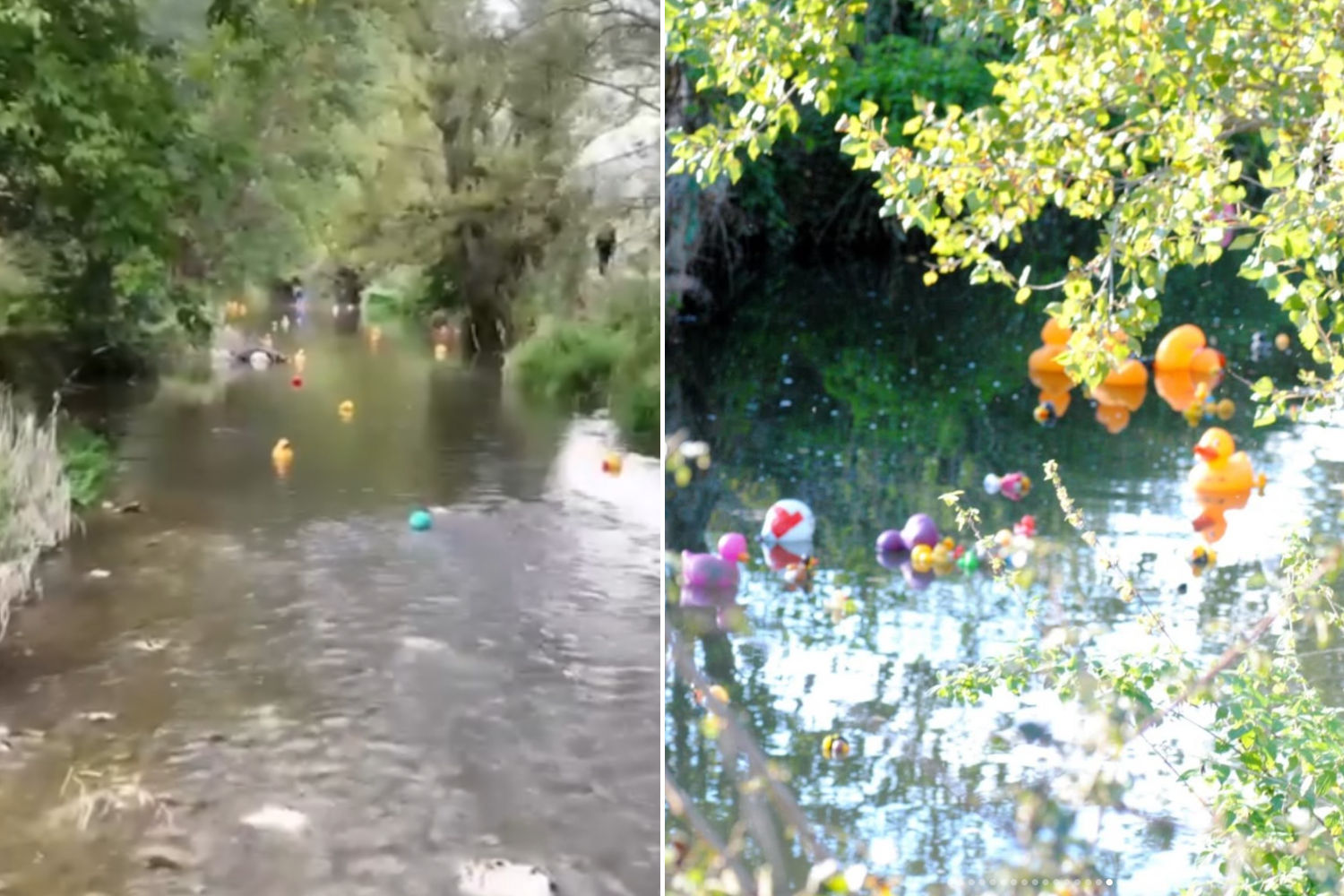
A playful and unusual feat saw Italy conquer the top step of the podium in the first edition of the World Duck Race Championship. On Saturday 17 October, in the waters of the Aterno river between the municipalities of Tione degli Abruzzi and Acciano, the Italian team won the world title, narrowly beating its cousins France and Moldova, which came in third place.
The competition, born from an idea of Elena, a girl originally from Goriano Valli living in Bolzano, saw the awarding of 197 plastic ducks to as many international delegations, including 195 official countries including the Vatican City State and Palestine, as well as the representatives of the UN and the European Union.
View this post on Instagram
To avoid excessive crowding in the waterway, the jury randomly selected 15 floats for the final descent, while around 200 other ducks took part in the collateral activities. The initiative aimed to support the Sirente-Velino Diffuso Museum (MuDi), founded by Fausto Di Giulio in Goriano Valli to combat the depopulation of small villages through 16 stations created from former stables and shops, according to the Give Back principle.
The cleanliness of the river, the One Health principle and the doubts about the ecological impact
The event acted as a driving force for environmental protection action in the area. Before the start of the challenge, the volunteers collected and eliminated 12 bags of plastic waste abandoned along the banks and bed of the Aterno river, aiming to send a message linked to the concept of One Health, the philosophy that recognizes the profound interconnection between the health of people and that of the ecosystem. Furthermore, the regulation requires each participant to dedicate at least 30 minutes in the following 30 days to cleaning the Sirente-Velino Park.
View this post on Instagram
Despite the good faith of the organizers, who set up a barrage with rigorous counting to recover every single piece, the event leaves open an obvious communication paradox: was it really necessary to introduce hundreds of synthetic floats within a protected natural area to raise awareness among the population about environmental protection?
Although the charitable intent is completely noble and admirable and the ducks are recovered at the end of the race, the idea of entrusting plastic to the current always runs the intrinsic risk that some pieces could get lost in the watercourse. The real news, perhaps, already resided in those 12 bags of dirt removed with difficulty from the arms of the volunteers.
