
Having blocked ears is an annoying problem that can also affect our daily life and, in particular, our sociality: if we have blocked ears, in fact, we don’t hear well what our interlocutor is telling us and we don’t participate in conversations and events that happen around us.
How to solve this problem in a simple and natural way, without resorting to the use of medicines and, above all, without damaging the delicate ear canals?
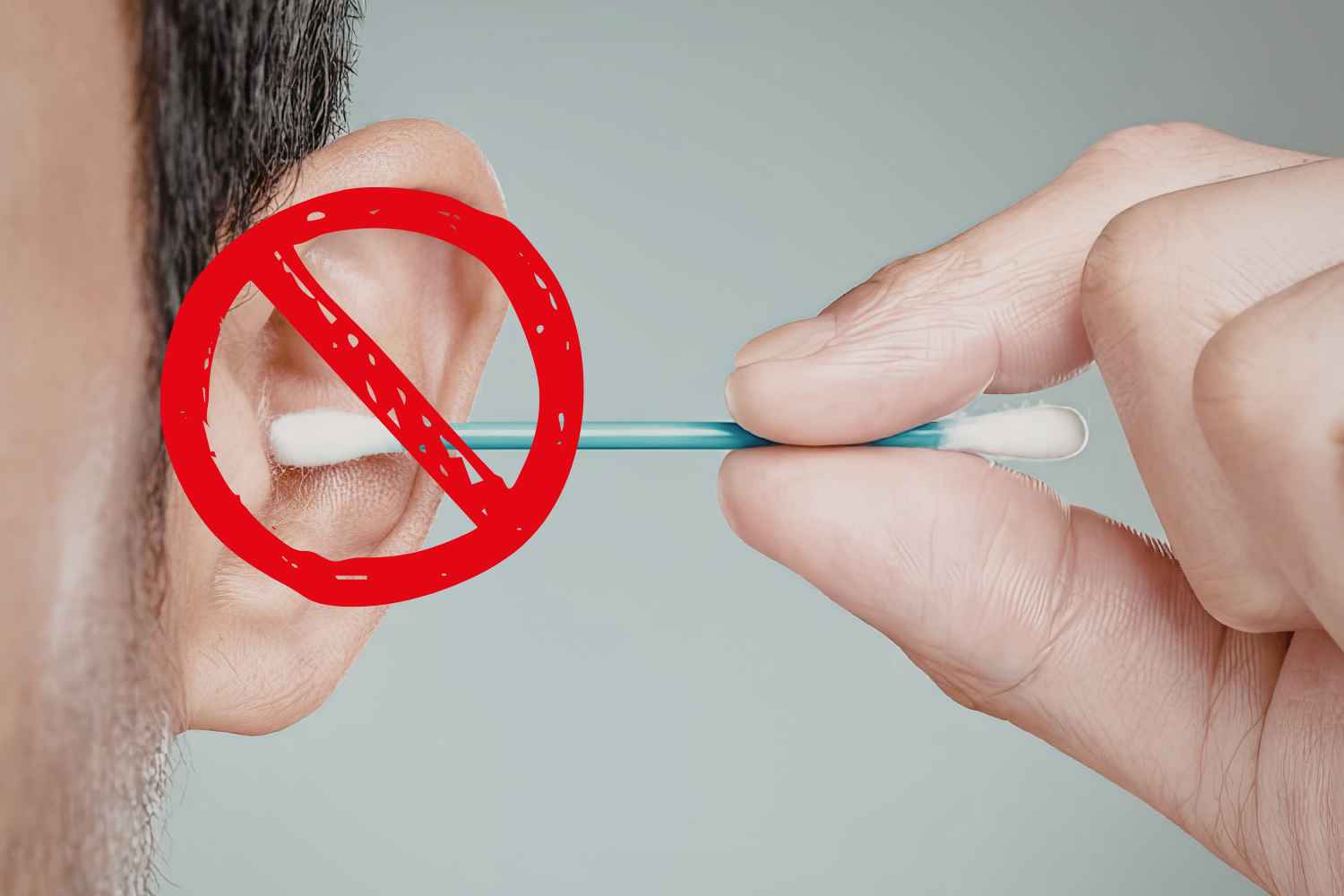
Cotton swabs? Better not
Using a cotton swab to remove earwax might seem like the most immediate solution, but it can actually have the opposite effect.
Introducing the stick into the ear canal, in fact, risks pushing the earwax even deeper, favoring its compaction. Furthermore, too vigorous use can irritate or damage the delicate skin of the ear canal.
Furthermore, earwax is not “dirty”: it is a substance naturally produced by the body which helps to protect and lubricate the ear. In most people it is eliminated spontaneously thanks to the normal movements of the jaw and the migration of the skin of the duct towards the outside.
For daily hygiene it is therefore sufficient to delicately clean only the external part of the ear, for example with a soft and clean cloth, without introducing objects into the canal.
Also avoid so-called ear cones or ear candles: there is no convincing evidence of their effectiveness in removing earwax and they can cause burns or other injuries.
But what should we do if our ears are so clogged that we are unable to hear voices and sounds well? Before resorting to drugs, here are some natural remedies you can put into practice. Obviously we always refer to the authority of the family doctor or ENT if the problem persists.
Fumigations
If our problem is excess earwax, which perhaps has solidified to create a plug or a major obstruction, we must find a way to dissolve it before removing it.
For this purpose we can implement a “grandmother’s remedy” often recommended in case of colds or sinusitis: fumigations. In fact, hot vapors can help dissolve earwax and eliminate it more easily.
Let’s take a not very large pan and pour two or three liters of water inside, which we will bring to the boil. Add a few tablespoons of dried chamomile flowers to the boiling water.
We turn off the flame under the pan and bring our ear over the boiling water, so that the hot steam reaches the ear (being careful not to burn us): to avoid heat dispersion, we cover our head with a towel.
The fumes will dissolve the dried earwax and make it easier to remove. Furthermore, the presence of chamomile will act as an antibacterial and soothing agent for the delicate skin that lines the ear canal.
After spending a few minutes in this position, we use a clean and dry cotton handkerchief to remove dirt from the ear – especially if we also have to carry out the same treatment on the other ear.
Salt water baths
Salt and water baths are another very useful remedy for clearing the ear and nasal canals of earwax or mucus. In the pharmacy you can find ready-made physiological solutions that can be injected into the ear to remove earwax lumps.
Alternatively, we can make it at home by dissolving a teaspoon of salt in 100 milliliters of warm water. We then inject a little of the saline solution into the ear, using a pipette or syringe without a needle, and leave it to act for about ten minutes (better to lie down with the ear facing upwards).
After this time, we let the water fall out of the ear by bending the head downwards and then use the cotton handkerchief to clean and dry.
No to vegetable oil (including olive)
Among the recommended remedies for removing earwax plugs, the use of drops of vegetable oil (often olive oil), heated before being introduced into the ear canal, is often included.
In fact, as doctors suggest, the oil could damage and irritate the ear further – not to mention the fact that earwax is already made up of fatty substances, and adding oil would only make the situation worse.
In the pharmacy there are oily drops (the so-called cerumelitic) designed specifically to facilitate the removal of earwax plugs, but these must be used under strict medical supervision and, obviously, cannot be replaced by common cooking oil.
Ears plugged after sea and swimming pool: pay attention to the water left in the duct
At the end of summer the sensation of having blocked ears can be particularly frequent. In fact, after weeks of swimming at the seaside or in the pool, some water can remain trapped in the ear canal, especially when there is already an accumulation of earwax.
Water can cause earwax to temporarily swell and accentuate the sensation of full or muffled ears. Furthermore, keeping the ear canal moist for a long time can lead to irritation and otitis externa, also known as “swimmer’s ear”.
After bathing, it is therefore useful to gently tilt your head towards the side of the affected ear and let the water flow out spontaneously. You can then dry only the external part of the ear with a clean towel, without introducing cotton buds, fingers or other objects into the canal.
If, in addition to the sensation of a blocked ear, there is pain, intense itching, secretions, a bad odor or a noticeable loss of hearing, it is better to avoid do-it-yourself remedies and contact your doctor or ENT specialist: it may not simply be a plug of earwax, but an inflammation or infection of the ear canal.
When to see a doctor
A muffled ear is not always simply full of earwax.
It is appropriate to ask for a medical evaluation especially when:
In particular, sudden hearing loss should not be treated independently as if it were a simple hearing loss: it requires timely evaluation.
The simplest rule, therefore, is not to stick anything in your ear and not to insist on home remedies when the problem does not resolve quickly. Earwax performs a protective function and in most cases the ear is perfectly capable of cleaning itself.
