
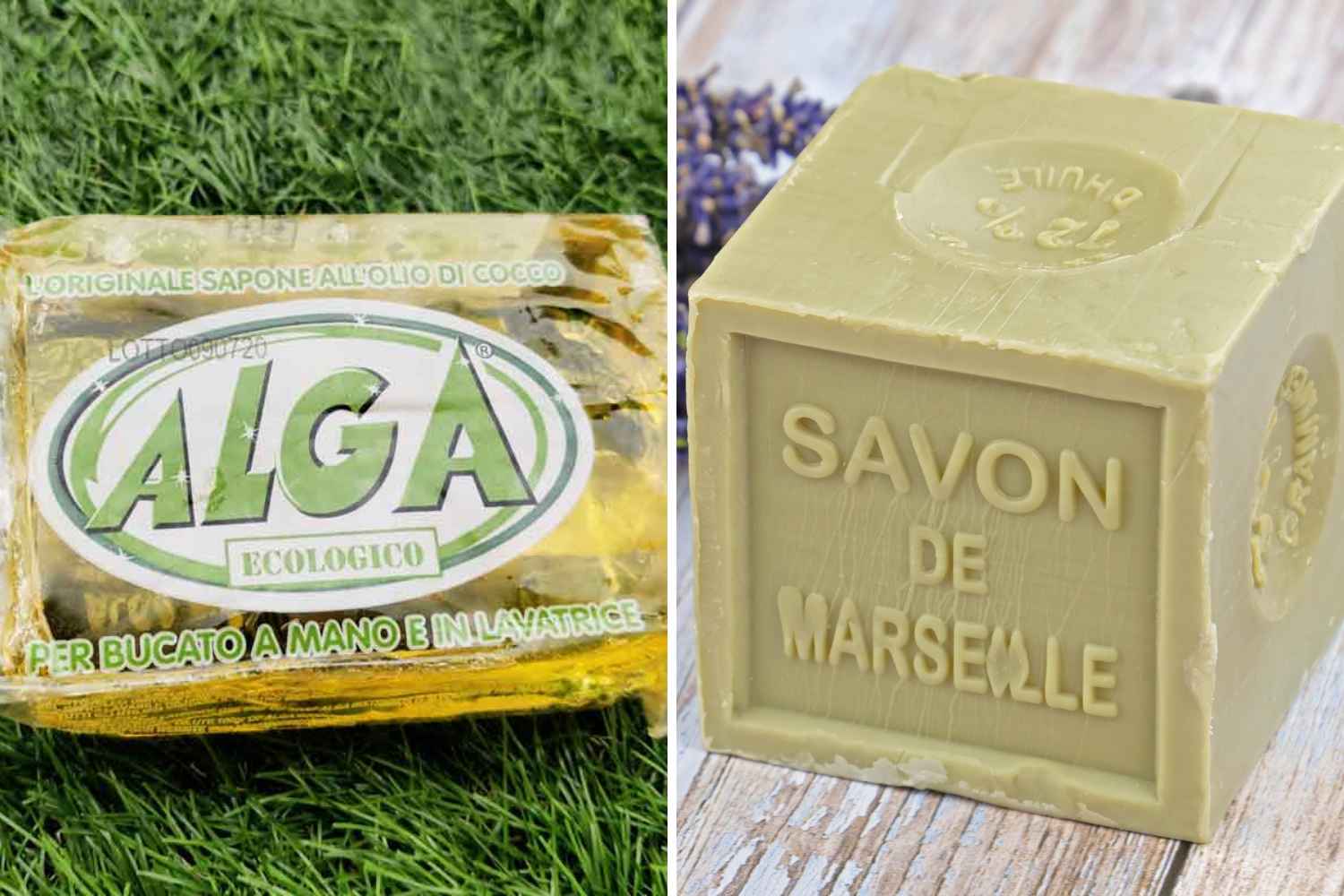
Each of us plays an active role in protecting the environment and many of the actions we can take in this direction start from home, such as choosing an ecological detergent for laundry and household cleaning. Coconut oil soft soap is a very valid option which in recent years has been enjoying great success both for its low environmental impact and its effectiveness, and for its decidedly affordable price. (READ also: How to read the detergent label). The first and most famous, which is driving everyone crazy, is Seaweed Soap.
Below we explain what it is and how you can use it!
Seaweed Soap: what does it really contain?
Alga soap is a soft potassium soap based on coconut oil. Its soft consistency depends on the saponification process, which uses potassium instead of the sodium used in traditional solid soaps. The current text indicates a very essential INCI, composed of water, coconut oil and glycerin, a characteristic that contributes to the simplicity of the formulation.
However, it is useful to distinguish between the ingredients used to obtain the soap and the substances actually present in the finished product. During saponification, in fact, the oils react with an alkaline base and are transformed into the related potassium salts of fatty acids, i.e. into actual soap. Glycerin can remain naturally in the product and contribute to its consistency.
For this reason, when you want to know precisely the composition of the product purchased, the most reliable source is always the updated label on the package, which may show formulations or names different from those used in the commercial descriptions.
Difference between Marseille soap and Alga soap
Marseille soap is also an excellent ally for cleaning the house and, depending on the formulation, also for personal hygiene. However, the main difference compared to Alga soap concerns the type of soap and, consequently, its consistency.
Traditional Marseille soap is a solid soap obtained through the saponification of vegetable oils with sodium hydroxide, commonly known as caustic soda. Alga soap, on the other hand, belongs to the category of soft potassium soaps: potassium hydroxide is used in its production, which allows to obtain a much softer product, easily mouldable and soluble in water.
The difference, therefore, does not lie in the fact that one contains a “more chemical” substance than the other, but in the different alkali used during the saponification process. In both cases, in fact, the alkaline base reacts with the oils transforming them into soap.
The uses may also be slightly different. Marseille soap is often used to pre-treat stains, wash laundry and clean various household surfaces, while the soft consistency of Alga soap allows it to be easily dissolved in water, divided into small portions or transformed into a liquid detergent.
It should also be remembered that products with very different formulations are marketed under the name “Marseille soap”. To really compare it with Alga soap it is therefore always advisable to check the label and verify the actual composition of the product purchased.
How to use Alga soap?
©greenMe
Simple, ecological and economical, if you have never tried this soft potassium soap, then we will explain how to do it. After using it we are sure that you will like it and will be satisfied, not only with the cleaning results, but also with having made a more informed choice.
Attention! You should always follow the directions and make sure you can use it on the surfaces of your homes.
For washing laundry
For washing in the washing machine, take a third of a stick of soap, rub it directly on the stains to be removed, and insert the rest of the product into the basket, then continue washing as usual.
For hand washing, however, take only a fifth of the product and rub it on the items to be cleaned, wash them normally and then rinse.

©greenMe
For convenience, it can also be divided into single doses: its soft consistency allows it to be handled as if it were clay to create, for example, balls ready to be used when necessary.
To make liquid detergent
If you prefer to prepare your liquid detergent first, without the need to cut the soap every time you need it, you could make it by following these simple instructions:
Ingredients:
Procedure:
- Cut the soap into small pieces.
- Place the water with all the soap pieces in a pan and bring to the boil over medium heat.
- As soon as it reaches the boil, turn off the heat, cover the pan and wait for it to cool. The soap should have dissolved completely.
- Transfer the detergent to a recycled bottle.
- Detergent ready!
OPTIONAL: you could add between 20 and 25 drops of an essential oil of your choice to the finished product.
If you use liquid soft soap detergent in the washing machine, to promote its whitening and stain-removing action, fill a measuring cup by adding a teaspoon of bicarbonate of soda and one of washing soda.
Uses:
For washing floors
You can also test Alga soap as a cleaner for floors and washable surfaces in the house. A very simple solution with water could become your routine even for kitchens and tiles. If used with the right quantities (never exaggerate) it does not leave streaks, it is effective and above all natural. It can even be used for marble floors.
How to use it:
- Dilute 1 or 2 capfuls of liquid detergent made with Alga soap (as previously indicated) in a bucket of water.
- Clean your floor using this water mixture.
- Rinse the floor with water and wait for it to dry.
- Clean floors!
DIY eco-friendly multipurpose spray
You could also make a multipurpose detergent using Alga soap. (READ also: Save orange and lemon peels to create this DIY cleaning spray).
Here is the step by step process:
Ingredients:
Procedure:
- Cut the soap into small pieces.
- Pour the water and all the bits of soap into a pan.
- Bring to a boil over medium heat.
- As soon as it reaches the boil, turn off the heat, cover the pan and wait for it to cool. The soap should have dissolved completely.
- Once cooled, transfer the detergent to a 1 liter spray bottle.
- Add 18-20 drops of essential oil of your choice, mix and close.
- DIY spray detergent ready for use!
Uses: Thanks to its delicacy, with this ecological and economical multi-purpose spray detergent we can clean various washable surfaces in the house without risking ruining them, such as the kitchen, sinks, wooden doors, shutters, degrease dishes and pots, clean bathroom tiles or pre-treat the linen.
Ally for the care of our plants
We had already explained to you that Alga is a soft potassium soap. These types of soaps are also known for their use in agriculture due to the fact that they are perfect allies to combat the parasites that infest our plants and orchards. Without a doubt, compared to other insecticides and pesticides that are toxic to humans and the environment, this remedy is natural, ecological, biodegradable and easy to use.
Thanks to its detergent and insecticidal properties, we can use it against sooty mold and parasites such as mites, aphids, some types of scale insects and other small insects capable of sucking the sap of the plant.
Ingredients:
Procedure:
- Dissolve the soap completely in the water and pour the mixture into the spray bottle.
- Remedy ready to be used on our plants!
How to apply it:
Some considerations:
On which surfaces NOT to use Alga soap?
Alga soap can be used on numerous washable surfaces, but this does not mean that it is suitable for every material without distinction.
It is best to pay attention especially to porous materials, waxed surfaces, unprotected wood or wood treated with particular finishes and delicate materials on which an alkaline detergent could leave marks or change the surface appearance. Even in the case of natural stones, special coatings and painted surfaces it is preferable to avoid abundant applications without first checking the compatibility of the product.
The most prudent solution is to try a small amount of diluted soap in an inconspicuous place and check the result after drying. If no opacities, color changes, residues or halos appear, you can proceed on the larger surface. It is also important not to exceed the quantities: too high a concentration can make rinsing more difficult and encourage the formation of residues.
Where to buy Alga soap
This yellow bar of coconut oil soap has a very low price and is sold in various personal care and home cleaning stores or in some supermarkets. In the national territory it can be found in Ipercoop, Tigotà stores, in some Acqua e Sapone stores (Abruzzo, Sardinia and central and northern Italy), at Conad and in Tosano, Martinelli, InGrande and Bennet supermarkets.
Fortunately, both consumers and companies are increasingly aware of the need to take care of the planet by taking care of themselves. The offer of sustainable, ecological and natural products is increasing, so it is time to take a further step forward in our commitment by modifying some gestures and choosing more responsible and ecological products from our daily routine, such as those for cleaning.
Frequently asked questions about Alga soap
Can Alga soap be used directly in the washing machine?
Before use, it is however advisable to check the instructions on the packaging, especially regarding quantities, dosage methods and compatibility with your washing machine model.
Why can Alga soap leave residues on fabrics?
Residues or streaks can appear especially when an excessive quantity of product is used, when the soap does not dissolve completely or when rinsing is not sufficient. The hardness of the water can also affect the result. In these cases it is best to reduce the dosage and check that the product disperses correctly during washing.
Can Alga soap be used on marble?
However, since it is a delicate surface, it is preferable to use a very diluted solution, avoid leaving the product on the surface for a long time and first test it in an inconspicuous area, especially in the presence of polished or treated marble.
Can Alga soap be used on plants?
Potassium soft soap is also used in plant care against aphids, mites, scale insects and sooty mold. Not all plant species, however, react in the same way. It is advisable to initially try the solution on a single leaf and observe the plant before proceeding with a more extensive treatment.
Can Alga soap be used on plants in full sun?
It is best to avoid, applying a cleaning solution on the leaves during hours of strong sunlight can increase the risk of stress or damage to the vegetation.
How long does homemade liquid detergent with Alga soap last?
It is a domestic preparation diluted with water and without a specially designed preservative system, it is preferable to prepare not excessive quantities, store it in a clean container and check its smell, color and consistency before each use.
