
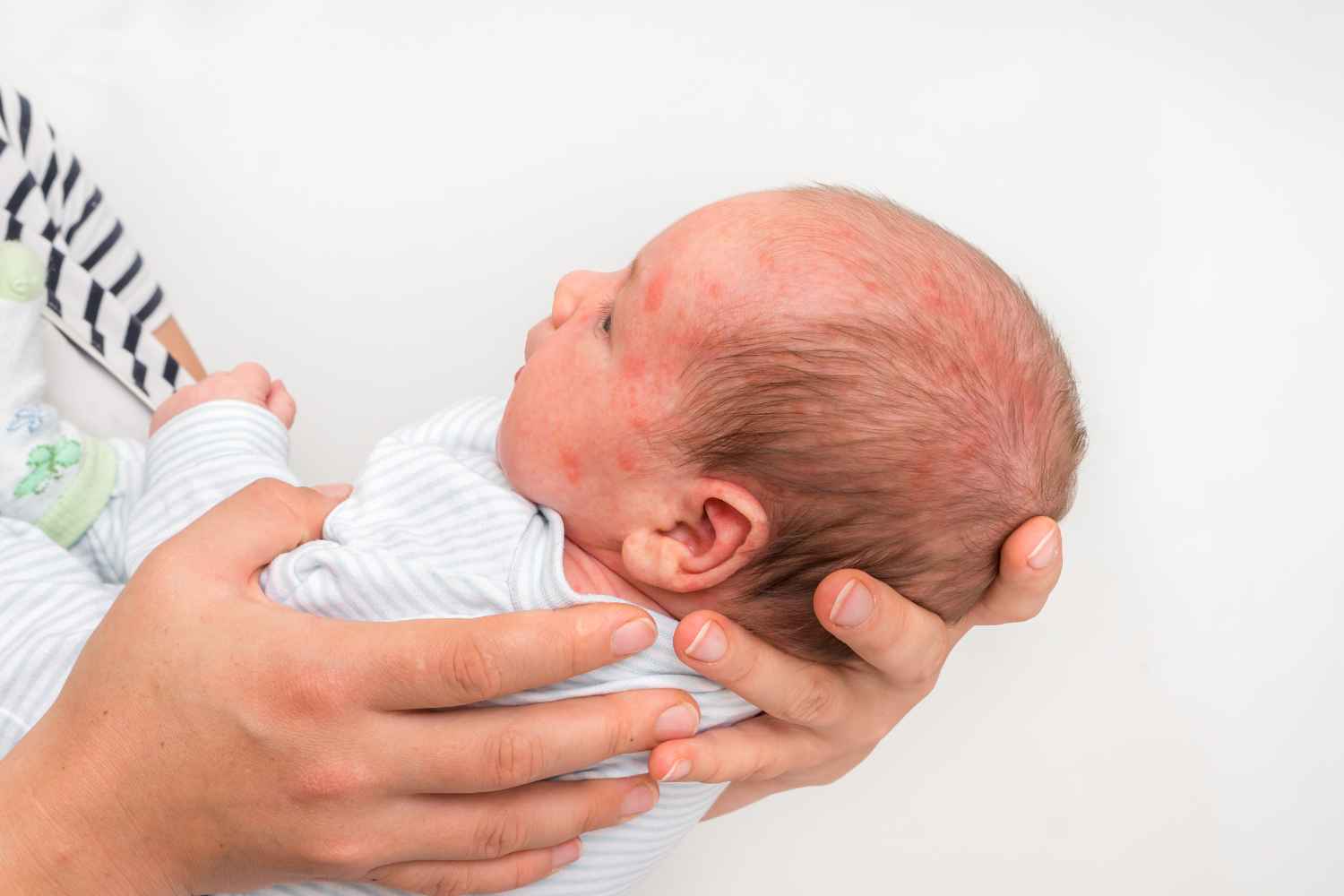
@Tiny Hearts Education Instagram
On Instagram some time ago, Tiny Hearts Education shared a very important video that contains a “life-saving” rule that all parents should know.
When a rash appears on our children’s skin, we certainly don’t immediately think of the worst but in some cases (albeit rare) this can be a sign of a life-threatening disease.
The good news is that there is an easy way to tell if this rash is truly a symptom of something more serious. This was revealed by the group managed by Nikki Jurcutz, a former paramedic and mother, who explains how important it is to carry out the “blanching test”.
View this post on Instagram
It is simply a matter of understanding if the rash turns white when pressure is applied, in this case it is considered safe, while a mark that remains the same color even when pressed can be a symptom of a serious disease such as meningococcus and parents should immediately call a doctor to have the situation evaluated.
Rashes can look very different: with raised bumps, be bright red, have flat areas, blisters, or a combination of all of these. They may spread, move and change over time. You may also have rashes that appear small and have red/purple spots or bruises – this is the type of rash you can see in the video above.
How to perform the blanching test
The blanching testor whitening test, can be useful for observing the behavior of a skin rash, but it is not a diagnostic test and cannot, on its own, rule out meningitis or a meningococcal infection.
You can apply light pressure to the affected area with a finger or a clear glass. If the redness temporarily disappears under pressure and then reappears, the rash is called blanching (blanching). However, if the red or purple spots remain visible even under pressure, it is called a non-whitening rash.
The latter type of rash, especially when it is made up of small red-purple spots similar to dots or bruises, spreads rapidly or appears together with fever and significant malaise, must be urgently evaluated by a doctor.
However, it is important not to rely solely on the glass test: a rash may initially be white and later become non-white, and meningococcal disease can occur without any rash.
For this reason, the general conditions of the child must always be considered. Unusual drowsiness or difficulty waking up, severe despondency, neck stiffness, seizures, changes in consciousness, difficulty breathing, or rapid deterioration require immediate medical attention, regardless of the result of the blanching test.
On dark or tanned skin, color variations can also be more difficult to recognize: it is important to check the whole body and not just rely on the appearance of a single area of the skin.
