
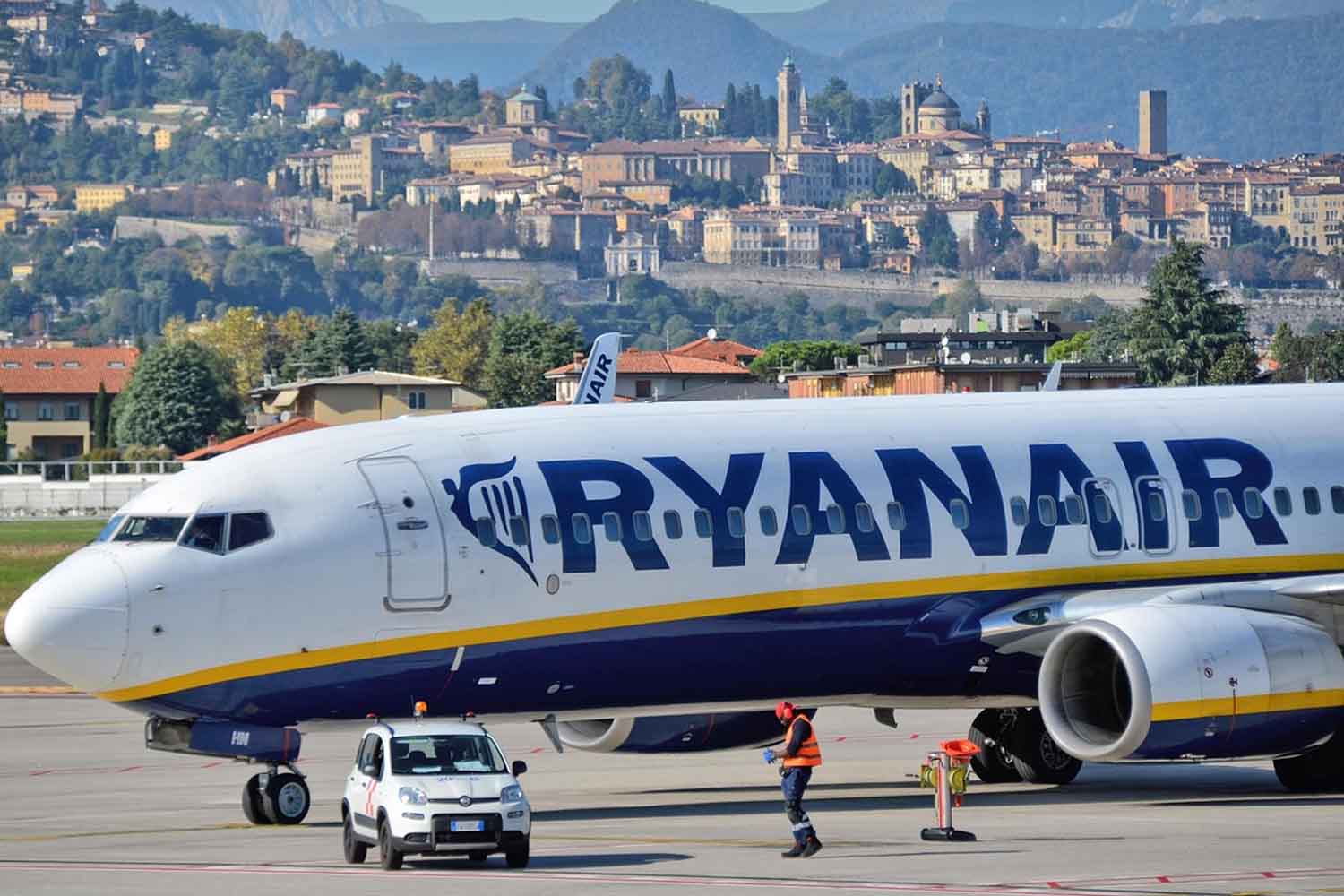
The busiest month of the year and the announcement of a brake on what’s to come: Ryanair closes the summer with a traffic record and opens the autumn by cutting the forecasts. On Wednesday 2 September, the Irish company released its traffic data for August and, in the same release, revised its passenger target for the entire fiscal year 2027 downwards, from 216 to 214 million. The cut, explained the low cost company, serves to reduce exposure to fuel not covered by hedging contracts during the winter season, the one in which Ryanair traditionally loses money.
In August the company transported 22.2 million passengers, 6% more than the 21 million in the same month of 2025, with an aircraft occupancy rate stable at 96%. Over 120,500 flights were operated, despite more than 400 cancellations caused by the eruptions of Etna, which forced Catania airport to close for days. In the twelve months ending in August the total rose to 214.4 million passengers, 5% more than the 203.6 million of the previous year, as also reported by Aviation Week.
Why Ryanair cuts winter flights
The issue is the price of kerosene, which according to the company is currently around 140 dollars a barrel. Ryanair has covered around 80% of its fuel needs for fiscal 2027 at a fixed price of around $67 a barrel, which puts it in a stronger position than many rivals. But the remaining 20%, the uncovered one, weighs heavily in the winter months, when demand drops and revenues are not enough to absorb such high energy costs. Hence the choice to limit traffic growth between November and March, which should remain substantially stable compared to the same period of the previous year, against a previously hypothesized 2% increase. According to company estimates, the “one-off” reduction of the winter program should limit seasonal losses by between 70 and 100 million euros. Ryanair has not made public the list of routes or airports affected by the cuts: as The Local/AFP also notes, the company “has not released details on which flights will be eliminated”. Therefore, it is still too early to say with certainty which Italian airports, among the main ones for the group are Rome, Bergamo and Venice, will feel the cut most forcefully.
The ticket price warning
The most delicate passage of the press release concerns tariffs. Ryanair argues that if oil prices remain high until spring 2027, short-haul airline tickets in Europe could rise significantly. The company’s reasoning, also reported by Sharecast/Hargreaves Lansdown, is that less protected competitors from a fuel hedge perspective will struggle to maintain current capacity, or may not make it through the next winter season.
Despite the uncertainty over the cold months, Ryanair confirms its growth estimates for the summer: between April and October 2026 it aims for 145 million passengers, more than 5% more than the 138 million in the same period of the previous year, even if fares for the second quarter are slightly down on an annual basis. In July the company had already reported a net profit down 34% in the first quarter of the fiscal year, to 538 million euros, despite passenger traffic growing by 6% to 61.3 million: average fares had fallen by 6%, while operating costs had risen by 11%. However, Ryanair expects to close the year with a profit, albeit below the record of 2.17 billion euros of the previous year.
