
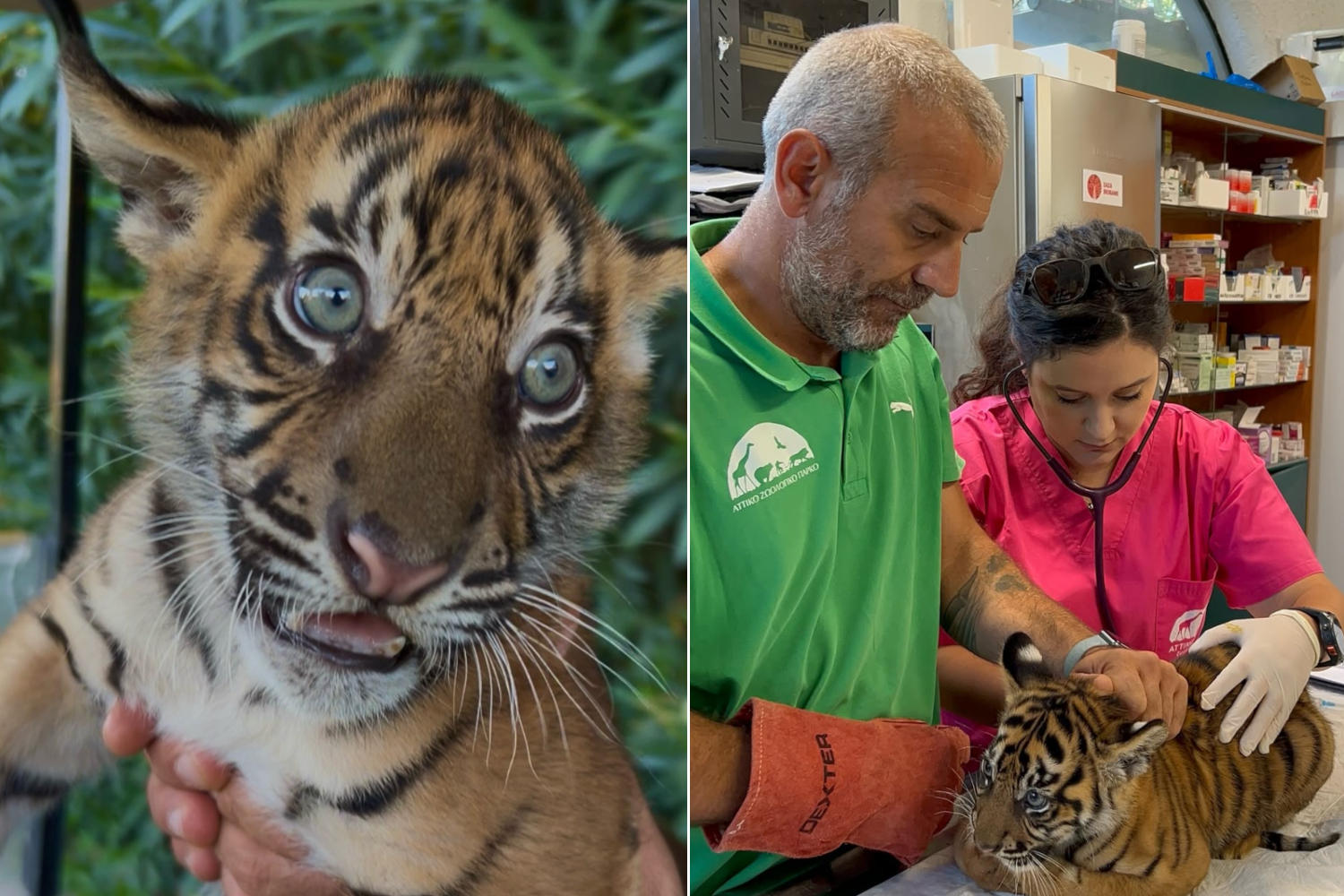
In the heart of the Attica Zoological Park in Spata, near Athens, the birth of three Sumatran tiger cubs has reignited international attention on one of the most threatened feline subspecies on the planet. The babies, two males and a female who were born at the beginning of July, recently turned two months old and underwent their first routine health procedures. The medical team led by veterinarian Arsinoi Psaroudaki managed the operations through the use of carriers and electric vehicles, inoculating the trivalent vaccine and applying the identifying microchip for registration in the global database of the species.
View this post on Instagram
The little ones will grow up without their father
The birth brings with it a note of melancholy linked to the family history of the children: their mother Toba now finds herself looking after them alone after the recent death of their father Argos, who died about a month and a half ago due to a form of cancer. The head of feline and primate care Theodoros Babilis confirmed that, in homage to their father and the tradition of the host country, the three cubs will receive names inspired by the characters of the Odyssey. Despite their young age, the little ones already show a typically wild nature, with sharp teeth and claws that require maximum caution from the staff.
The conservation emergency and a life behind bars
The Sumatran tiger represents the smallest variant of all the known subspecies, although adult males can exceed 2.5 meters in length and 140 kilograms in weight. Characterized by dark stripes unique to each individual, these creatures are native exclusively to the Indonesian island of Sumatra.
In nature the population is reduced to less than 600 specimens (with minimum estimates of around 400 units), devastated by systematic poaching and the progressive disappearance of the native jungle due to deforestation. The programs conducted by European zoological structures officially aim to preserve a genetic-health reserve population for hypothetical future reintroduction projects. However, behind the scientific narrative of captive births and the joy of recorded biometric data, a bitter reality remains.
These three puppies, although endowed with a precious genetic heritage for the survival of the species, will take their steps within fenced perimeters, thousands of kilometers away from the rainforests of Indonesia. Their existence will develop mainly within delimited spaces, inevitably transforming into yet another attraction for visitors’ cameras. A forced conservation that protects against extinction, but which deprives these extraordinary predators of their only legitimate element: freedom in their natural habitat.
