
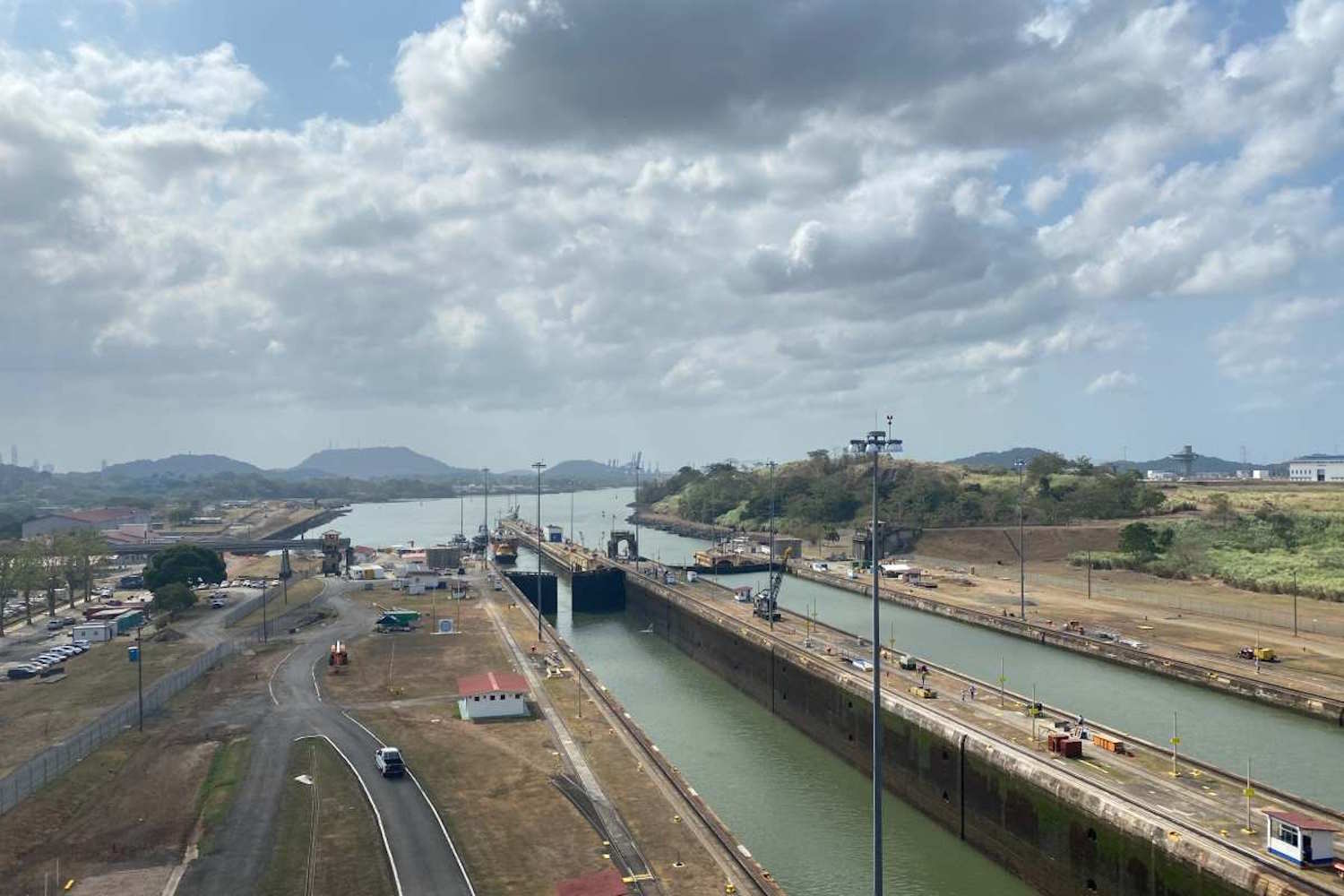
The Panama Canal is once again faced with drought. From October, according to the new plan presented to the Panamanian Parliament, the average number of ships authorized for transit will drop to 29.5 per day, compared to 36 in August: a reduction of approximately 18%. And in September, the authorities have already reduced daily transports to 32.
A decision that risks creating new slowdowns along one of the most important arteries of global trade: the Canal connects the Caribbean Sea with the Pacific Ocean and manages approximately 5% of global maritime trade and 40% of United States container traffic.
Why El Niño is putting the Panama Canal in difficulty
The problem does not concern the sea, but fresh water. The functioning of the Canal’s locks depends in fact on the reserves of Lake Gatún, fed by the region’s rainfall. The locks work like enormous water elevators: as they fill, they allow ships to rise approximately 26 meters above sea level to the lake, and then descend again on the other side of the route.
However, when the lake level drops too much, the Canal Authority must limit passages to ensure safety and preserve the water resource. According to Panamanian authorities, in September the basin received less rain than expected, worsening an already delicate situation.
It is not the first time that drought has put this infrastructure in crisis. In 2023, when lake levels fell to their lowest levels, daily transits were reduced from 38 to 22 vessels, causing long queues and forcing many companies to look for alternative routes.
Even today the effects are being felt: in August some ships had to wait up to 10 days to cross the Canal. One company reportedly paid around $4 million to skip the queue through the auction system that allows operators to buy priority passage.
Geopolitical tensions also further complicate the situation, with the war between the United States and Israel against Iran and the difficulties related to the Strait of Hormuz which have increased the costs of global logistics.
El Niño is an increasingly warmer planet
The Panama Canal drought is one of the effects of a climate phase characterized by El Niño, the natural phenomenon that temporarily alters winds, atmospheric pressures and precipitations in different areas of the world. According to analyzes of meteorological data by the European Copernicus programme, between June and August numerous countries recorded record seasonal temperatures: in Central America and northern South America nine countries experienced the hottest period on record.
The effects of this climatic phase have manifested themselves in different forms: from heat waves in Europe to drought in some areas of Africa, to fires fueled by extreme heat in Indonesia.
However, the case of the Panama Canal shows an often less evident aspect of the climate crisis: it does not only concern temperatures and extreme phenomena, but can also influence the large infrastructures on which world trade depends.
