
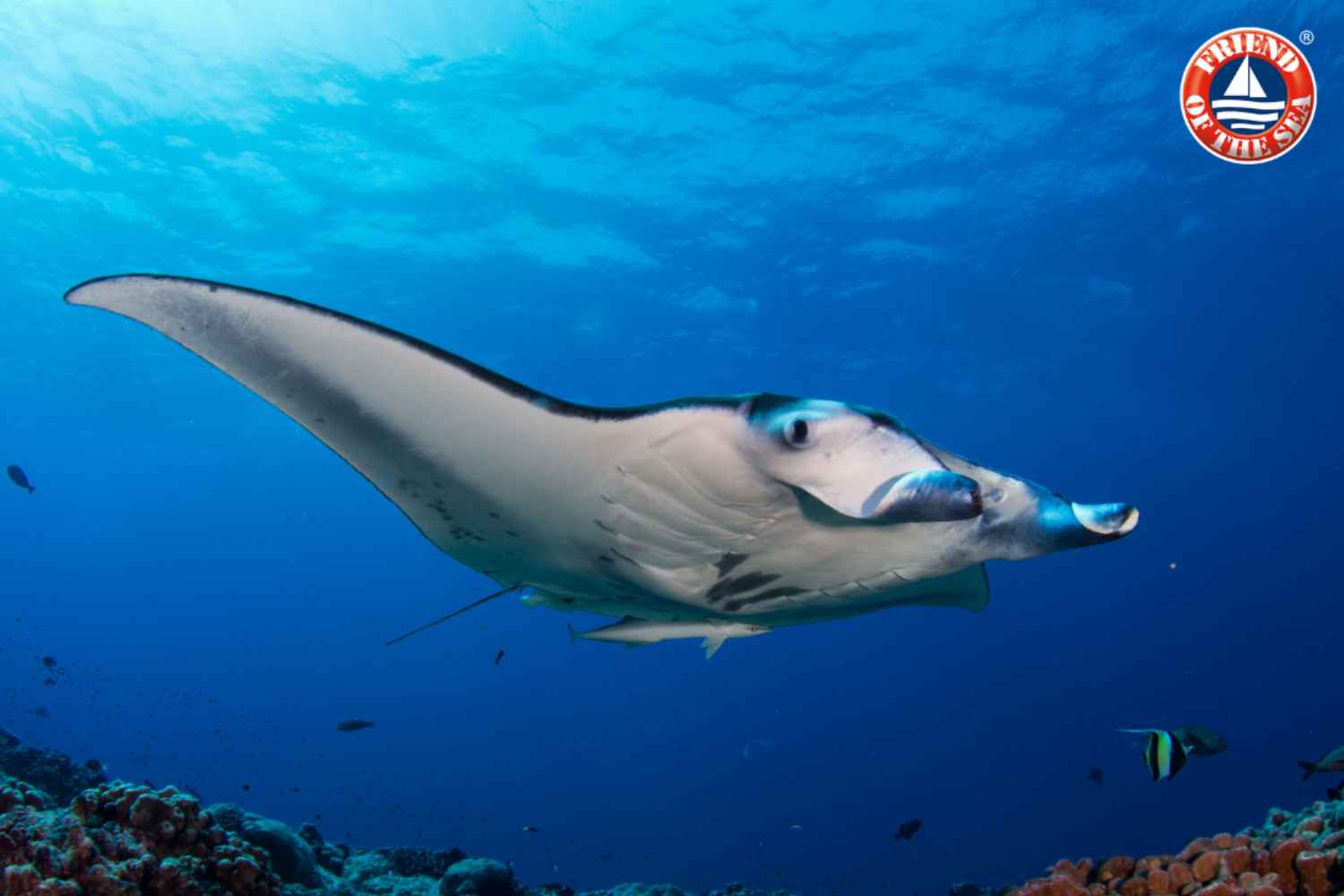
Imagine a majestic shadow gliding silently into the blue depths, with a wingspan that can exceed seven meters. We are talking about manta rays, the gentle giants of the oceans, fascinating creatures that have always inspired wonder and amazement. But behind this imposing beauty lies a growing vulnerability that requires our attention and commitment. And it is precisely for this reason that, every year, on September 17th, World Manta Ray Day is celebrated.
This day is not only an opportunity to admire their grace, but above all to reflect on the threats looming over them and the solutions we can adopt to ensure their survival. The growing popularity of manta ray observation activities, the so-called “manta watching”, has turned the spotlight on the urgent need for respectful tourism, capable of reconciling the human experience with the protection of these magnificent animals and their delicate habitat.
World Manta Ray Day: a vulnerable giant
Manta rays, cartilaginous fish related to sharks and rays, are among the most iconic marine creatures. They can reach impressive sizes, with some specimens capable of weighing up to two tons, yet they are completely harmless to humans. Despite their imposing size, manta rays are unfortunately extremely vulnerable animals.
The threats weighing on them are multiple and complex. Accidental and targeted fishing, pollution of our seas, degradation of coastal habitats and illegal trade in their gill plates represent critical factors that compromise their survival. It is no coincidence that the oceanic giant manta ray is classified as “endangered”, while the reef manta ray is “vulnerable”, a wake-up call that we cannot ignore.
Manta watching: an opportunity with challenges
Observing manta rays in nature, through diving and snorkeling, is undoubtedly an exciting experience. These activities, if well managed, can play a crucial role in raising public awareness and collecting useful data for research and conservation. However, the growing popularity also brings with it significant risks.
Excessive overcrowding, direct contact by tourists or inappropriate behavior in the water can cause considerable stress to these animals, disturbing them in crucial moments such as feeding or resting. It is clear that such a fascinating activity must be regulated to prevent it from turning into a threat, rather than an opportunity for knowledge and protection.
Friend of the Sea: for responsible observation
It is precisely from the need to combine the pleasure of observation with the imperative of respect that the Friend of the Sea certification standard for “Manta Watching” was born. Friend of the Sea® is a project of the World Sustainability Organization (WSO) and is established as one of the main global standards for the certification of products and services that are committed to protecting the marine environment.
With specific requirements for different sectors – from fisheries to aquaculture, from marine ingredients to other areas – Friend of the Sea aims to safeguard ecosystems and aquatic resources. The Manta Watching certification is dedicated to tourism operators and aims to minimize the disturbance caused to manta rays and their natural habitat. The standard is rigorous and is also based on the valuable recommendations of the Manta Trust, a leading international organization in manta ray research and conservation.
The fundamental requirements include:
A call for sustainability
World Manta Day is a powerful warning: the beauty of nature is a heritage to be protected. Tourism, if sustainable, can be a fundamental ally in this effort. Choosing Friend of the Sea certified operators means not only living an unforgettable experience, but also actively contributing to the conservation of these magnificent marine giants.
Reconciling tourist attraction with the need to protect the well-being and habitat of manta rays is a responsibility that concerns us all. Only in this way will we be able to ensure that future generations can continue to admire the majestic dance of manta rays in the depths of our oceans, a symbol of a nature that is still intact and prosperous.
