
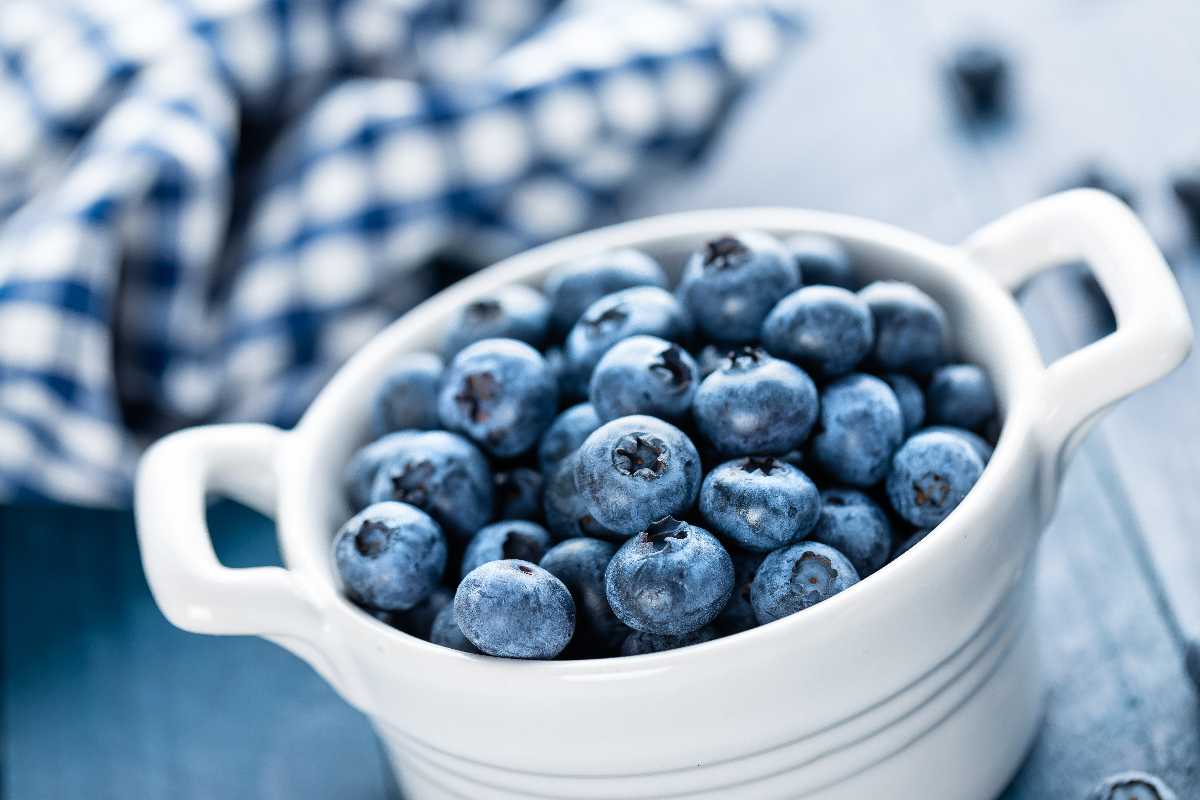
Have you ever picked up a bag of fresh blueberries and noticed a thin whitish film on the surface of the fruit? Many people, upon seeing it, immediately think that it is dust, dirt or residues left from processing. For this reason they often try to eliminate it by rubbing the blueberries before eating them.
In reality, that light veiling is a completely natural element: it is called pruina and it is one of the most effective strategies that nature has developed to protect these small fruits.
The presence of this patina is therefore not a defect, but may be a sign that the blueberry still retains its natural protection. Understanding what pruina is allows us to observe these fruits with different eyes and avoid a very common mistake when we buy and prepare them.
What is blueberry bloom?
The bloom is a thin waxy layer that covers the surface of some fruits, including blueberries. It is produced directly by the plant during growth and is deposited on the peel, forming a sort of protective coating with an opaque and slightly whitish appearance.
Its name comes from Latin bloomwhich means “frost”, because its appearance resembles that of a light frost on the surface of an object. In reality it has nothing to do with ice: it is a natural film composed mainly of vegetable waxes and other lipid substances.
In blueberries this coverage can be more or less evident depending on the variety, the conditions in which the fruit was grown and the methods of harvesting and conservation. Some blueberries appear almost covered in a light powder, while others only have a slight matte tinge.
Because blueberries produce this white film
The bloom performs several important functions for the fruit. Its main utility is to create a natural barrier between the blueberry and the external environment.
One of its tasks is to limit water loss. Blueberries, being small and delicate fruits, can easily dehydrate after harvesting. The waxy layer helps to keep the surface more protected, helping the fruit to retain texture and freshness for longer.
The bloom also plays a protective role against some external agents. The coated surface makes it more difficult for certain microorganisms to settle which can favor the deterioration of the fruit. In this way the blueberry has a first natural defense even before being harvested and consumed. Additionally, this coating can help protect the fruit from the effects of sunlight during ripening, helping the plant to preserve more delicate tissues.
Is the white film on blueberries dirt or residue from treatments?
One of the most frequent mistakes is confusing the bloom with something that has settled on the surface of the fruit. In fact, when it comes to the normal natural patina of blueberries, it is not dust and it is not a coating added from the outside.
The bloom is produced directly from the plant and is an integral part of the fruit. For this reason, seeing slightly cloudy blueberries does not necessarily mean they are old or spoiled.
Conversely, a highly visible patina may indicate that the fruit was handled carefully and was not aggressively scrubbed or washed after harvest. In fact, during processing, the bloom can be easily removed because it is a very delicate layer.
What to do when you buy blueberries
When purchasing blueberries, avoid automatically choosing the fully shiny ones thinking they are better. The brilliance of the surface is not always synonymous with greater freshness: it is often the presence of the bloom that characterizes the fruit in its most natural condition. Once brought home, the advice is to keep them in the refrigerator and wash them only shortly before consuming them. In fact, water can progressively remove the protective film and, if the fruit remains moist for a long time, can encourage more rapid deterioration. To clean them, simply rinse them gently under running water and remove any damaged fruit. There is no need to rub them vigorously to eliminate that white veil: what looks like a “stain” is actually a natural protection.
