
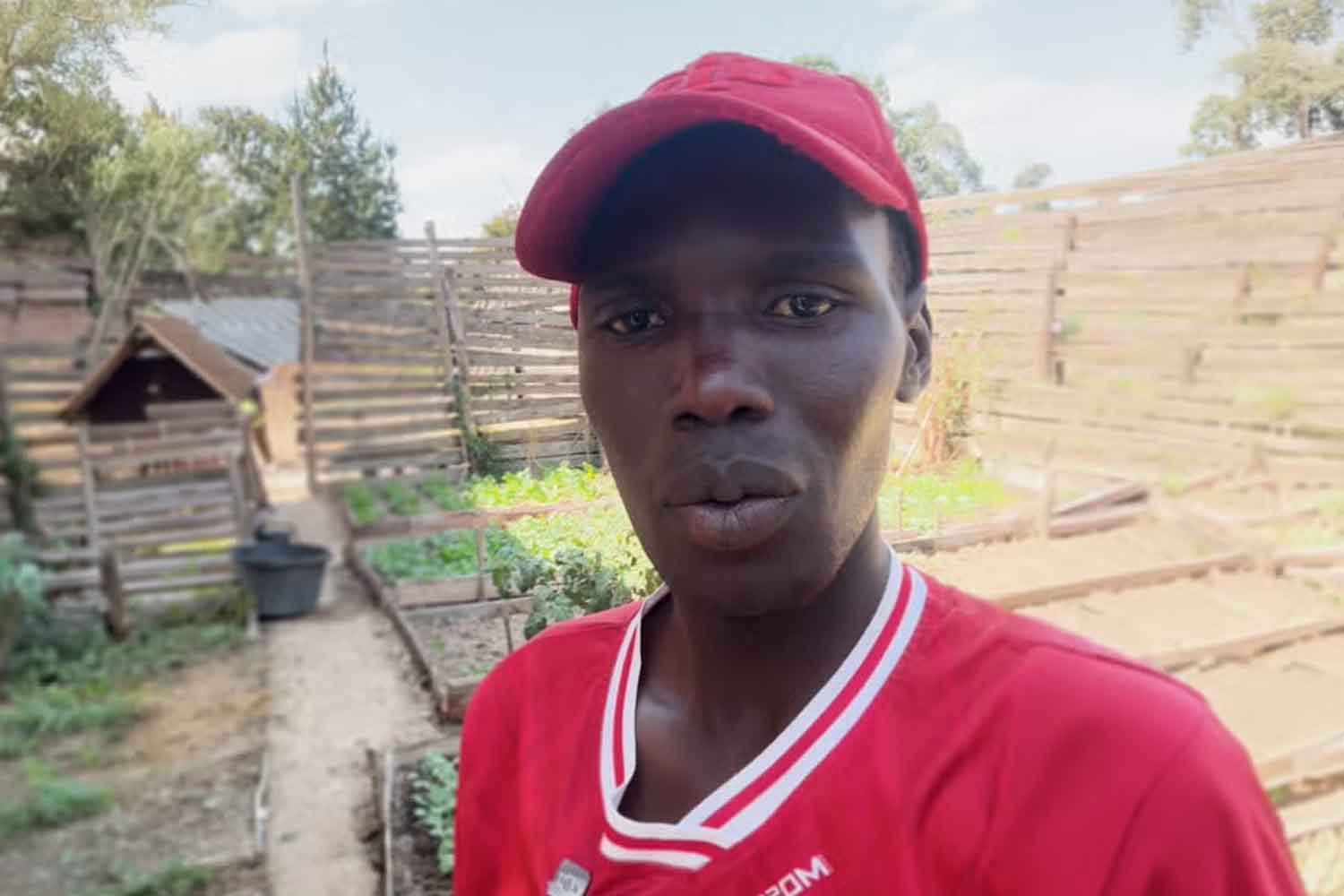
In Udumka the answer to rains that arrive badly, too heavily or all at once is growing inside a nursery. The community in southern Tanzania has begun to cultivate species capable of retaining water and fixing nitrogen, inserting them into soil tested by intensive cultivation and rainfall that can carry away nutrients. No futuristic technology. Trees are planted here.
The nursery is managed by the Udumka Environmental Group, a local collective involved in the project Her Resilience, Our Planet. The choice of species serves to gradually recover fertility and make the fields less fragile in the face of a climate that has become more irregular. There are also trainers chosen and trained within the community working on it, so knowledge does not remain pending the arrival of external technicians. It is one of the interventions described by CARE Tanzania, which participates in the project.
The trees enter the fields
Nitrogen-fixing trees work mainly underground. Thanks to the relationship with some bacteria present in the roots, they contribute to making atmospheric nitrogen, one of the essential nutrients for plants, available in the agricultural system. Over time, leaves, roots and organic matter left on the ground also come into play.
It is a principle used for some time in agroforestry systems and also documented by the FAO: trees and crops can share the same agricultural space, with effects on soil fertility, water management and soil protection. In Udumka this old agricultural idea is put back to work within a very contemporary problem.
Rainfall, in fact, has become more difficult to predict. CARE describes violent rainfall, hail and flooding capable of compromising crops and further impoverishing already exploited land. Planting a suitable species, here, means trying to leave something in the ground even when the water takes the rest away.
A few kilometers away, the potatoes also change
In the nearby village of Kihesa Mgagao, Bariki Kagine grew potatoes with poor results and crops particularly vulnerable to hail. Then he began to change several things at once: the spacing between plants, the timing of planting, the use of weather forecasts, fertilization, pest management and even the variety grown. He chose Sagitta, more suited to his terrain. The harvest earned him around 2 million Tanzanian shillings, as reported by CARE.
It is the result of a single farmer, but the change is clearly visible: moving a sowing, leaving more space between the plants, choosing a different variety can make the difference when the rainy calendar stops behaving as before. And in fact the adaptation, in these parts, has a rather unspectacular appearance. A tree in the right place. A potato planted a few days later. A farmer looking at the forecast before entering the field.
The project aims to involve over 60 thousand small farmers
Her Resilience, Our Planet works in the Great Ruaha River basin, one of the most important agricultural and natural areas in southern Tanzania. The program is also supported by Global Affairs Canada and, according to the official Canadian Government sheet, will continue until 2030. CARE indicates among its objectives over 60,000 small farmers and 18,000 agricultural entrepreneurs involved in the region, with particular attention to women and young people. They are goals set by the project, not people already achieved.
For now the story is much smaller, and that’s probably why it works. A nursery run by the village. Trees also chosen for what they do to the soil. A farmer who changes the way he grows potatoes and manages to sell them better. A ready solution for any African field does not come from Udumka. Here comes something more concrete: as the climate changes the rules, this community is changing the way it is on the ground. Sometimes starting with a tree.
