
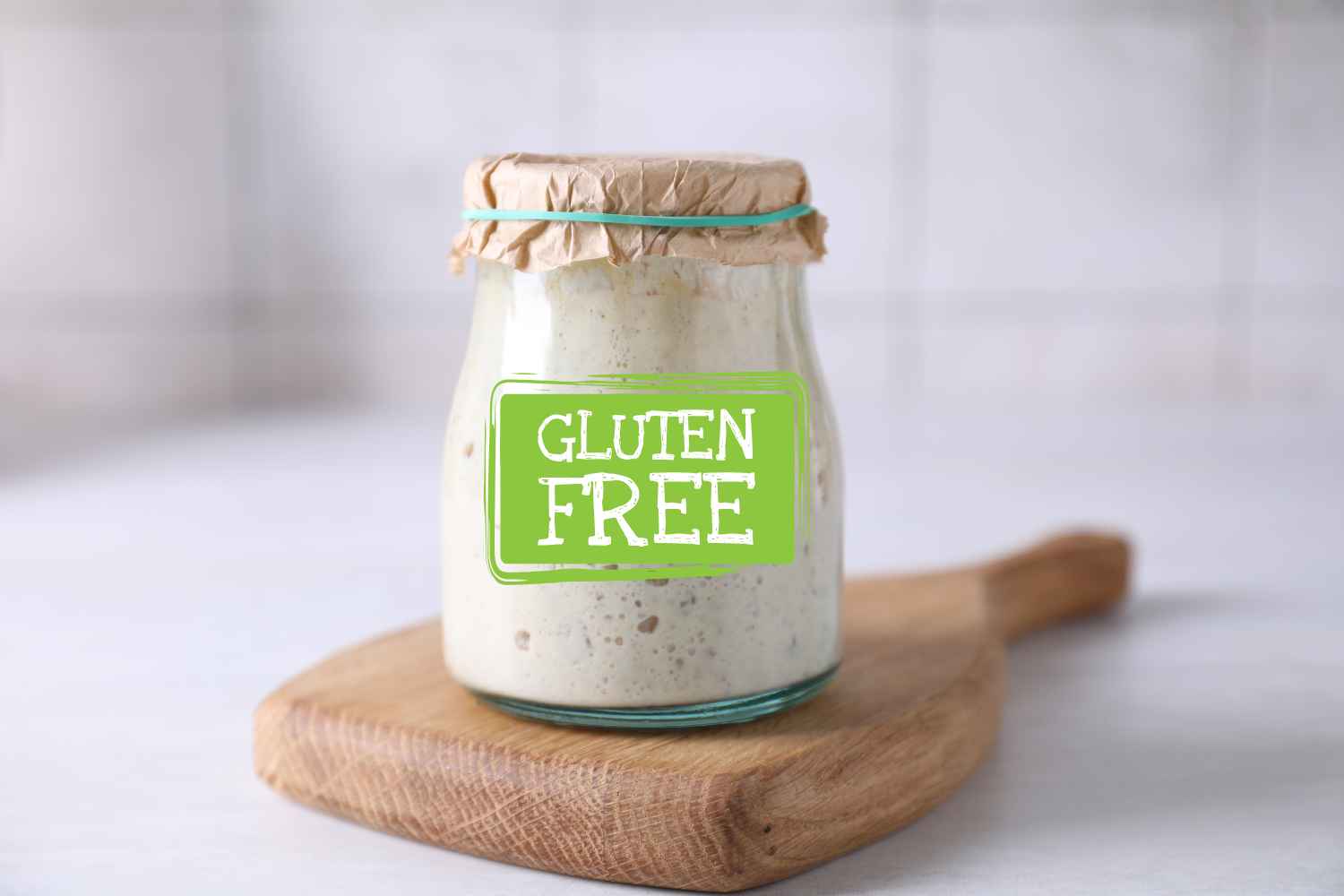
Is it possible to prepare soft, fragrant and naturally leavened gluten-free bread? The answer is yes, thanks to gluten-free sourdough. This precious ingredient allows you to obtain tastier, more digestible baked products with a consistency very similar to that of traditional bread.
Let’s see together what sourdough is, what its benefits are and how to prepare it even with gluten-free flours.
What is sourdough and what is it for?
@123rf
Sourdough is a natural yeast used to prepare bread, pizza, focaccia and other baked products. Also known as sourdough or sourdough, it is a living dough composed of water and flour which, thanks to the presence of microorganisms naturally present in the environment, develops a fermentation process.
Sourdough can be obtained in several ways. Traditionally it is preserved through so-called refreshments, i.e. periodic additions of water and flour which allow yeasts and beneficial bacteria to be kept active. Alternatively, it can be created from scratch by preparing a simple dough of water and flour and letting it rest so that it is naturally enriched with the microorganisms responsible for leavening.
Doughs made with sourdough require longer leavening times than those prepared with industrial yeasts, but the wait is rewarded by the result: the bread is generally more fragrant, with a better consistency, greater digestibility and longer shelf life.
Natural fermentation also helps to improve some nutritional characteristics of the doughs. In fact, during the leavening process, some substances present in the flours are transformed and made more easily usable by the body. Furthermore, the presence of lactic bacteria can promote a better balance of the intestinal flora.
Another advantage of sourdough concerns the flavor profile: the long fermentation times allow the development of more complex aromas, giving the bread a more intense and characteristic flavour.
The sourdough can also be made with different types of flours, including those naturally gluten-free.
Gluten-free sourdough: an alternative for bread and baked goods
For those who must avoid gluten, preparing bread, pizza and focaccia can seem like a challenge. Gluten-free flours, in fact, have different characteristics than traditional ones and often make it more difficult to obtain elastic and soft dough.
Gluten-free sourdough represents an interesting solution because it allows you to improve the consistency, aroma and flavor of gluten-free baked products.
Unlike traditional sourdough, it is prepared using gluten-free flours, such as rice, corn, buckwheat or other cereals and pseudocereals suitable for those who follow a gluten-free diet.
Thanks to natural fermentation, the dough can be softer inside and with a more pleasant crust, helping to make gluten-free bread more similar to traditional bread.
How to prepare gluten-free sourdough
Preparing gluten-free sourdough requires few ingredients, but above all time and consistency.
To get started you need:
Mix water and flour in equal parts until you obtain a soft dough, which should be transferred to a jar large enough to allow it to grow. The container must be covered, but not completely closed, so as to allow air to pass through.
The dough should be left to rest at room temperature for approximately 24 hours. After this time we proceed with the first refreshment: a part of the dough is eliminated and the remaining part is fed by adding water and flour again in the same proportions.
For about ten days the procedure must be repeated regularly, generally once or twice a day. As time passes, the sourdough will change its appearance: initially it will be creamy, then it will begin to develop air bubbles and increase slightly in volume, a sign that fermentation is active.
When the sourdough is stable and sufficiently active, it can be stored in the refrigerator and kept alive through periodic refreshments.
How to store and refresh gluten-free sourdough
Once ready, the gluten-free sourdough can be stored in the refrigerator in a clean, closed jar.
To keep it active it is necessary to refresh it, that is, add new water and flour after eliminating part of the previous dough.
The frequency depends on the use: those who often prepare bread and baked goods can refresh it more frequently, while for occasional use it may be sufficient to proceed every few days.
With correct maintenance, sourdough can be stored for a long time and become a precious ingredient for preparing gluten-free bread, pizza and focaccia with an authentic flavour.
FAQ on gluten-free sourdough
Does gluten-free sourdough contain gluten?
No. If it is prepared exclusively with gluten-free flours and maintained correctly, sourdough can be used to make products suitable for those following a gluten-free diet. However, it is important to avoid contamination during preparation and storage.
Which flours can be used to prepare gluten-free sourdough?
The most used flours are rice, corn, buckwheat, sorghum or other specific gluten-free mixes. Each flour can give different characteristics to the dough, influencing flavor and consistency.
How long does it take to have sourdough ready?
It generally takes around 7-10 days for a gluten-free sourdough to become sufficiently active, although times may vary based on temperature, the type of flour used and environmental conditions.
Is gluten-free sourdough more difficult to handle?
It may require a little more attention than traditional sourdough, especially in the early stages, but once established it is easy to maintain with regular refreshments.
Is gluten-free sourdough bread more digestible?
Natural fermentation can help make doughs more easily digestible thanks to the long leavening times and the action of the microorganisms present in the sourdough.
Can gluten-free sourdough be frozen?
Yes, it is possible to freeze it, although after thawing it may require some refreshments to become fully active again.
What is the best flour for sourdough?
There is no single “best” flour for preparing sourdough: the choice depends on the type of yeast you want to obtain and the final product you want to make.
For gluten-free sourdough, the most used flours are:
To get started, rice flour is often considered one of the simplest options because it allows you to easily observe the fermentation progress. Once the sourdough has stabilized, it is also possible to experiment with other flours to customize its aroma and consistency.
