
Puglia has a wider UNESCO heritage than you think. In addition to the Trulli of Alberobello and Castel del Monte, now symbols known abroad, the region has a sanctuary which houses one of the most important testimonies of the Lombard presence in Southern Italy, the beech forests of the Gargano included in a large European natural site and, since 2024, some sections of the Via Appia, the Roman road that connected Rome to the South.
Added to these is the MurGEopark of Alta Murgia, which entered the UNESCO Global Geoparks network in 2025: a different recognition from that of the World Heritage List, with its own criteria and procedures, but which nevertheless attests to the international value of the territory, its geological history and the link between the environment and local communities over the centuries. Retracing the UNESCO heritage sites of Puglia means crossing almost two thousand years of history: from the great Roman infrastructures to the medieval architecture of Frederick II, from the stone houses of the Itria Valley to the woods of the Gargano, up to a karst landscape where the rocks tell stories that precede the presence of man millions of years ago.
The Trulli of Alberobello, a UNESCO heritage site since 1996
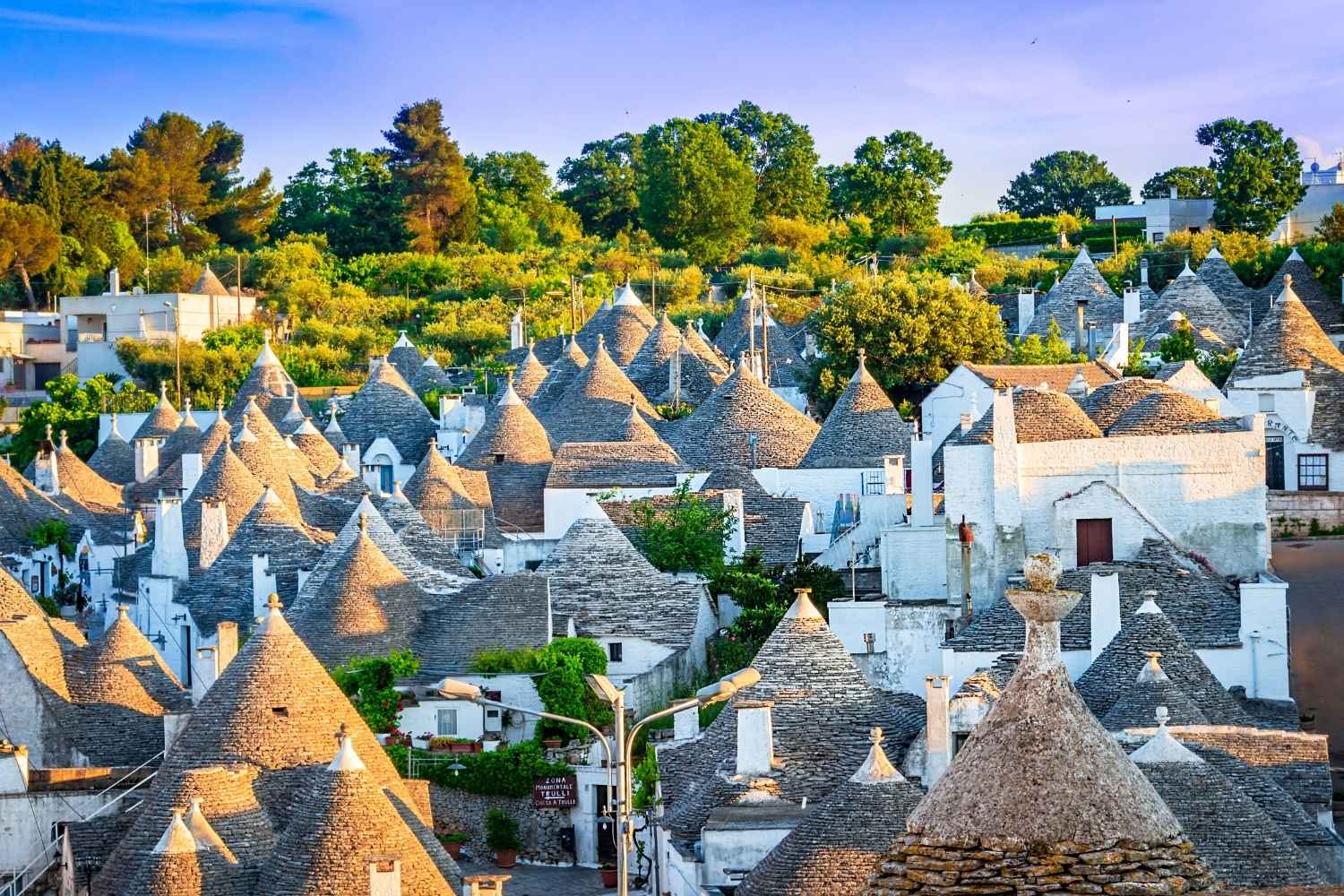
Alberobello is one of the most particular urban landscapes in Puglia. Much of the historic center is made up of trulli, limestone buildings with massive walls and conical roofs made by overlapping dry slabs: an ancient technique, more so than the tourist image with which these buildings are often associated suggests.
UNESCO included the Trulli of Alberobello in the World Heritage List in 1996, recognizing the value of a very ancient construction system which here is not limited to a few isolated buildings, but forms entire neighborhoods: streets, perspectives and inhabited spaces defined by traditional constructions. Trulli are not exclusive to Alberobello – they are found in many places in the Itria Valley and central Puglia – but it is here that they reach the highest concentration, capable of transforming a rural technique into a true urban landscape, especially in the Monti and Aia Piccola districts, where hundreds of conical roofs follow one another along narrow and irregular streets. Their importance lies not only in their unusual shape: behind them there is a technical knowledge that for centuries has exploited local materials, producing homes capable of adapting to the climate of the Murgia thanks to thick walls that maintain stable temperatures inside.
Castel del Monte, the octagonal castle of Frederick II
- @wikipedia
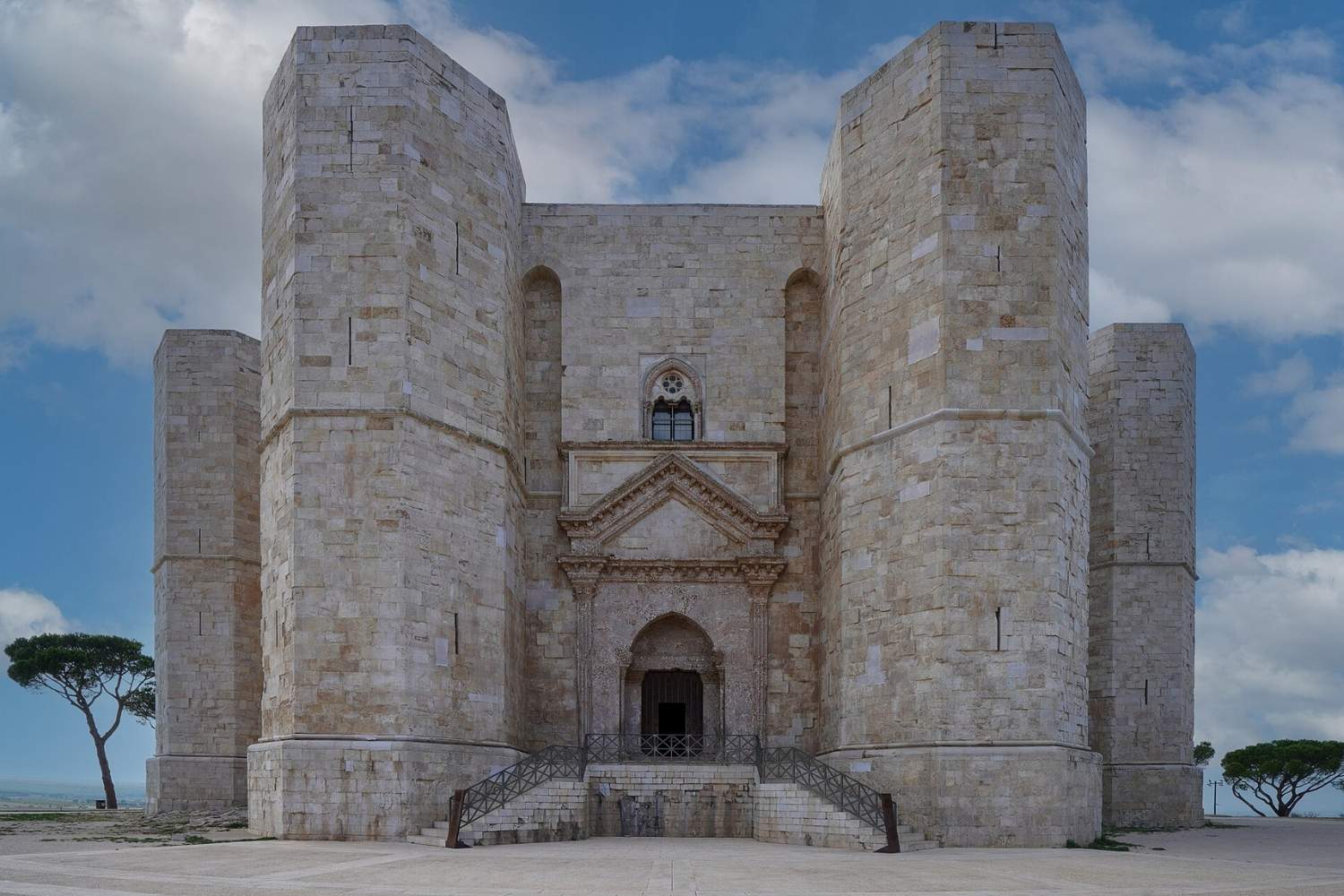
About 18 kilometers from Andria, on the top of a hill overlooking the western Murge, Castel del Monte is one of the most recognizable medieval monuments in Italy. The octagonal plan, the eight towers and the rigorous geometry of the rooms have fueled many interpretations of its original function over time. Frederick II of Swabia ordered its construction in the 13th century; the castle was completed around the middle of the thirteenth century, when the imperial court was a meeting point between different cultures – an element that is also found in the architecture of the complex, where references to classical antiquity coexist with solutions close to the Islamic world and northern Europe.
The inscription on the World Heritage List dates back to 1996, the same year as the Trulli of Alberobello. UNESCO considers it an exceptional example of medieval architecture for the cultural synthesis it expresses and for the way in which the project relates geometry, internal spaces and external structure. Part of the charm of the castle also lies in what we do not know for sure: the absence of some typical defensive systems and the particular organization of the rooms, with the ever-present octagon, have favored symbolic and astronomical readings that still circulate today, even without being proven historical conclusions.
The Sanctuary of San Michele Arcangelo and Lombard Puglia
- @wikipedia
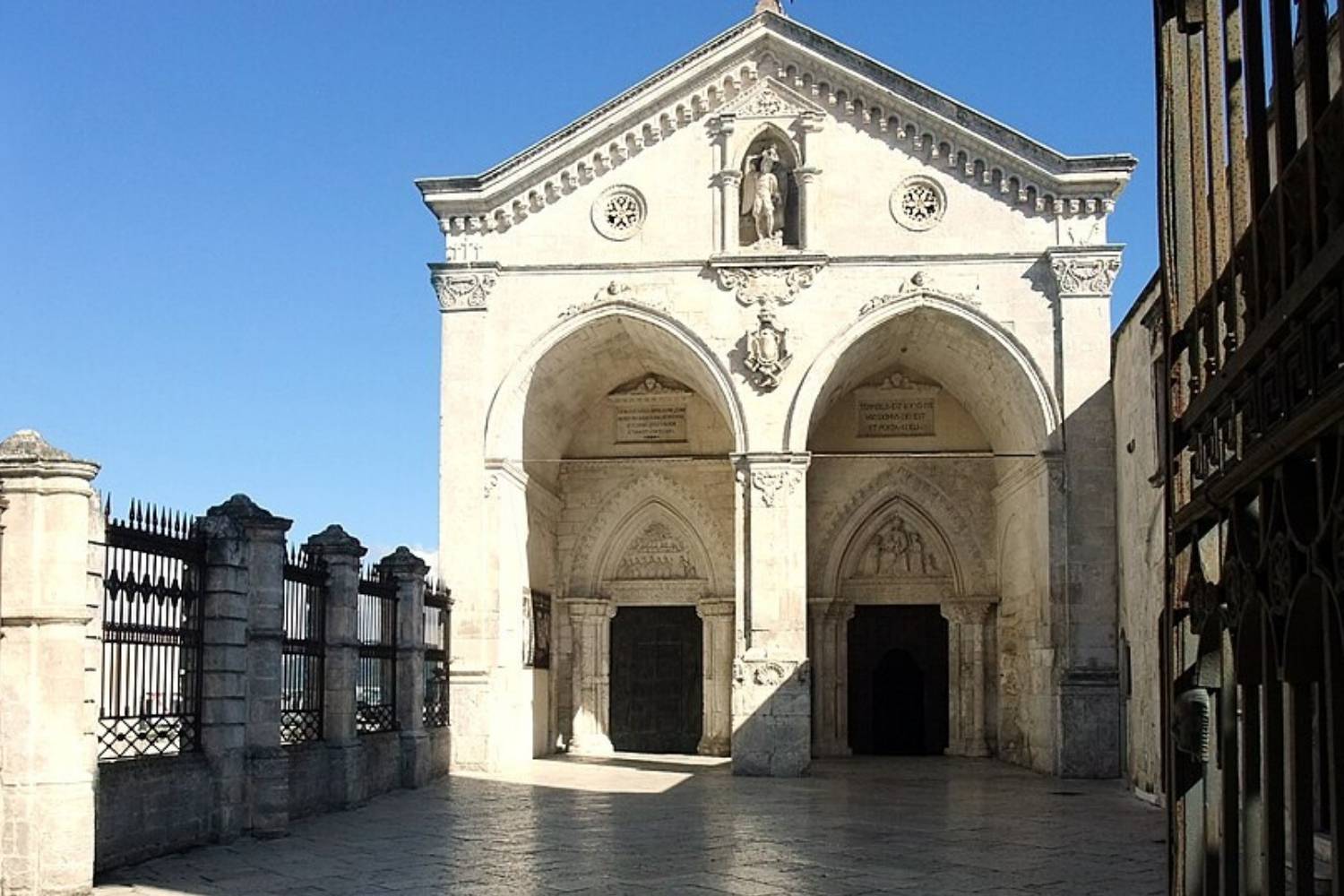
On the Gargano, in the historic center of Monte Sant’Angelo, the Sanctuary of San Michele Arcangelo tells a different story. Here the monumental value is linked to a natural cave which has become one of the main places of the Michaelic cult in the West, a destination for centuries of pilgrims heading towards the South and the Holy Land. The sanctuary is not an autonomous UNESCO site, but since 2011 it has been part of the serial asset “The Lombards in Italy. The places of power (568-774 AD)”, which brings together seven complexes in different Italian regions, chosen because they document the role of Lombard culture in the political and religious transformation of Europe between late antiquity and the Middle Ages.
The presence of Monte Sant’Angelo on this site has a particular meaning: the Lombards spread the cult of San Michele, in which they recognized traits close to their own warrior tradition, and transformed the Gargano sanctuary into a large religious centre, connected to the pilgrimage routes that crossed the peninsula. Even today the entrance to the cave is the heart of the complex, while the architectural interventions carried out over the centuries have created a whole in which different eras overlap without erasing the original character of the place.
The beech forests of the Umbra Forest are a UNESCO natural heritage site
@wikipedia
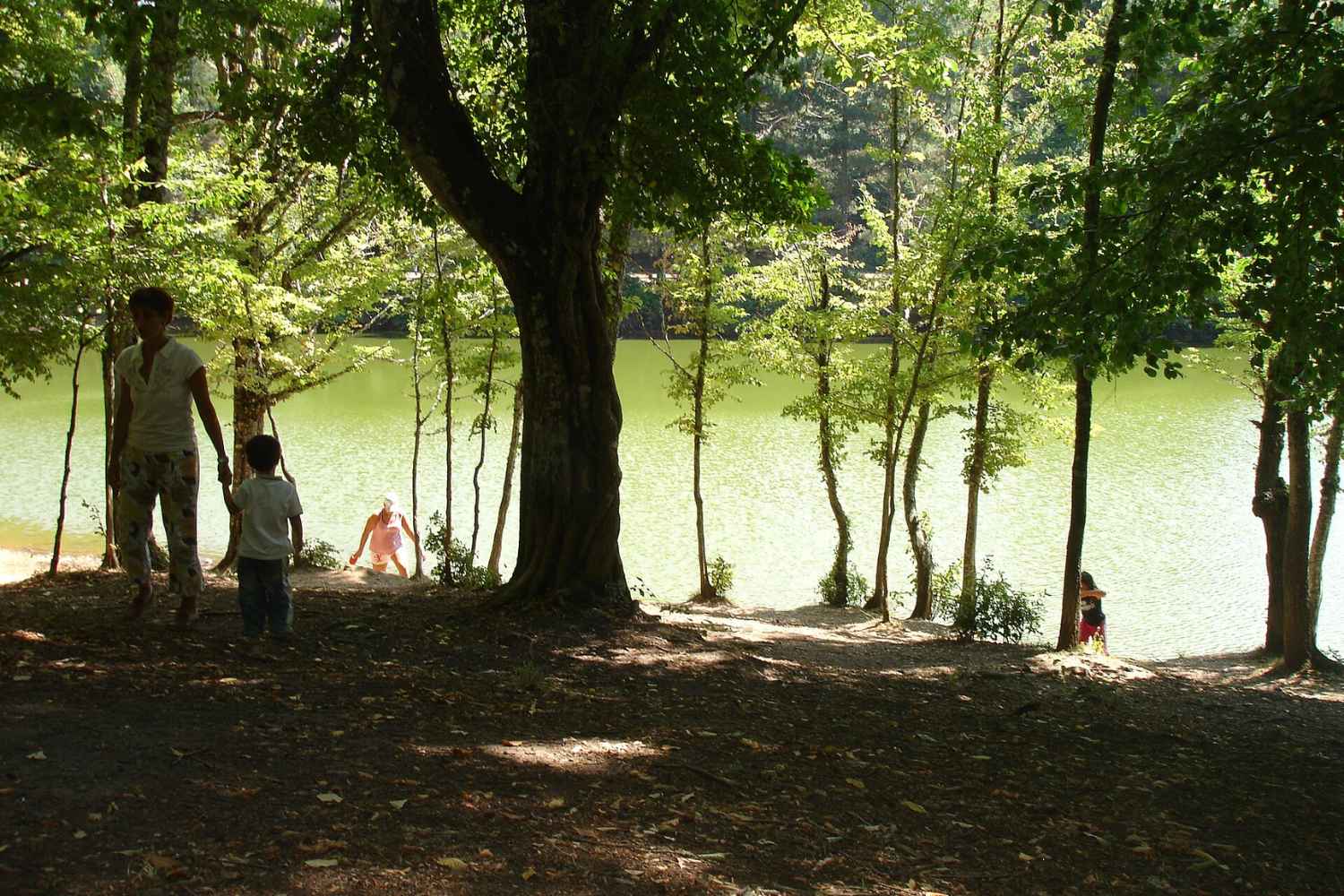
In the Gargano National Park, the Umbra Forest represents the greenest soul of the promontory, with a wooded environment that contrasts sharply with the coastal landscapes and which preserves ecosystems in which the beech can live even at relatively low altitudes compared to those normally occupied by the species along the peninsula. The UNESCO recognition, however, requires clarification, because it does not generically concern the entire Umbrian Forest: some of its beech forests are part of the transnational site “Ancient and Primeval Beech Forests of the Carpathians and Other Regions of Europe”, a natural heritage that includes areas distributed in several countries and which protects forests that are fundamental for understanding the expansion and evolution of the European beech. The extension that involved the Italian components, including the Gargano ones, dates back to 2017.
The value of these areas therefore does not depend only on the presence of monumental trees or the richness of the fauna, but on the possibility of observing forest dynamics which in many European territories have been profoundly modified by human activities, while some portions of the Gargano preserve ecological structures of particular scientific importance. For those who visit the Umbra Forest, international recognition adds a key to understanding a place that remains accessible through paths, nature trails and equipped areas, where the landscape changes with the seasons and shows a face of Puglia very distant from that of the beaches and olive groves.
Appian Way. Regina Viarum, Puglia’s most recent UNESCO heritage site
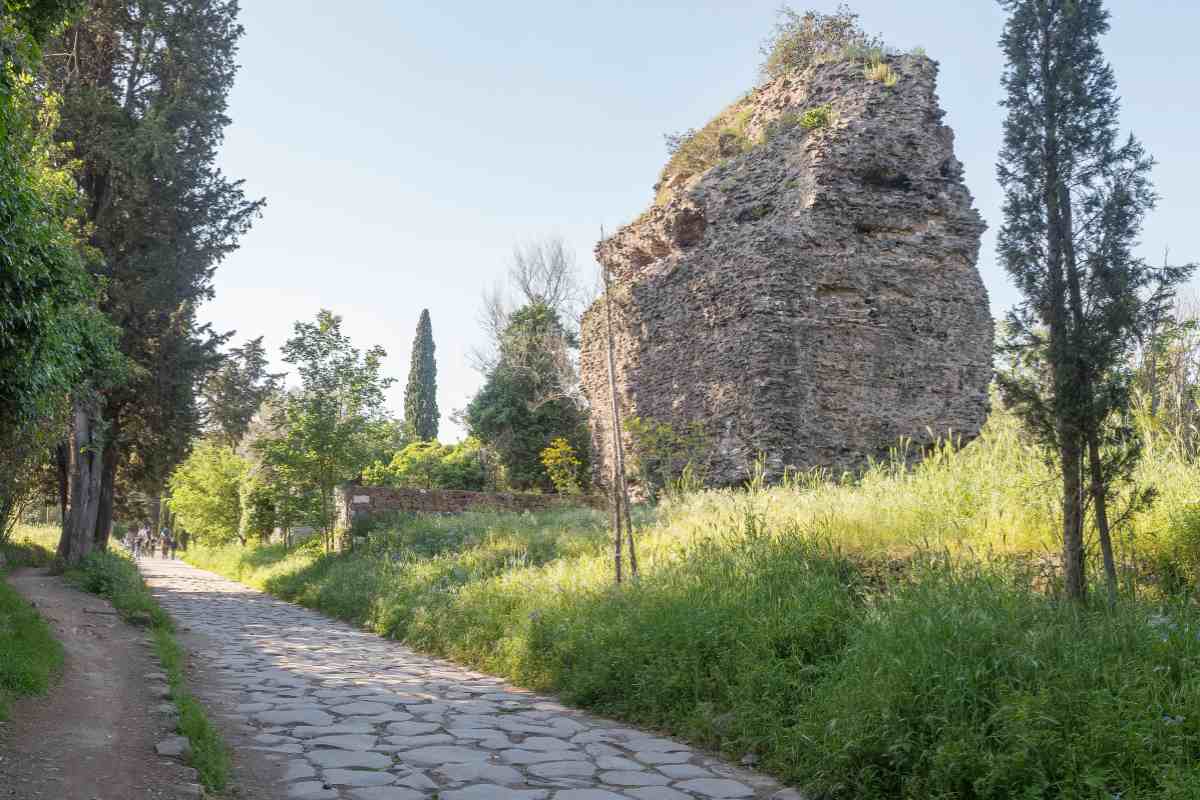
©chiarazeni/123rf
From 2024 the list of World Heritage assets in Puglia also includes the Via Appia. Regina Viarum, registered by UNESCO as a serial site that collects evidence of the ancient Roman road and its branches in various Italian territories. Its presence also changes the way of building an Apulian UNESCO itinerary: not a single monument closed in a perimeter, but the traces of one of the most important infrastructures of antiquity, with which Rome consolidated connections with southern Italy and ports towards the East. Begun in 312 BC by the will of the censor Appius Claudio Caecus, the road first reached Capua and was then extended towards Benevento, Taranto and Brindisi; in the imperial age the Via Appia Traiana offered another great axis towards the Apulian Adriatic coast.
In Puglia, the heritage of the Appian Way allows us to read cities, archaeological remains, routes and landscapes as parts of a single historical network, in which Taranto and especially Brindisi have a central role: the Brindisi port was one of the great terminals of the routes between Rome and the eastern Mediterranean. The entry of the Appian Way into the World Heritage List has expanded the regional UNESCO heritage and given visibility to an asset that does not coincide with a spectacular building, but with a territorial structure that for centuries has determined movements, trade, conquests and relationships between cities.
The MurGEopark of Alta Murgia, UNESCO World Geopark from 2025
A separate chapter concerns the MurGEopark, which includes the territory of Alta Murgia and the Apulian Premurge and which in April 2025 officially entered the UNESCO Global Geoparks network. It is not an inscription in the World Heritage List, so it would not be correct to include it in the same category as Alberobello or Castel del Monte, but the UNESCO recognition still certifies the exceptional geological, naturalistic and cultural interest of this area. The territory tells a story that long precedes that of the cities and monuments, because it preserves evidence of the ancient Adria plate, a continental fragment involved in the complex geological processes that shaped the Mediterranean, while sinkholes, blades, caves and other karst forms show the action exerted by water on limestone rocks over very long periods of time.
View this post on Instagram
Inside the geopark there are also paleontological testimonies of international importance, including the large deposit of dinosaur footprints in the Altamura area and the findings linked to the Altamura Man, while farms, jazzi, sheep tracks and dry stone walls tell a second level of the same story, one in which human communities have modified the territory without completely erasing its original characteristics. Precisely this relationship between geology and human presence constitutes one of the most interesting aspects of the MurGEopark, because the landscape of the Alta Murgia cannot be explained only through the rocks nor exclusively through rural history: fields, pastures, ravines, stone architecture and large open spaces belong to a single territorial system that the UNESCO recognition aims to conserve and enhance.
How many UNESCO heritage sites there are in Puglia
If the expression “UNESCO heritage of Puglia” indicates the assets of the World Heritage List that have an effective presence on the regional territory, the picture today includes five realities: the Trulli of Alberobello, Castel del Monte, the Sanctuary of San Michele Arcangelo as a component of the Lombard serial site, the beech forests of the Umbra Forest included in the transnational natural heritage and the Via Appia. Regina Viarum, registered in 2024. Alongside these, without confusing the two categories, is the MurGEopark of Alta Murgia, which has belonged to the global network of UNESCO Geoparks since 2025. However, the Sassi of Matera, which constitute a World Heritage site but are located in Basilicata, are not included in the list, nor is Castel Fiorentino in Torremaggiore, an important archaeological area in the province of Foggia which does not appear in the UNESCO World Heritage List.
The Apulian case shows how the very concept of UNESCO heritage has expanded over the years: no longer just the single monument to be photographed, but networks of sites, roads that cross regional borders, forests shared with other European countries, geoparks that tell the story of millions of years before man even arrived. The Via Appia and the MurGEopark, the two most recent recognitions, go precisely in this direction: less of an “icon-monument” and more of a territorial system, where the value lies in the relationships between places rather than in the places taken individually. For those traveling in Puglia this means a concrete thing: the trulli or Castel del Monte remain obligatory stops, but the UNESCO heritage of the region today is better read as a network of signs distributed over the territory – some evident, others buried in the rock or hidden under a forest – which is difficult to exhaust in a single visit.
