
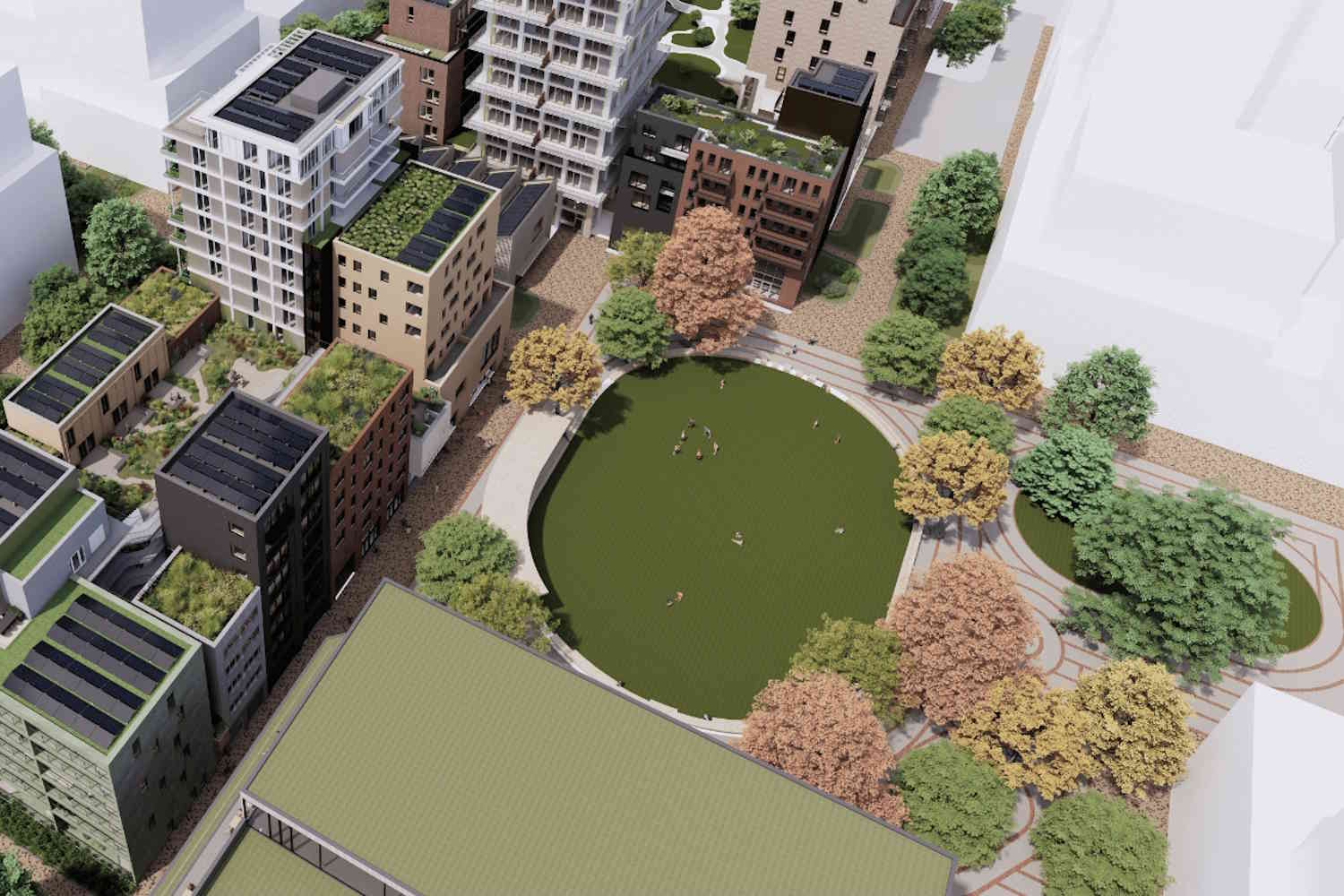
Imagine a neighborhood where cars no longer dominate public space, where courtyards are completely green and open to the community and where homes, nature and services coexist within a few steps of each other.
It is not an imaginary city, but a project that is taking shape with the new neighborhood of Merwedein the Dutch city of Utrecht, a true “district of the future”: an innovative, sustainable and completely car-free area.
The goal? Rethinking the way we experience urban spaces, replacing the traditional model of streets dominated by traffic with an environment closer to people’s needs.
A wonderful car-free neighborhood
The Merwede project was born within a broader urban plan which involves the construction of approximately 6,000 homes spread over 24 hectares. At the basis of the project is the concept of Superblockan urban model that breaks with the traditional closed block: instead of creating large separate and impermeable blocks, the neighborhood is organized through a network of intermediate spaces, courtyards, paths and common areas that can evolve over time.
@Marc Koehler Associates
The idea is to create a sort of high-density “urban village”, where people can meet and where spaces are designed to adapt to the needs of the community. Which is why the project integrates different elements: resilient materials, intelligent energy systems, rainwater management, waste reduction, sustainable mobility solutions and greater presence of nature.
A landscape of dunes instead of asphalt
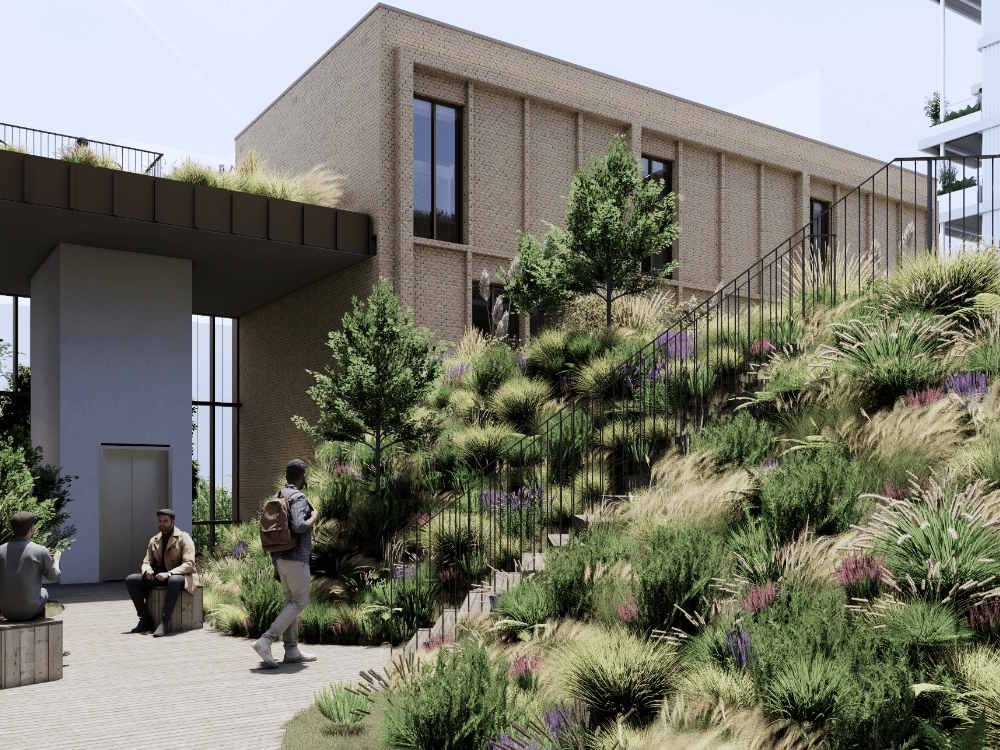
One of the most characteristic elements of Merwede will be the so-called Dunescapean urban landscape inspired by the dunes. A green hill will cross the public spaces, creating a natural environment within the neighborhood and expanding the areas dedicated to socializing.
@Marc Koehler Associates
Nature is therefore not added as a simple decorative element, but becomes part of the architecture itself. Greenery helps to make spaces more livable, promotes biodiversity and also helps in water management, which is increasingly important in cities that have to face extreme climatic events.
Open courtyards and spaces designed for meeting
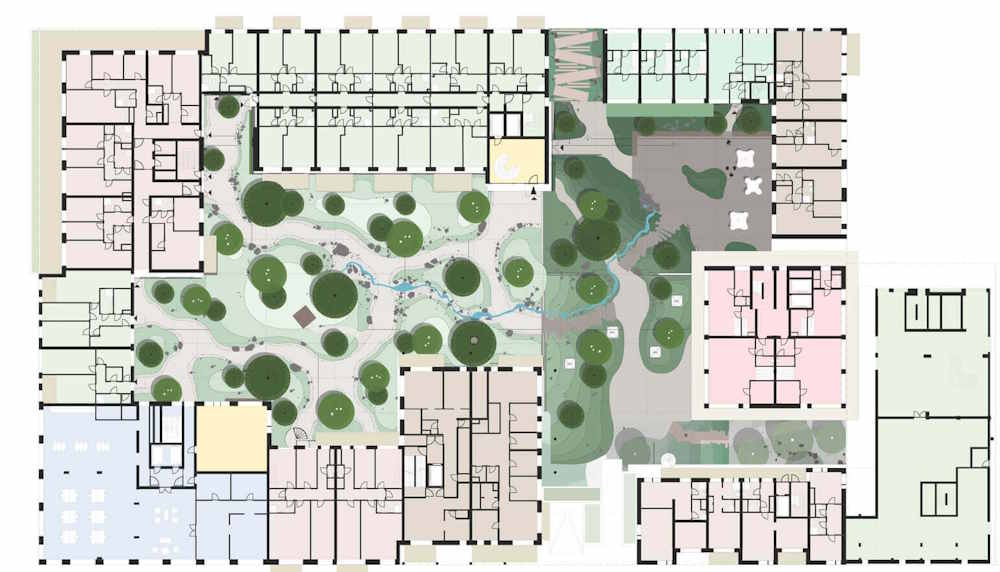
One of the most innovative aspects of the project is the principle of “Open Cities“, or open cities. The internal courtyards of the neighborhood will not be closed private spaces, but places accessible to the community, with the aim of creating an environment where people can meet spontaneously, where children, elderly people and residents can share common spaces and where urban life is not concentrated only inside homes.
@Marc Koehler Associates
@Marc Koehler Associates
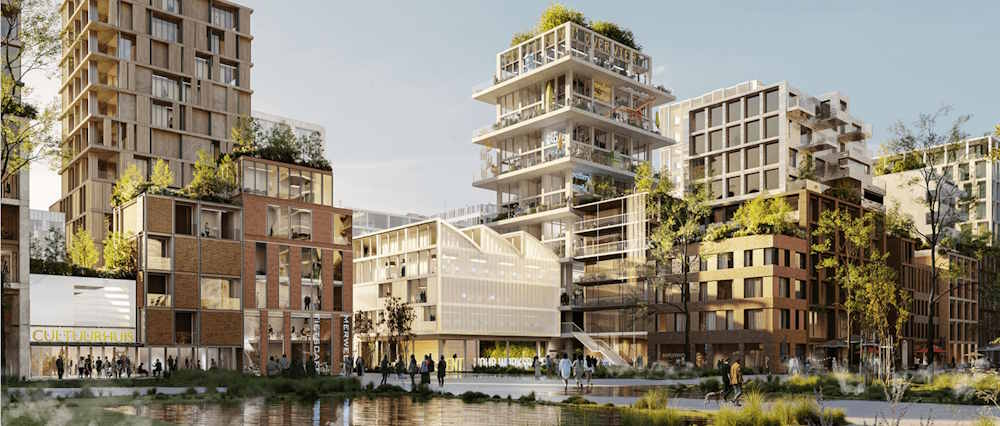
The lower part of the buildings will be animated by different activities and functions, making streets and squares more lively during the day.
One of the most important aspects of Merwede is therefore the choice to eliminate car traffic from the neighborhood. This allows us to recover public space: less parking and roadways, more green areas, pedestrian paths and meeting places. Mobility is rethought through intelligent logistics management and alternative solutions to the private car.
The first homes in Merwede are expected to be completed in 2027. The neighborhood represents one of many urban experiments created to respond to an increasingly urgent challenge: building denser cities without making them less livable.
The future of cities may not be made up of increasingly distant suburbs and ever busier streets, but of neighborhoods where living, working, moving and meeting take place in the same space. And in Utrecht, that future is starting to take shape.
