
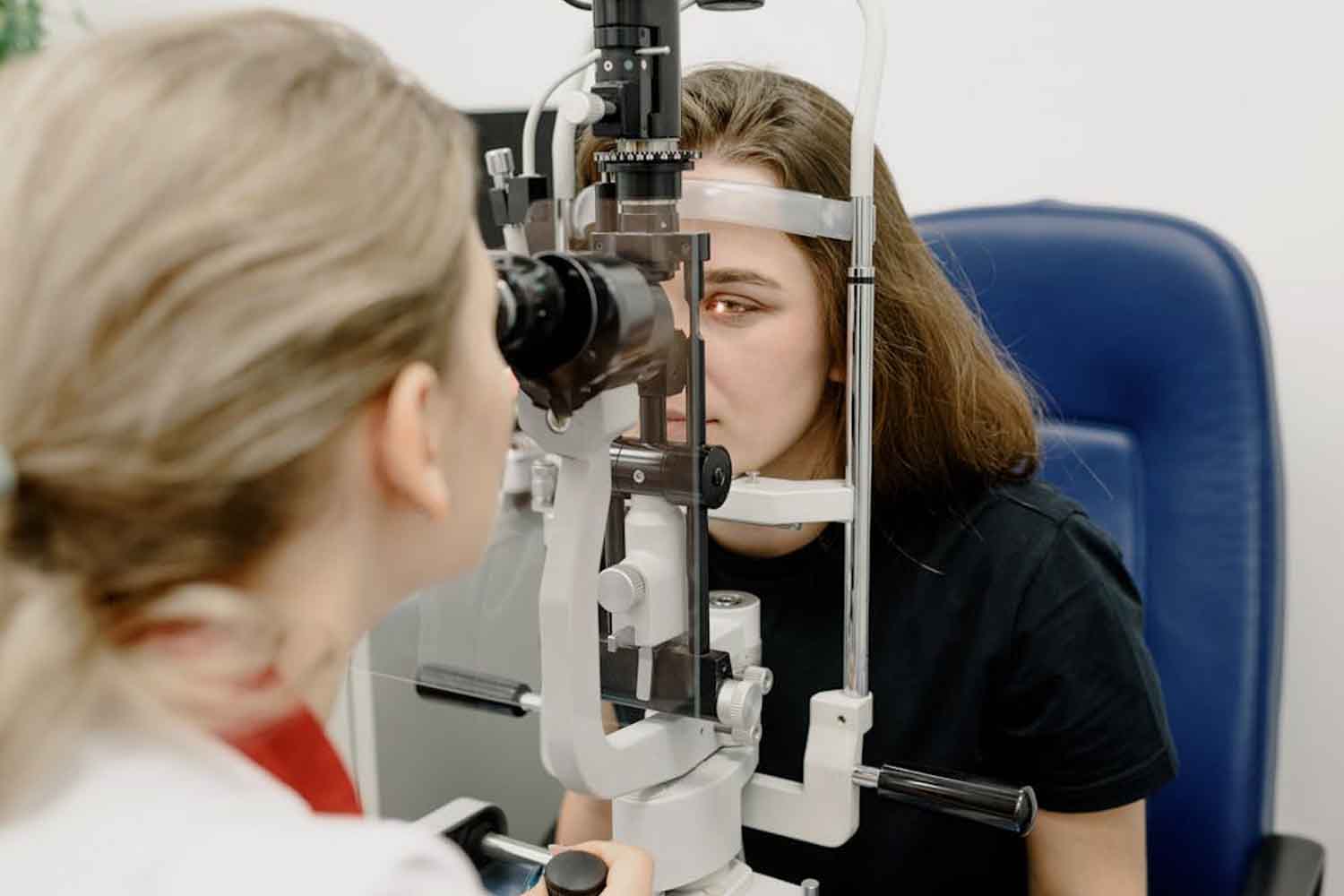
For years, when ocular hypotony caused an eye to slowly collapse, the margin for action remained narrow and often frustrating. Now a result comes from London that shifts the boundary: in a small clinical series published in British Journal of Ophthalmologya clear gel commonly used in eye surgery, improved vision, internal pressure and eye anatomy in 7 out of 8 eyes after twelve months of treatment. The material is called hydroxypropyl methylcellulose, or HPMC, and its value also lies in its simplicity: surgeons have been using it for decades.
The right image to understand this disease lies in the form. When the internal pressure drops too much and remains low for months, the eye loses support, becomes deformed, its internal planes go off axis and the vision becomes dirty, bends and recedes. Over time the damage can become permanent and accompany the patient to the point of blindness. It is a rare, but serious, condition that arises from other ocular pathologies, from inflammation, trauma or complications after an operation, that is, from anything that damages the system that produces the fluid responsible for normal intraocular pressure.
When internal pressure drops, the eye loses geometry
In the work of the clinicians at Moorfields Eye Hospital and UCL the logic was almost physical before being pharmacological: to restore volume to the eye, keep it open long enough, allow the retina, lens and ocular walls to regain a more stable geometry. The mechanism resembles that of a balloon patiently brought back to the right size. When the structure stops crumpling, even the sight can work better again.
Up to now the reference treatment was above all silicone oil, useful in some situations, but uncomfortable to keep inside the eye for a long time. Clinicians describe it as a support that can be toxic to the ocular structures over time and which also makes it more difficult to look through the eye itself during checks. HPMC, on the other hand, has a very concrete advantage: it remains transparent and lets light pass through much more naturally, therefore it helps both the patient and the doctor who must continue to see the retina well.
The pilot series involved eight patients with chronic structural hypotony for more than three months and an intraocular pressure less than 6.5 mmHg. The doctors chose eyes that still retained visual potential, with a transparent cornea and a free visual axis. HPMC injections were repeated every 2-4 weeks, with volumes ranging from 70 to 1400 microliters, until the eye regained its previous length, or reached a stable pressure of 10-15 mmHg for four weeks, or returned close to the size of the other eye. Then the observation began.
The numbers, even on a minuscule number of cases, are those that have attracted attention. Corrected visual acuity improved in 87.5% of eyes, i.e. in 7 out of 8, while the last one remained stable. The pressure also rose here in 87.5% of cases, going from an initial range of 1-5 mmHg to 3-23 mmHg at the final follow-up. In 6 out of 8 eyes, axial length also increased, with a median increase of 1 millimeter. In the first glance it seems like little. In a collapsed eye, that millimeter really counts.
The gel had already been in the operating room for years, only it was removed immediately
The strongest part of this story also lies in its concreteness. The tested material does not come from a new molecule that is years away from clinical practice. HPMC is already a gel familiar to eye surgeons, used to protect tissue and maintain space during surgeries. The difference here lies in the choice to leave it inside the eye and use it repeatedly as a therapeutic support. If larger studies confirm these signals, the road to wider use could be less slow than with therapies that start from scratch.
One of the patients who made the meaning of this turning point visible is Nicki Guy, 47 years old. Her problems began after the birth of her son with uveitis; then came cataracts, complications, steroids, silicone oil, new drops in blood pressure and progressive loss of sight. With the gel, the clinicians say, the pressure began to rise again and the vision gradually returned. In daily life this difference had a very simple impact to understand: Nicki said that she was able to go back to skiing with her son and take photographs again, with the concrete hope of even getting back into driving.
The side effects deserve space, because this is where the seriousness of the story lies. Two eyes had a flare of uveitis with loss of gel clarity, then managed with topical and intravitreal steroids. In two other cases there was a temporary loss of vision immediately after the injection, which was resolved with paracentesis, which is a small procedure to quickly release excess pressure. The events have resolved, but they remain a clear reminder: the technique requires close checks, experience and careful selection of patients.
Who is this therapy for?
The treatment works on the eyes which still retain a chance to see. This detail changes everything. When the optic nerve is already irreversibly compromised, recovering the shape of the eye is not enough in itself to bring back vision. For this reason, the protocol included only eyes with a clear cornea, an open visual axis and signs of function still present. Recruitment also weighs: in the United Kingdom there are estimated to be around 100 new cases per year, a rarity that makes large studies slower and every piece of data collected more precious.
The next step will be to understand how long the effect lasts, which gel works best, how many injections are really needed and in which patients the treatment can be suspended once good anatomical stability has been achieved. Moorfields is already talking about larger trials and a national reflection on more standardized treatment pathways. It’s the right way to face a result like this: with enthusiasm, yes, and with the brakes well mounted. The series remains small, preliminary, promising. Sometimes this is enough to change the climate of a disease.
For years, a clear sentence fell on these patients: the path ended there. Now, in place of that phrase, there is a transparent gel, a schedule of injections and an eye trying to regain its shape. The light, from somewhere, comes back like this.
You might also be interested in:
