
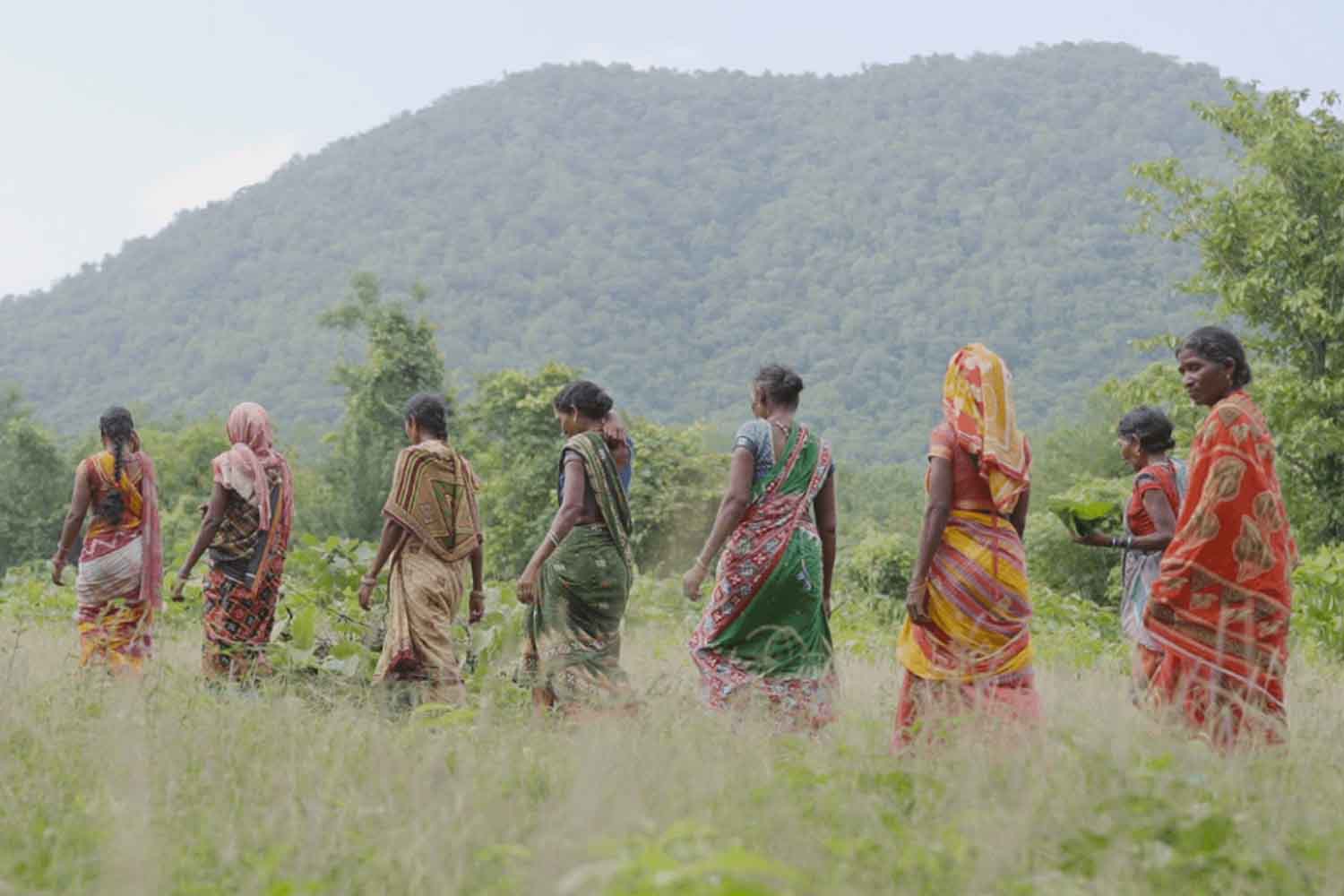
For six months of the year, the water around Laktiguda simply disappeared. The streams dried up, the wells could stop working during the summer and it was mostly women who were looking for what remained, forced to walk almost five kilometers every day to get drinking water. Then the 38 families of this small village in Odisha, eastern India, had the chance to do a seemingly simple thing: together take care of the forest on which they depended.
Within two or three years the trees thickened again, animals that had not been seen for a long time reappeared and the streams that previously remained dry for about half the year began to flow again even in the dry season. The transformation is described in a good practice note published by Agricultural Extension in South Asia on the work carried out in the village with PRADAN.
Laktiguda’s story works precisely because it is small. We are talking about 38 families, not a national plan worth billions of euros. People who live next to a forest, derive water, food, wood, fodder and income from it and who, when given the tools and space to manage it, began to protect it as something on which their very lives depended.
Families belong to Scheduled Tribesthe tribal communities recognized by Indian law, and the village is surrounded by approximately 567 acres of Community Forest Resource, just under 230 hectares. Fruits, medicinal plants, materials, water and products that can be sold have been coming from that forest for generations.
However, years of fires, shifting cultivation, excessive extraction of resources and the absence of community management had severely degraded the area. With the reduction of tree cover, watercourses dried up, biodiversity decreased, the soil lost fertility and crops worsened. Many families were now dependent on a single annual crop fed by rain and the seasonal harvest of forest products. The forest continued to be indispensable to the village, but it was able to offer less and less.
The turning point came when the forest also became a responsibility
Since 2021, PRADAN has been working in the Gram Panchayat of Bethiapada together with the Rayagada district administration for the implementation of the Forest Rights Act of 2006. The law recognizes Scheduled Tribes and other traditional forest inhabitants rights to lands and resources used for generations, also giving communities a role in their protection and management.
In Laktiguda they started with concrete things. The inhabitants have formed a Forest Rights Committeereconstructed together the traditional boundaries of the forest also with GIS tools and, in 2022, the Gram Sabha, the village assembly, created a committee to manage community forest resources. In short, before planting, they decided who should take care of the forest and how.
Then came the daily rules. Collective patrols against illegal cutting of trees and fires, more controlled harvesting of forest products, protection of degraded areas, reforestation, seed balls of native species dispersed on the ground and interventions to leave space for natural regeneration.
Laktiguda’s formal request for definitive recognition of Community Forest Resource Rights however, it is still pending. And here the little story of the village encounters a huge problem.
According to data from the Mo Jungle Jami program of the Government of Odisha, as of December 31, 2024, 15,179 applications for Community Forest Resource Rights had been submitted in the State. Those approved were 4,903, while over 11 thousand were still waiting. The Government itself recognizes that community rights over forests are progressing more slowly than expected. Meanwhile, Laktiguda’s request still waits. The forest, however, has already begun to change.
With the trees the water also returned
Within two or three years, according to the case study, the degraded areas began to regenerate. The native vegetation has become denser, trees of different ages have returned and residents say they have seen long-lost birds and monkeys again, including the Gharchatiaa bird traditionally linked to the village.
Under those canopies, however, something even more important was changing. Thicker plant cover slows rain runoff, helps water infiltrate the soil and can promote groundwater recharge. In Laktiguda, according to available documentation, the waterways that previously remained dry for about six months have become perennial. Soil humidity has increased and tube wells that might have stopped working during the summer now continue to supply water.
For women the change is measured above all in the time saved: no more five kilometers a day to look for water. And with soil that retains more moisture, it has become possible to cultivate for longer, combining mixed crops and agroforestry with that single annual harvest that previously depended almost entirely on rain.
Laktiguda’s work fits into a much broader program. In its annual report 2023-2024, PRADAN reported that it had accompanied 1,498 villages in submitting claims for Community Forest Resource Rights across Odisha, Jharkhand and Chhattisgarh. 824 had already obtained titles on over 516 thousand acres and conservation, restoration and management activities had been started on approximately 254 thousand acres.
The forest has also returned to providing income
Regeneration has also increased the availability of products other than timber: tamarind, mango, jamunflowers of mahua, hill broom and leaves of sialialso used to make dishes.
The families combined the harvest with processing and collective sales, with producer organizations in which women took on management roles. According to the case study, many families now earn around 100,000 Indian rupees a year from forest-related activities alone.
The transformation has already begun to move beyond the confines of Laktiguda. Three more villages from the same Gram Panchayat have completed the process of applying for forest rights and have started protecting their community forests. In the meantime, the village hosts visits from inhabitants of nearby towns, operators and public officials interested in seeing how the area is managed.
In Odisha the potential is huge. The State Government has over 32,500 villages potentially affected by the Forest Rights Act and created the program Mo Jungle Jami precisely to accelerate the recognition of forest rights and link it to income, food security and public programs.
However, Laktiguda’s results have an important limitation. There good practice notes it arises from the work of the organization involved in the project and does not present independent measurements of forest cover, stream flow or crop yield increases. The 567 acres also indicate the extent of the community forest resource around the village: the document describes the regeneration of degraded areas, without demonstrating that all of the nearly 230 hectares have been restored in the same way.
Previously, women walked almost five kilometers a day to find water. Some streams disappeared for half the year and wells could stop during the summer. Today, according to what is documented in the village, those streams flow all year round and the wells continue to function even in the driest months.
Laktiguda has just 38 families. They were given tools, rules and the chance to take care of the forest they depend on together. In a few years, trees, animals, water and part of the income returned. A very small community, when it can really take care of its territory, can do a lot.
