
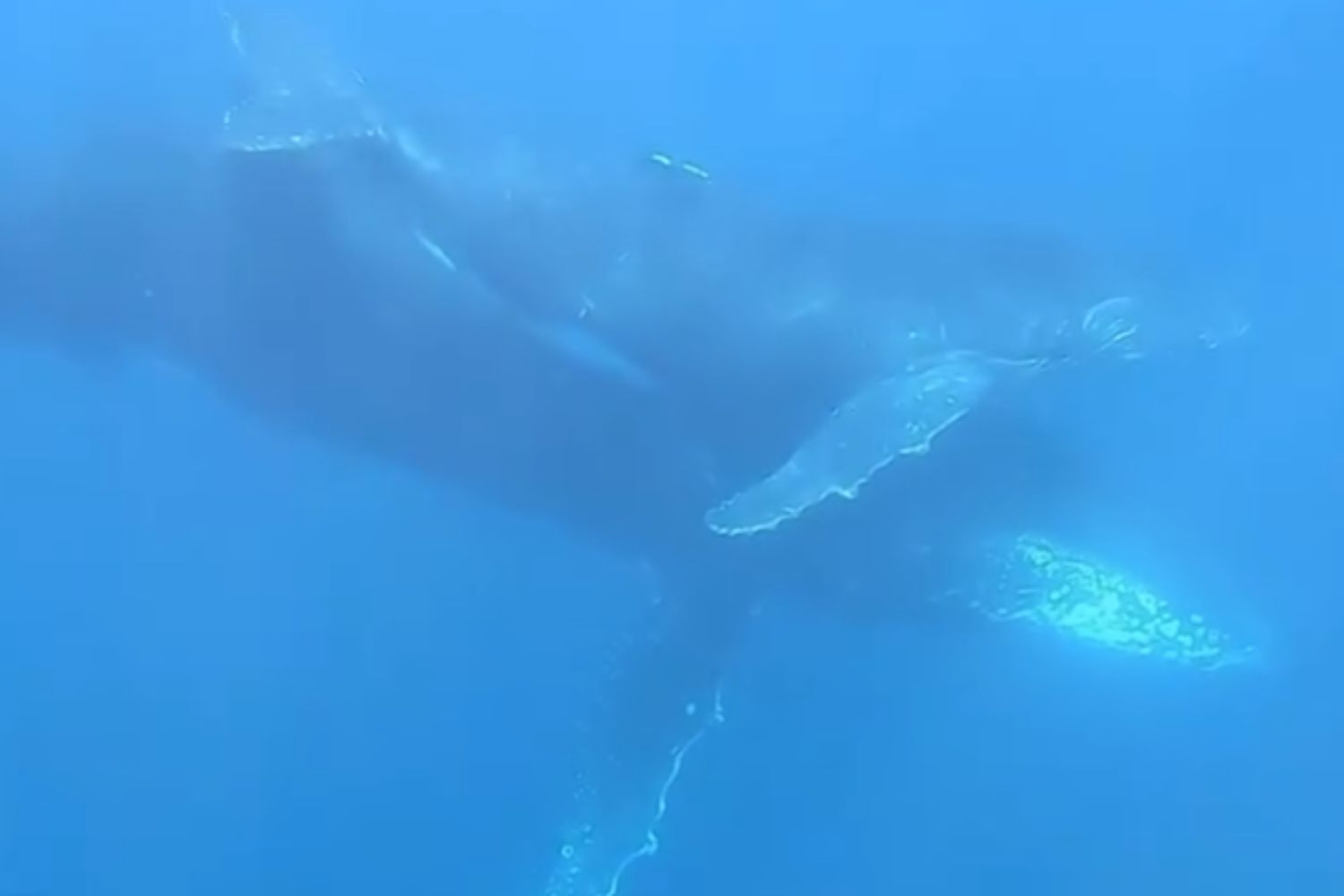
A touching behavior involving a female humpback whale has been documented off the southern coast of the Gold Coast in Australia. The episode, captured in a video by researchers from Griffith University and the Sea World Foundation and published in the magazine Discover Animalsshows an enormous whale intent on watching over its stillborn calf. Unlike what has been observed in the past, the mother did not limit herself to a brief interaction, but remained underwater next to the baby for hours and perhaps for days, maintaining constant eye contact and protecting the little body.
The scientific novelty with respect to toothed whales
This discovery fills a significant gap in the scientific literature on cetaceans. As Olaf Meynecke, head of the whale and climate research program at Griffith University, points out, post-mortem attention behaviors had been widely documented, especially among odontocetes, or cetaceans with teeth such as killer whales and dolphins. The latter generally tend to push the deceased young towards the surface of the water. In the case of mysticetes, whales with baleen like humpback whales, such a prolonged and intimate attitude under the surface of the water had never before been recorded with such scientific evidence.
The emotional bond and the presence of another whale
During the observation, which lasted over 3 hours according to some findings and continued over time, the experts noticed the constant presence of a second adult specimen who remained close to the grieving mother. For scientists, such marked care and nurturing actions confirm an innate maternal attachment and a social and cognitive complexity comparable to that of other evolved mammals, such as elephants and primates. The research highlights how even sea giants share profound emotional responses to loss, opening new perspectives on understanding their sensitivity.
The implications for the conservation of the species
Documenting these rare neonatal mortality events is of fundamental importance for marine conservation. The research coordinated by Olaf Meynecke and the Australian team highlights the need to implement systematic monitoring systems along ocean routes. Understanding the depth of the emotional dynamics and family bonds of great whales not only enriches marine biology, but reinforces the urgency of protecting these magnificent mammals from the growing dangers related to anthropogenic activities and climate change.
View this post on Instagram
