
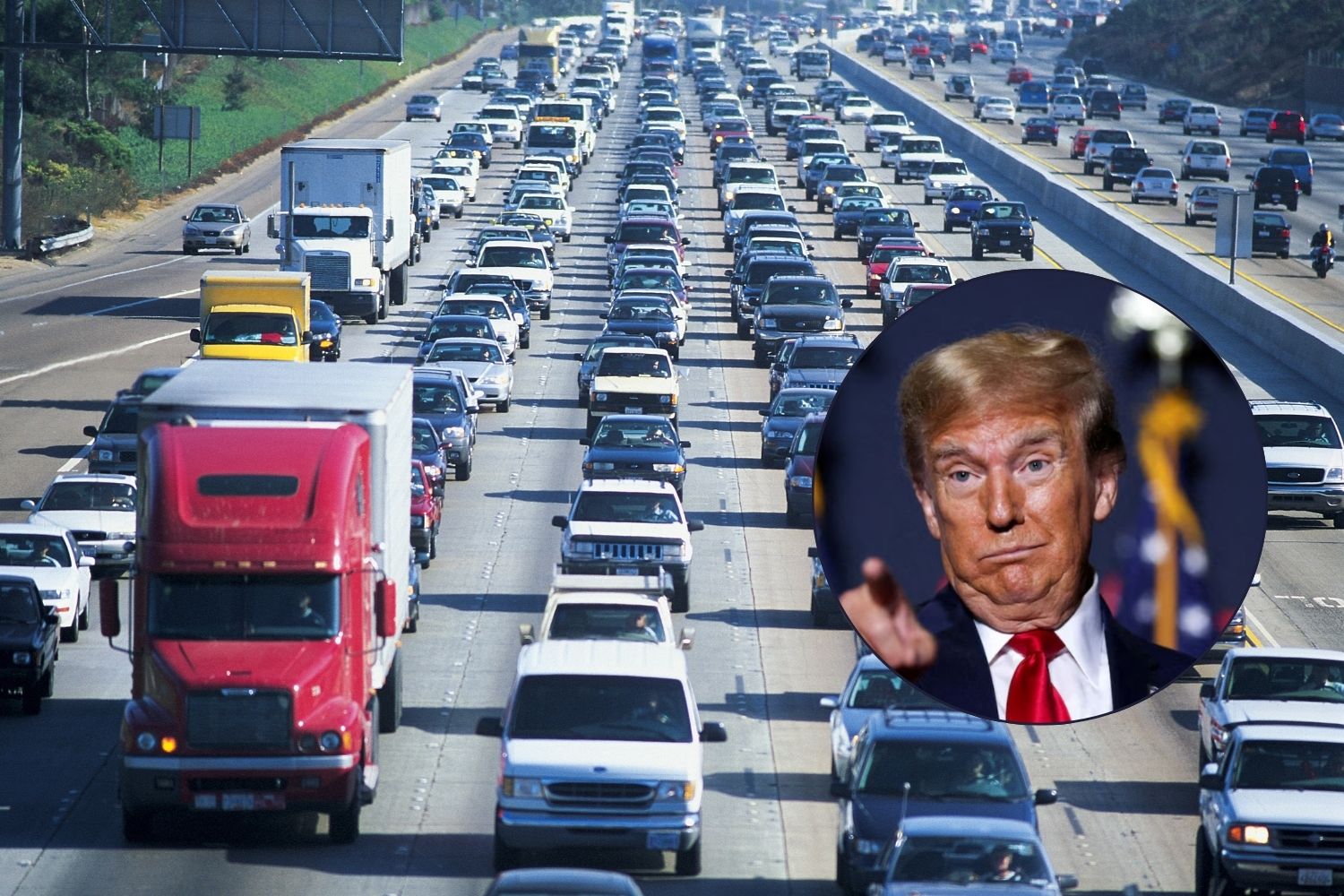
The Trump administration will take yet another step backwards on US climate policies, winking at car manufacturers. The Department of Transportation has in fact approved a new rule that aims to weaken the standards on the fuel efficiency of cars and light commercial vehicles, canceling a significant part of the measures introduced during the Biden presidency to reduce emissions and accompany the transition towards more efficient and electric vehicles.
This is the new initiative with the high-sounding (and propagandistic) name “Freedom Means Affordable Cars” and concerns the CAFE standards, i.e. that package of federal regulations that establish how far, on average, new vehicles must be able to travel with a certain amount of fuel.
According to the White House and the Department of Transportation, the revision will help make cars less expensive and give manufacturers more freedom. A move which, according to environmentalists and health associations, will have the exact opposite result in the long term: more petrol consumed, more expenses for motorists and more climate-changing emissions. And this is not a marginal sector: in the USA, transport is responsible for approximately 28% of direct greenhouse gas emissions, making it the leading national source of emissions according to the EPA.
What changes with Trump’s new rules
Fuel efficiency standards dictate how efficient new cars sold in the United States must become over time. As the Guardian explains, the Biden administration had foreseen rather substantial increases: around 8% per year for cars in model year 2024 and 2025, 10% in 2026 and then 2% annually from 2027 to 2031.
The Trump administration has instead decided to review the entire path downwards, including some standards referring to previous years, and to foresee much smaller increases in efficiency until 2031.
The Department of Transportation says this will allow manufacturers to build vehicles that consumers “they want to buy“without being forced to invest so quickly in fleet electrification. According to official estimates, the new rule should reduce the average price of a new vehicle by about $1,300 and generate overall savings of $138 billion over the next five years.
Thanks to President Trump’s leadership, we have finally ended the illegal mandate that forced automakers to produce more expensive electric vehicles that American families didn’t want. While Joe Biden and Pete Buttigieg have pushed a green agenda that has made our roads less safe and increased costs for hard-working Americans, this administration is bringing relief to families and reviving the beating heart of American manufacturing, U.S. Transportation Secretary Sean P. Duffy said. With our common-sense standards in place, we are making the American dream accessible again, putting safer cars on the road and investing in the American auto worker.
But, of course, there is another side to the coin.
More fuel and more CO2
The same government estimates cited in the proposal indicate that easing standards could increase fuel consumption by about 100 billion gallons (about 380 million cubic meters) by 2050. The estimated consequence would be additional gasoline spending on the order of $185 billion and an increase in carbon dioxide emissions of about 5%.
In other words, cars may cost less when purchased, but use more fuel over their useful life. Therefore, it goes without saying that what would be the immediate benefit on the purchase price would risk being offset by higher costs at the pump.
Dan Becker, head of the Center for Biological Diversity’s Safe Climate Transport campaign, accused the administration of ignoring both the availability of more efficient technologies and the millions of fuel-efficient vehicles already on US roads.
The Sierra Club also announced plans to fight the new rule, arguing that less stringent standards could end up making it more expensive to drive because vehicles would consume more fuel. The Guardian
No, in the United States there was no “obligation” to buy electric cars
Trump continues to present these decisions as the end of what he calls an “electric car mandate.” But the definition is misleading. The Biden administration had set a goal of reaching 50% of sales of new electric vehicles by 2030 and had introduced stricter emissions and efficiency standards, which effectively incentivized manufacturers to put more electric and fuel-efficient vehicles on the market.
However, there was no federal rule requiring automakers to sell exclusively electric cars or consumers to buy them. Yet, as we have seen, Transportation Secretary Sean Duffy did not help but present the new initiative as the end of what he called an “illegal mandate”, arguing that the previous rules would have forced automakers to produce more expensive electric vehicles not requested by American families.
It is a narrative that has long accompanied the Trump administration’s automotive policy and which is part of the now well-known and broader rollback of federal regulations on climate and pollution.
In recent months, the Trump administration has already weakened other federal tools used to monitor, regulate and reduce vehicle emissions. The new revision of the CAFE standards is therefore part of a precise political line: slowing down the transition towards more efficient and electric vehicles and reducing the environmental obligations imposed on manufacturers. In all of this, the underlying fact remains difficult to ignore: in the United States, road transport represents the main part of emissions from the transport sector, which alone accounts for approximately 28% of the country’s direct greenhouse gas emissions.
Reducing the efficiency required of new cars therefore means intervening precisely in one of the sectors that contributes most to the American climate crisis.
