
In Brittany, around fifty farmers are cultivating around 500 hectares of wheat without using synthetic insecticides or fungicides. One of the ingredients of this small agricultural revolution comes practically from behind the house: seaweed, transformed into biostimulants and used to help plants grow and cope better with stress.
The project is carried out by Merci les Algues, an association founded in Brittany to build agricultural and food supply chains that make greater use of solutions derived from algae. Wheat has become one of the most advanced cases: from the fields it passes to the mills and then ends up in flours, biscuits and crêpes produced by local companies. Other than seaweed relegated to salad or abandoned on the shoreline. Here they entered directly into the bread production cycle.
How algae help grain
The products used in the fields are also developed by Olmix Group, a company based in Bréhan, Morbihan, specialized in marine biotechnology. Algal extracts are used as biostimulants: they serve to support plant growth, photosynthesis and the ability to react to difficult conditions such as heat and water scarcity.
Olmix itself presents these solutions as tools included in programs to reduce the use of plant protection products. In the Merci les Algues grain supply chain, the work is naturally not limited to a splash of marine extract. The farmers follow a dedicated cultivation path and are accompanied by technicians during the plant cycle. The declared objective is to get from sowing to harvesting without synthetic insecticides or fungicides.
Annual production is between 2,500 and 3,000 tons of wheat. Some producers have also chosen to join the supply chain for several years, transforming what began as an experiment into a now quite structured agricultural practice.
From the field to the flour
Wheat doesn’t sit still in silos waiting for someone to decide what to do with it. A real local supply chain has been built around the project. Among the members is Paulic Meunerie, a Breton milling group that has participated in the project since 2018 and transforms the cereal into flour. The same flour is then used by companies such as Bernard Jarnoux Crêpier and Biscuiterie de Kerlann. The latter, according to Merci les Algues, has been using flours obtained from wheat grown without synthetic insecticides or fungicides in its range since 2020.
There is also a much less romantic aspect of algae, but definitely important for those who work in the fields: the economic valorisation of the harvest. The supply chain involves agreements on grain volumes and prices, with the aim of giving farmers greater security as they change their way of producing. Because convincing a field to change habits is complicated. Convincing those who need to earn a salary from that field requires some more guarantees.
Now it’s the turn of the potatoes
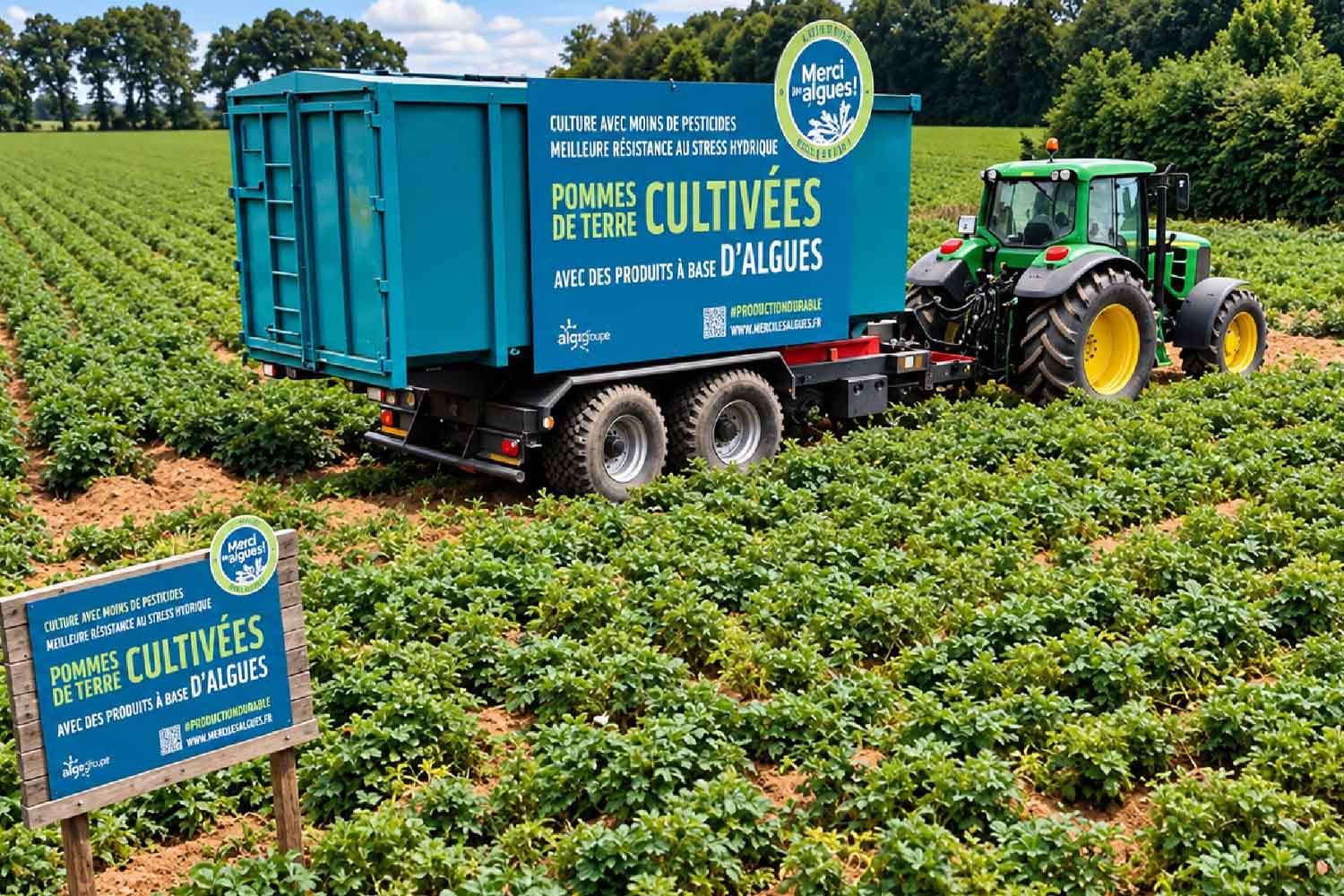
Algae are also entering another crop widely present in Brittany: potatoes. In Guilliers, Morbihan, Fabrice Sablé has been using products derived from algae for years. He is a farmer and co-president of Merci les Algues and on his farm he also grows potatoes included in the project. For this supply chain the association talks about crops without insecticides and with a 60% reduction in fungicide treatments.
During periods of heat, biostimulants are also used to help plants better withstand water stress. A front destined to become increasingly important in agriculture, especially in summers marked by high temperatures and irregular rainfall. Merci les Algues is already expanding the model to other productions. Among these also appears barley, grown with solutions derived from algae and then used to produce beer.
Six years ago the idea was to connect the Breton sea and the fields. Now there are hundreds of hectares of crops, mills, biscuits, crêpes and even potatoes involved in the project. The algae, it seems, have found another place to work. Even when the sea is several kilometers away.
