
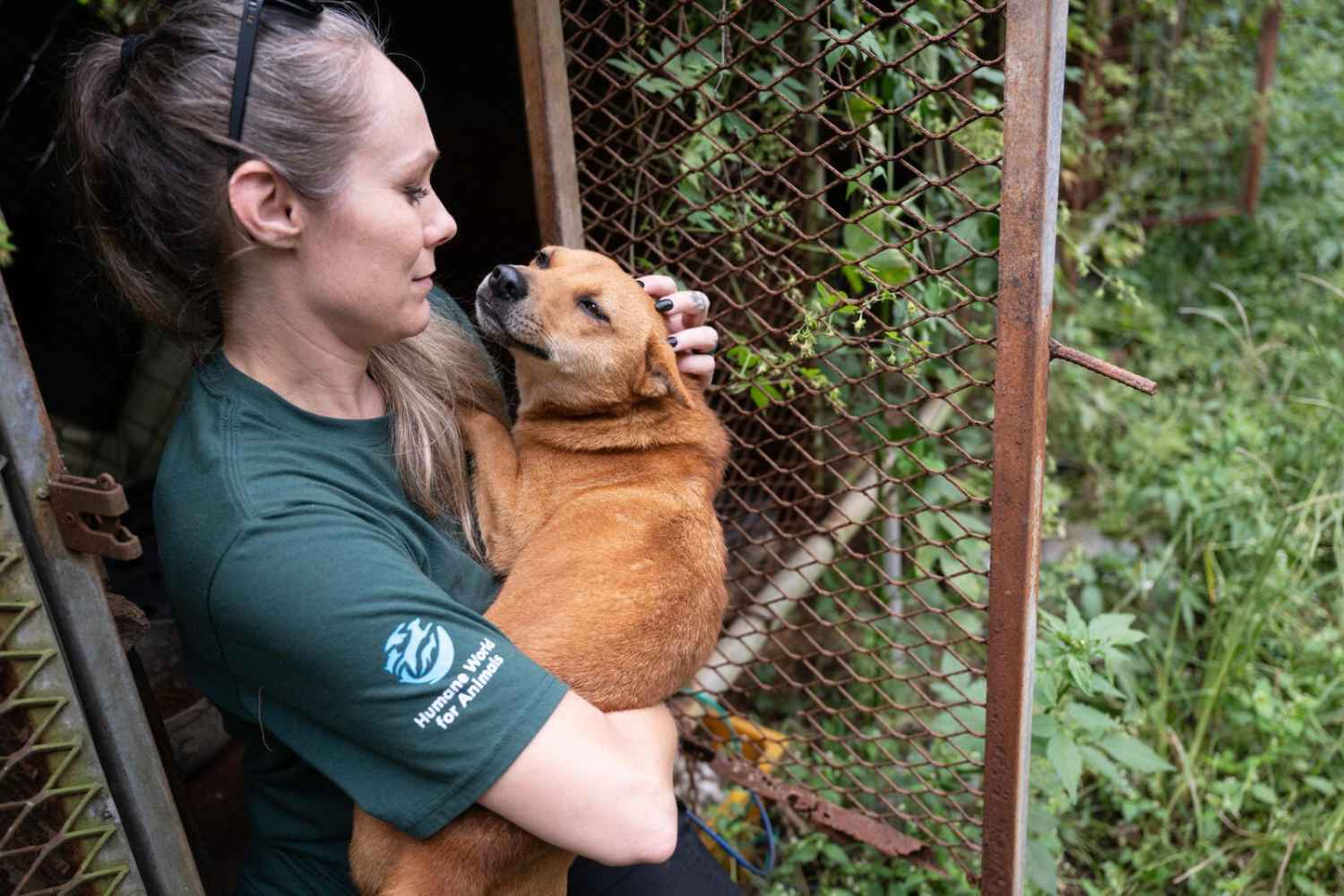
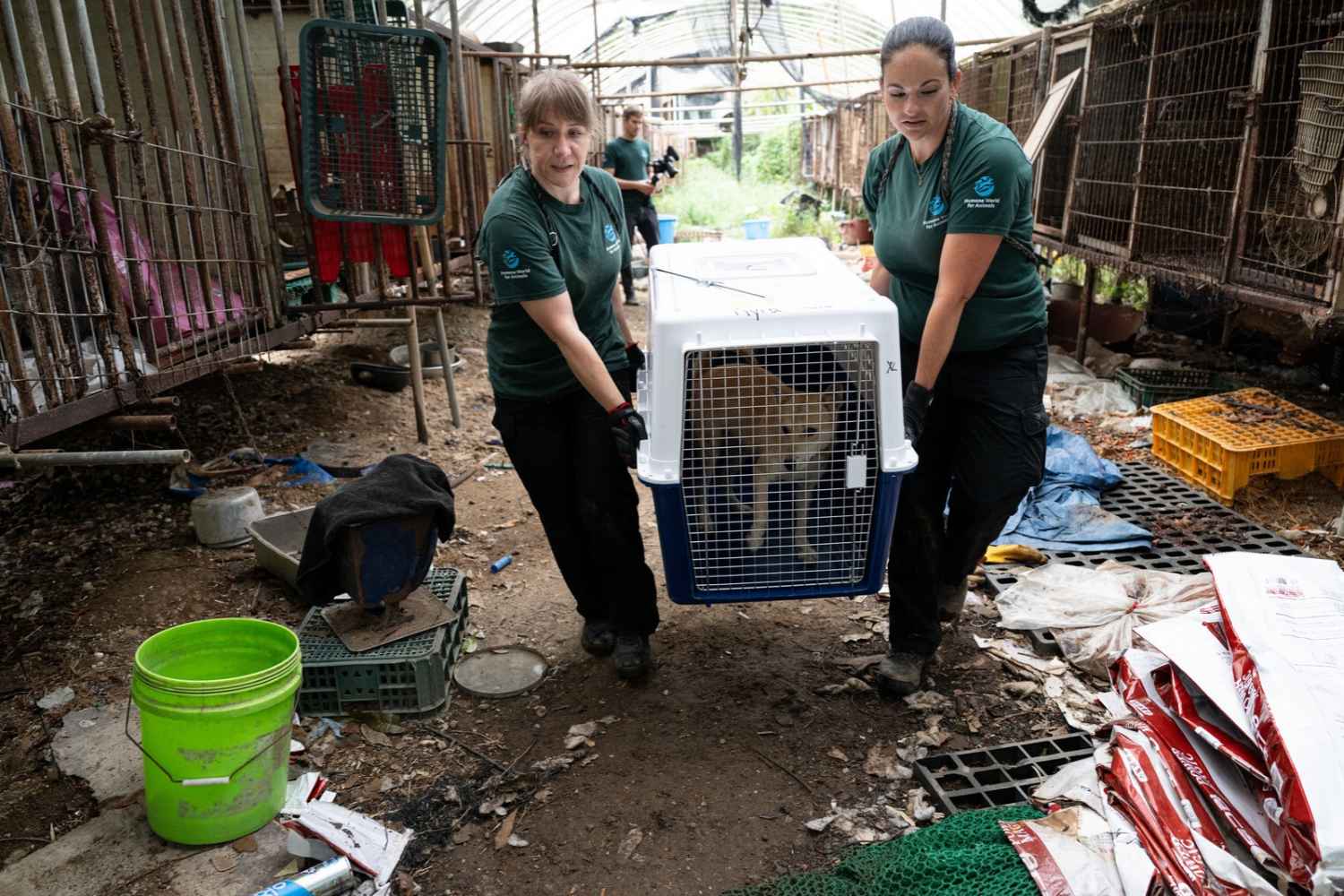
SEOUL, South Korea — At a pivotal moment for global animal welfare, Humane World for Animals (HWA), formerly known as Humane Society International, recently completed its latest large-scale rescue operation in South Korea. Over 70 dogs, intended for human consumption, were rescued from a farm in Gangjin, just months before the historic ban on the dog meat industry takes full effect in February 2027.
This rescue concludes a massive decade-long mission by HWA, which has saved nearly 3,000 dogs raised for human consumption in South Korea from slaughter since 2015.
Meredith Lee / Humane World for Animals
A historic milestone for animal welfare
The Gangjin kennel, once home to a thousand dogs a year, was in bleak conditions, with rusting cages and traces of past canine lives. The rescued dogs include Jindo, a German shepherd, and various crossbreeds, including Corgi, Husky and Spitz. Their release is not only an act of compassion, but a powerful symbol of the inexorable decline of South Korea’s dog meat industry.
Sangkyung Lee, head of campaigns for Humane World for Animals in South Korea, expressed the deep emotion linked to this latest rescue:
For more than a decade, our rescue teams have exposed what happens inside these farms, facing the pain of witnessing the suffering caused by this trade while saving the lives of thousands of dogs. These 70 dogs are among the very last to suffer in a dying industry, and being able to move them to the United States and Canada, where they can start a new life with loving families, seems like the perfect way to end our decade-long mission, just as South Korea begins a new chapter in its relationship with dogs, finally starting to think of them as friends, not food.
The decline of a cruel industry
Meredith Lee / Humane World for Animals
The legislative breakthrough came in January 2024, when the South Korean National Assembly unanimously passed the Special Law on the Dog Meat Industry. This legislation will make the breeding, killing, slaughter and sale of dogs or dog meat intended for human consumption illegal, starting from 7 February 2027, providing for penalties of up to two years in prison and heavy fines.
As early as May 2026, the Ministry of Agriculture, Food and Rural Affairs confirmed that 82% of registered meat dog farms (1,265 out of an initial 1,537) have already closed their doors. However, government data reveal a worrying picture: of the almost 394,000 dogs registered in closed farms, it is estimated that as many as 97% were destined for slaughter or transferred to other farms. Only 0.3%, or 1,121 dogs, were able to survive through adoption or shelter.
This statistic underlines the urgency of the intervention of organizations such as Humane World for Animals, which with its rigorous health and safety protocols ensures rescued dogs have veterinary checks, vaccinations and the necessary preparation for a safe future away from cruelty.
With the conclusion of large-scale rescue operations in South Korea, Humane World for Animals’ focus now shifts to monitoring compliance and enforcement of the ban. The organization will continue its work in other regions of Asia, such as Vietnam, Indonesia, India and China, to end the dog and cat meat trade through sustainable, locally developed solutions.
This success in South Korea is a model of how ongoing commitment and collaboration can lead to profound legislative and cultural changes in favor of animal welfare.
