
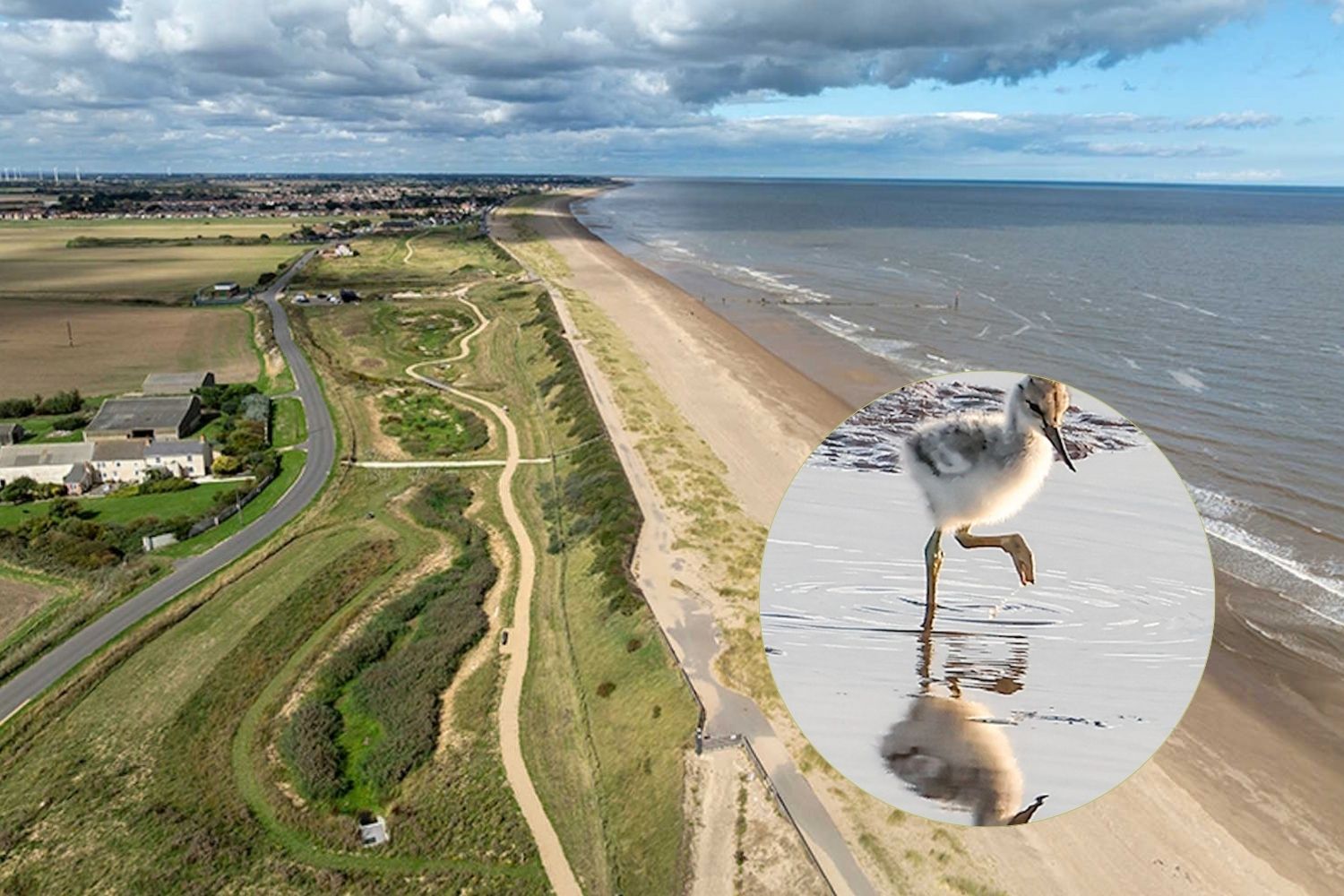
Where once there were perfectly shaved fairways, bunkers and greens (those who love golf know what they are), today there are wetlands, reed beds, meadows full of flowers and coastal shrubs. We are on the beautiful coast of Lincolnshire, England, and here a former golf course has been transformed into a new 30-hectare nature reserve, the size of about 42 football pitches.
Is called Sandilands Nature Reserve and was officially inaugurated in recent days after six years of planning, consultations and renaturalization work. A project, promoted by the National Trust, which aims to finally restore space to biodiversity along one of the most important migratory corridors in Europe.
To shape the new landscape, almost 52 thousand cubic meters of earth were moved, an amount that the National Trust compares to the volume of 21 Olympic swimming pools. The objective was to recreate a pattern of different environments: open water, wetlands, meadows, reed beds and coastal vegetation. A fundamental variety for providing feeding, resting and breeding areas for birds, insects, amphibians and other animals.
Added to this are over 35 thousand native shrubs planted on the site, including sea buckthorn, broom, goat willow and blackthorn. “Green hay” from a nearby Lincolnshire Wildlife Trust reserve was also used to rebuild the species-rich meadows, with seeds from plants such as wild carrot, yarrow, rattlesnake and red clover.
View this post on Instagram
A strategic area along the migratory bird route
Sandilands is located within the Lincolnshire Coastal Country Park and is part of the important East Coast Flyway, one of Europe’s main migratory routes. Every year, thousands of birds travel along the east coast of the UK between the Arctic and northern European breeding areas and wintering areas further south.
The new habitat mosaic will favor species such as lapwings, snipes, terns and gulls and offer a valuable stopover for migrants such as black-tailed godwits, spotted redshanks and spoonbills. Furthermore, according to National Trust data, some species have already started to use the site: in 2026 avocets and oystercatchers nested successfully, while little plover chicks were observed for the second year.
Furthermore, the new reserve is not isolated, but becomes part of the larger Lincolnshire Coastal Country Park, a system of approximately 3,500 hectares which includes beaches, dunes, wet pastures, salt marshes, coastal lagoons and reed beds.
Sandilands therefore adds a new piece to a network of habitats already managed by various conservation bodies, including Natural England, Lincolnshire Wildlife Trust and the RSPB. Together, these areas form a series of “stepping stone“ecological” along the coast: places where animals can stop, feed and reproduce while moving. The location is all the more important in a context in which the loss and fragmentation of habitats, together with the climate crisis, are making it increasingly difficult for many species to complete their migratory cycles.
For the next ten years the stated goal is to let the habitats continue to mature, monitoring the fauna and adapting the management of the site. The National Trust points out that drought and record temperatures have already complicated some phases of the project and that work has been suspended several times to avoid disturbing the nesting and migration periods of birds.
Yes, because restoring an ecosystem does not simply mean planting trees or digging a pond, but it means giving back space to natural processes and then having the patience to wait. Where until a few years ago the landscape was designed primarily for rolling a golf ball, today a spatula can stop after thousands of kilometers of travel. Isn’t it magnificent?
