
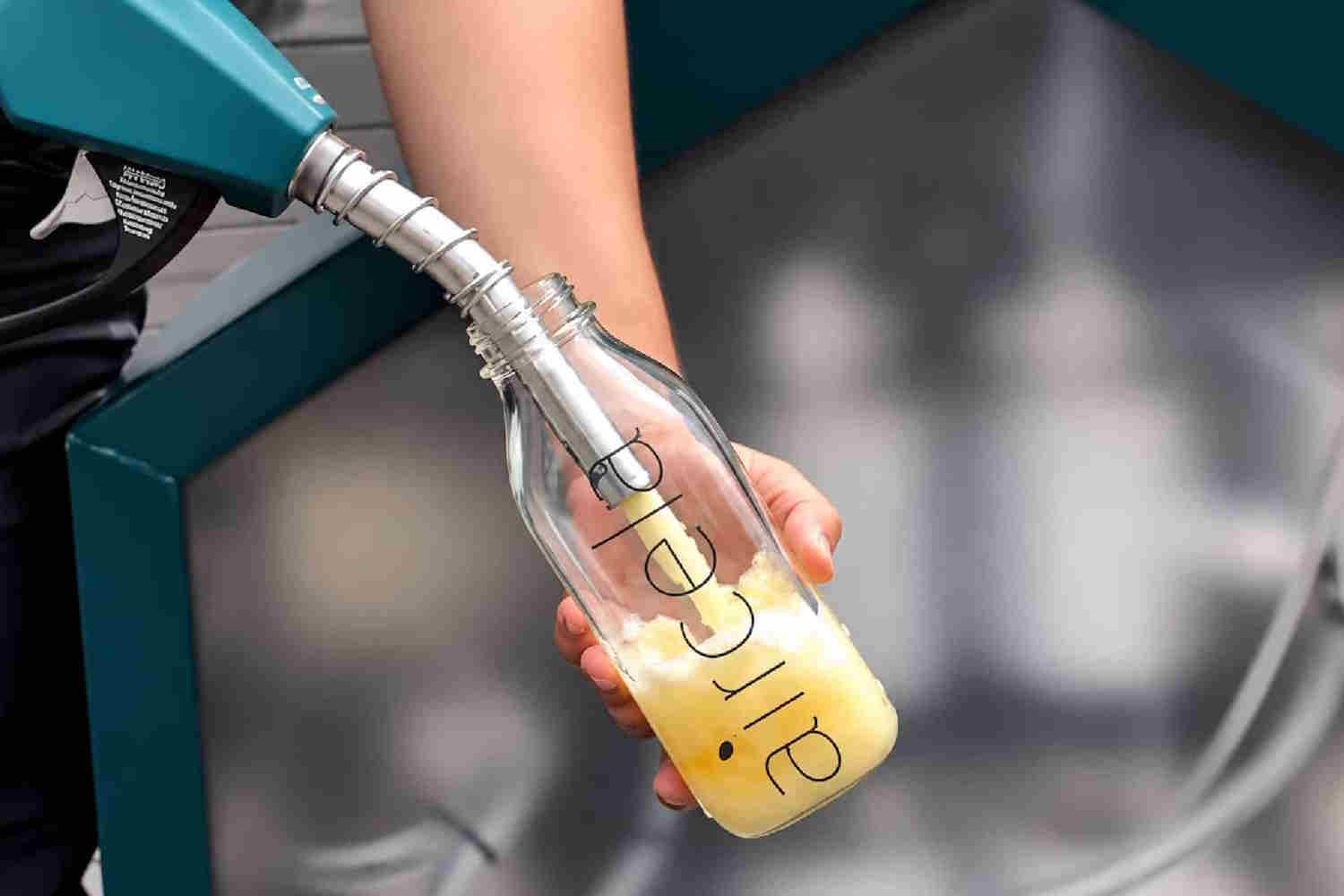
Real petrol comes out of the filler, except that there was no oil well before. The machine developed by the American Aircela takes CO₂ directly from the air, extracts hydrogen from water and turns it into fuel usable in normal petrol engines. A single unit is designed to produce about one US gallon per day, just under 3.8 litres.
The technology is already out of renderings: Aircela showed the machine in operation in New York in May 2025 and is now working with selected partners to test it in real-world conditions. The stated goal is to begin limited commercial availability in select US markets from late 2026.
How to make petrol starting from air
The first step is the direct capture of atmospheric carbon dioxidethe so-called Direct Air Capture. The machine passes air through an aqueous solution containing potassium hydroxide, which binds CO₂.
At the same time, water comes into play. Through electrolysis, powered by renewable electricity, it is separated to obtain the hydrogen necessary for the next phase. CO₂ and hydrogen are then combined to produce methanol, which is transformed into petrol through a catalytic process already known as methanol-to-gasoline.
The result, according to company data, is a gasoline without fossil carbon, ethanol, sulfur and heavy metals. The latest tests indicate an octane rating of 90 AKI, equivalent to over 95 RON on the scale used in Europe. And above all, there is no need to invent a special car. Aircela declares that the fuel can be used directly in existing combustion engines, pure or mixed with normal petrol, and distributed with a common dispenser.
One machine can capture around 10kg of CO₂ per day
By running it continuously, Aircela estimates that each unit can capture and convert approximately 10 kilograms of CO₂ per dayproducing approximately 3.8 liters of fuel in the same period.
It’s still a small scale if we think about the consumption of a car, but the company’s idea starts from modularity. The machines can work individually, for local production, or be installed in groups of tens, hundreds or potentially thousands of units. A kind of distributed fuel production, without a large central refinery and without having to transport oil from one part of the world to another.
And this is probably one of the most interesting aspects of the project. Aircela imagines applications even in remote locations or where bringing fuel through traditional infrastructure is complicated: air, water and a source of electricity are needed.
Yes, it requires a lot of electricity
The machine, of course, does not create energy out of nothing. Aircela estimates that, once an overall efficiency of over 50% is achieved, it takes approximately 75 kWh of electricity. It is therefore fundamental where that energy comes from. The system is designed to be powered by renewable sources; if it is connected directly to the electricity grid, its climate footprint depends on the mix used at that moment.
It is also one of the reasons why the e-fuel they are studied above all where continuing to have a liquid fuel can be particularly useful. The International Energy Agency indicates synthetic fuels among the options that can contribute to decarbonisation, especially in the sectors most difficult to directly electrify, such as aviation and navigation.
However, Aircela’s machine adds a particular element to this scenario: it brings the entire process into a compact and modular system, with the ambition of producing the fuel close to the place where it will be used.
CO₂ is taken from the air before returning to the air
©Aircela
When this petrol is burned, CO₂ comes out of the exhaust pipe again. The difference compared to conventional petrol lies in the origin of the carbon. In fossil fuel, carbon that has remained outside the atmospheric cycle for millions of years is extracted from the subsoil. Here it is used instead CO₂ already present in the atmospherecaptured by the machine and subsequently returned during combustion.
This is why Aircela talks about fuel carbon neutralprovided that the energy used to produce it is renewable. The International Energy Agency itself, in its report on Direct Air Capture, considers CO₂ captured directly from the air as a possible raw material for producing synthetic fuels, distinguishing this use from the permanent removal of carbon.
From working machine to commercial production
For now, Aircela is still working on the step that separates a working machine from a large-scale manufactured product. The company has not yet communicated a definitive commercial price and indicates among the decisive items the cost of renewable electricity and that of the industrial production of the units. He plans to reduce them by increasing volumes and underlines that the system was designed using common materials, without resorting to precious metals.
Commercialization is expected to begin in limited form in some US markets from the end of 2026, while tests are already underway with selected partners. A waiting list is also open on the company website to receive information on the arrival of the first machines.
It remains a very curious object: it takes air and water from one side and, with the help of electricity, lets out petrol that can end up directly in the tank of an existing car. Four liters a day will not replace a refinery tomorrow morning. For a machine that starts from air, however, that’s already four liters which until a few years ago we would probably have only looked for in a laboratory.
View this post on Instagram
