
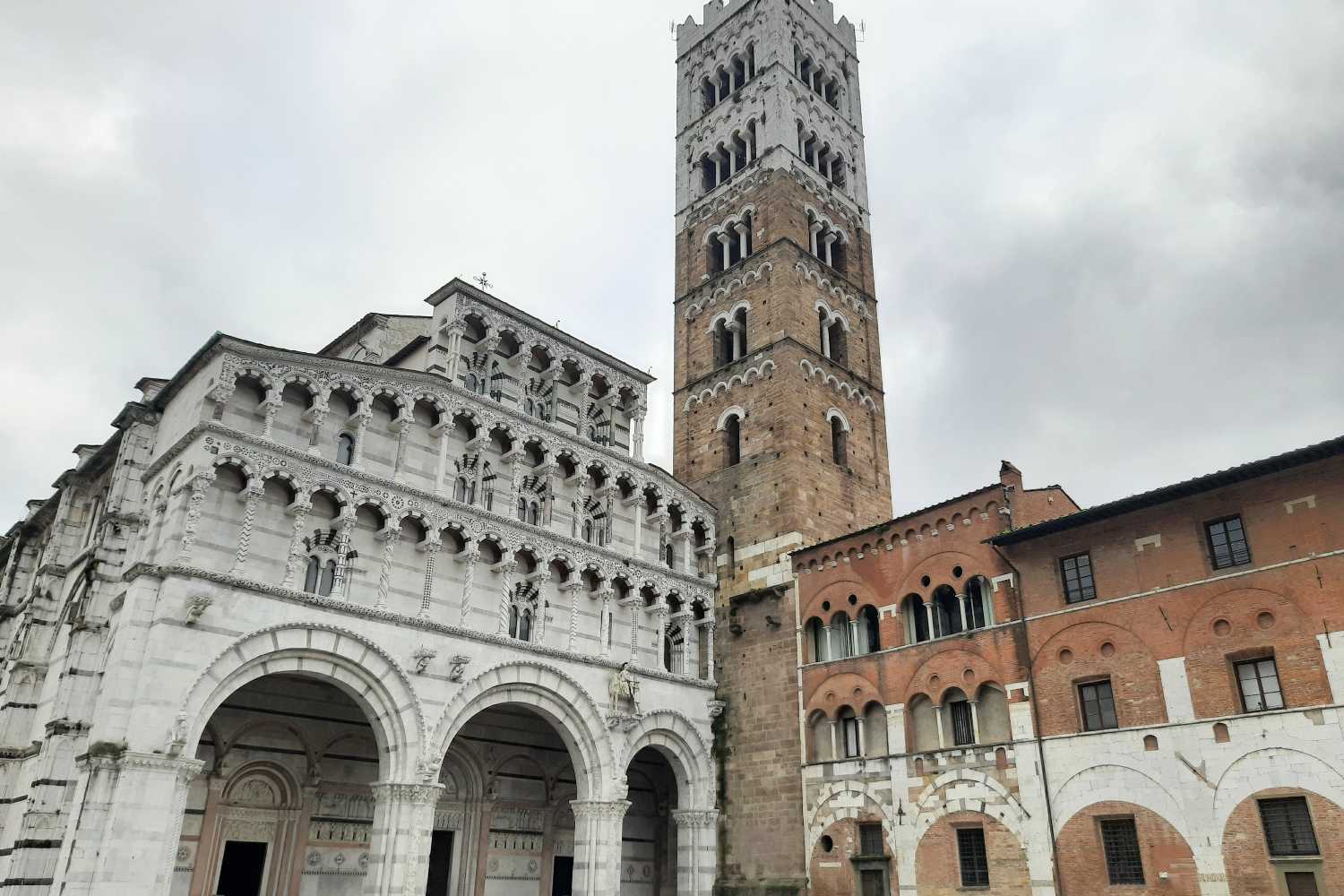
When we crossed one of Lucca’s monumental gates, we immediately understood that this corner of Tuscany needs no high-sounding introduction. Its beauty is not shouted out, but stratified over centuries of independence and urban planning care. We experienced the city at a slow pace, discovering a microcosm where the legacy of the Roman Empire blends with Renaissance geometries and the great operatic tradition. A trip to enjoy away from the crowds and overtourism to discover the authentic charm of Garfagnana.
The monumental breath of the sixteenth-century walls
Our itinerary could only start from the top. The walls of Lucca, over four kilometers long and thirty meters wide, are not a simple monument but the true green lung of the city. Designed in part by Alessandro Farnese and built between 1504 and 1645, these fortifications have never had to repel a military siege. In 1812, however, the regent Maria Luisa of Bourbon used them as a saving barrier to protect the historic center from the devastating flood of the Serchio river. Today, walking or cycling under the centuries-old plane trees of the ramparts allows you to dominate the clay roofs and private gardens with your gaze, immediately understanding the orthogonal plan of the city.
@RebeccaManzi/GreenMe
The suspended holm oaks of the Guinigi Tower and the time of the Torre delle Ore
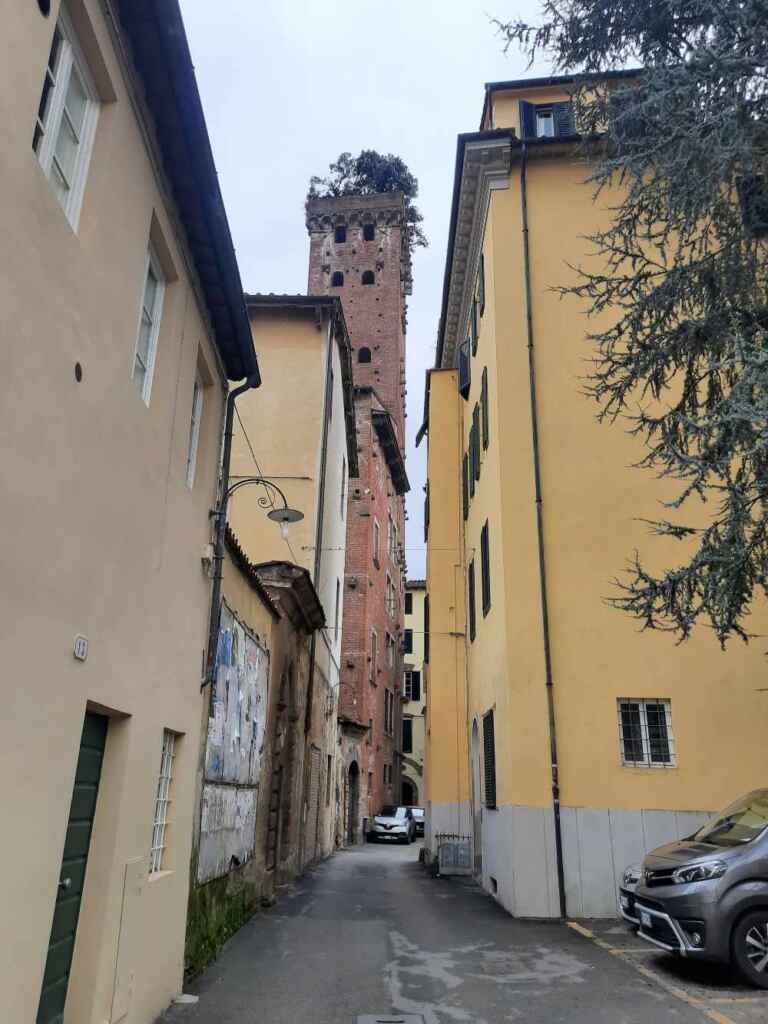
Walking towards the centre, the urban profile is dominated by the only two surviving towers of the 250 that stood out in the Middle Ages. The first is the famous Guinigi Tower, 45 meters high. We climbed its 230 steps to reach the incredible hanging garden at the top, where centuries-old holm oak trees sink their roots into earthen boxes suspended in the air. Not far away, the Torre delle Ore imposes a different challenge: 207 wooden steps lead to the clockmaker’s mechanism from 1754, still wound manually, which marks the time of the people of Lucca with exposed gears. The view from up here allows you to perfectly decipher the Roman decumani which today correspond to the lively Via Fillungo and San Paolino.
@RebeccaManzi/GreenMe
The ellipsis of Piazza dell’Anfiteatro and the sacred masterpieces
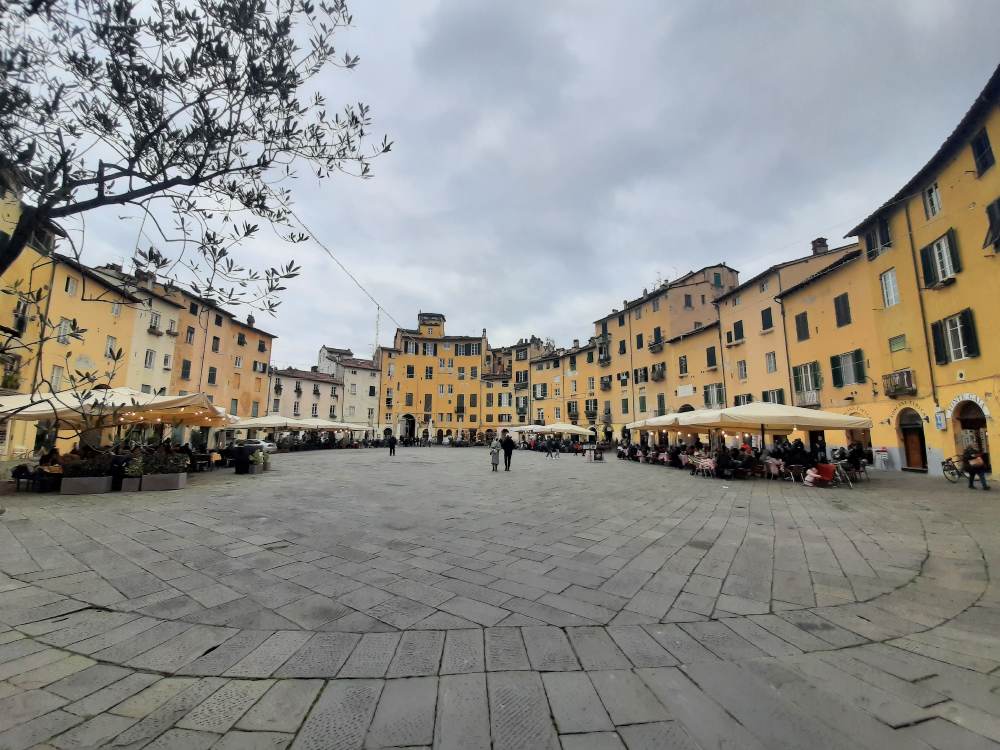
The descent took us straight into Piazza dell’Anfiteatro, a nineteenth-century masterpiece designed by the architect Lorenzo Nottolini. On the ruins of the 2nd century Roman arena, Nottolini connected the pastel-colored buildings to create a closed square, accessible only through four vaulted doors. In the center of the flooring, a ceramic tile indicates the exact point of intersection of the four entrances.
@RebeccaManzi/GreenMe
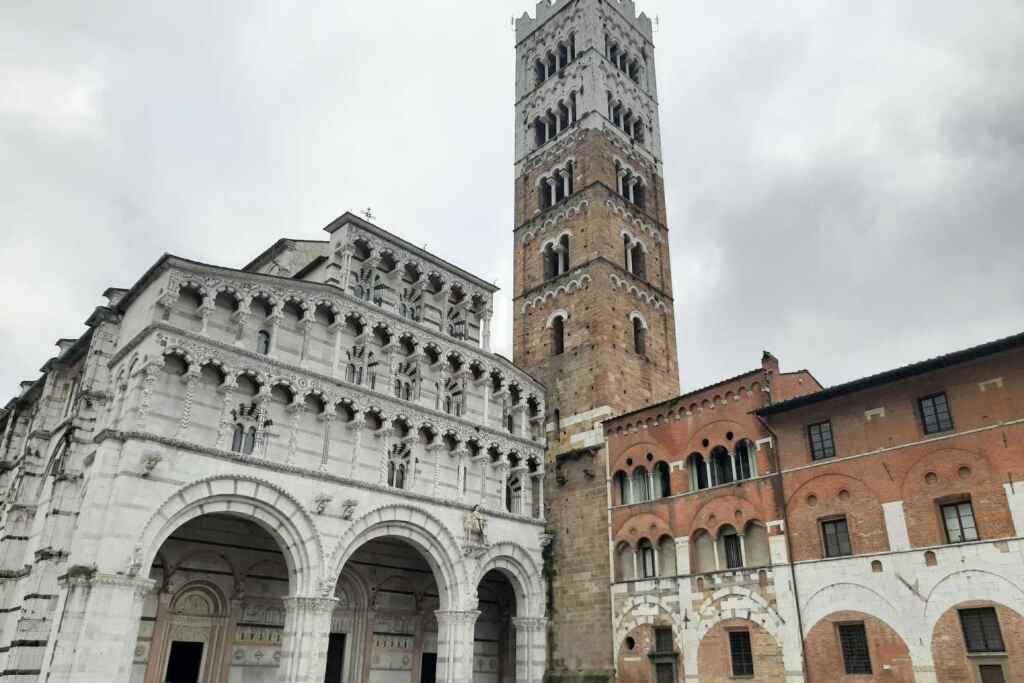
From here, the journey into sacred art is a must. In the Cathedral of San Martino we remained for a long time in front of the funerary monument of Ilaria del Carretto, sculpted with poignant realism by Jacopo della Quercia, and the legendary wooden crucifix of the Holy Face, which tradition says was sculpted by Nicodemus.
@RebeccaManzi/GreenMe
Moving to Piazza San Michele, where the Roman Forum once stood, the facade of the church of the same name soars four meters above the roof, dominated by the statue of the Archangel Michael.
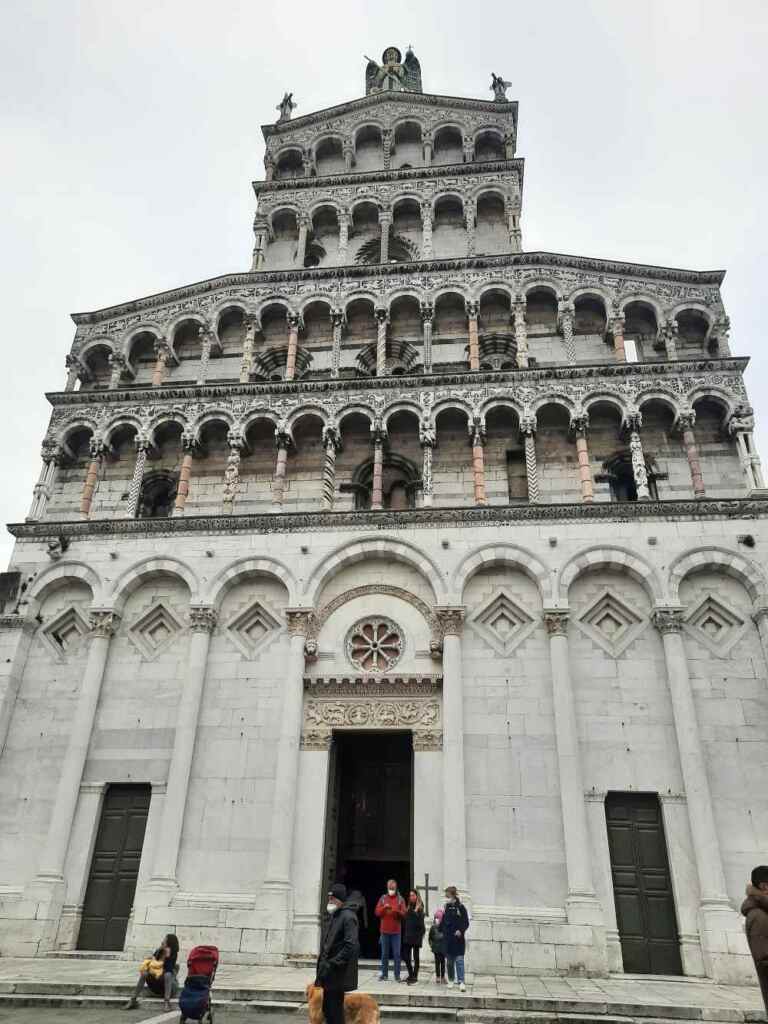
@RebeccaManzi/GreenMe
The triptych ends with the Basilica of San Frediano, unique for its immense Byzantine-style golden mosaic which illuminates the surrounding square.
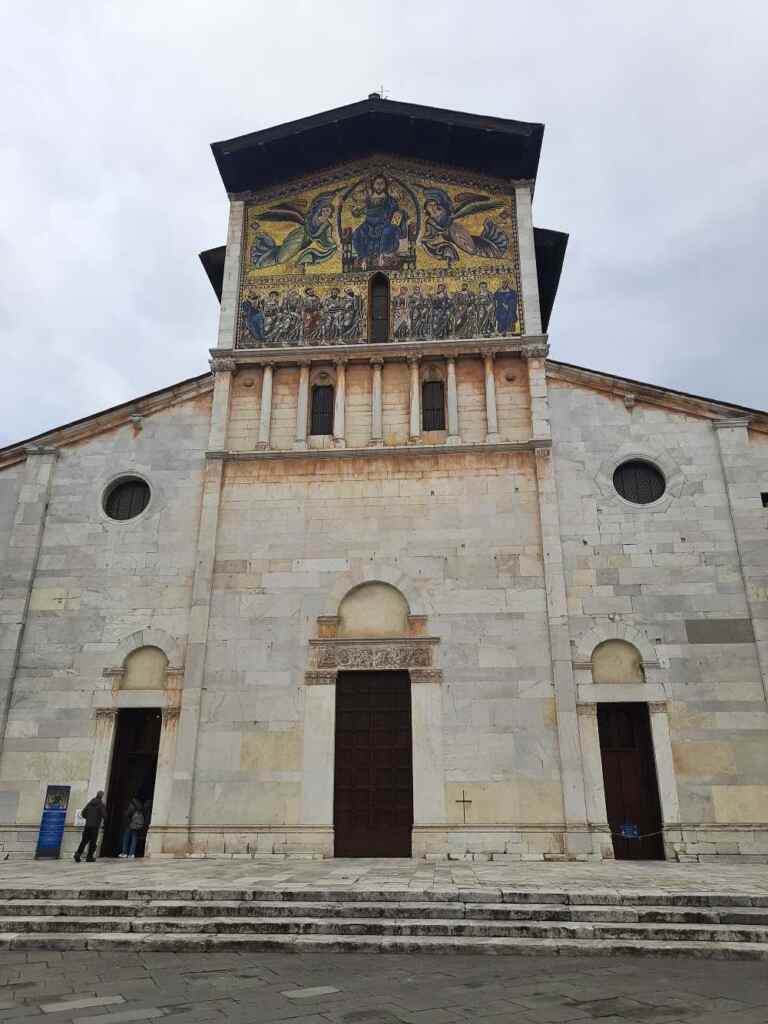
@RebeccaManzi/GreenMe
The nineteenth-century elegance of the Teatro del Giglio and the notes of Giacomo Puccini
We couldn’t leave the city without stopping in Piazza del Giglio, where one of the oldest public theaters in Italy overlooks. The Teatro del Giglio, inaugurated in 1675 and completely rebuilt in neoclassical style in 1819 by the architect Giovanni Lazzarini, owes its name to the golden lilies that decorated the Bourbon coat of arms of Maria Luisa di Borbone.
This stage is a true temple of opera: here, in 1831, the famous tenor Gilbert Duprez performed the legendary “chest C” for the first time in Italy in Edgardo from the Lucia di Lammermoor. Giacomo Puccini himself – whose birthplace has been transformed into a museum and can be visited – maintained a visceral connection with this theatre, personally taking care of the staging of many of his works, including the memorable staging of Edgar in 1891. Crossing its threshold means breathing in the golden and velvety atmosphere of the great Tuscan operatic tradition.
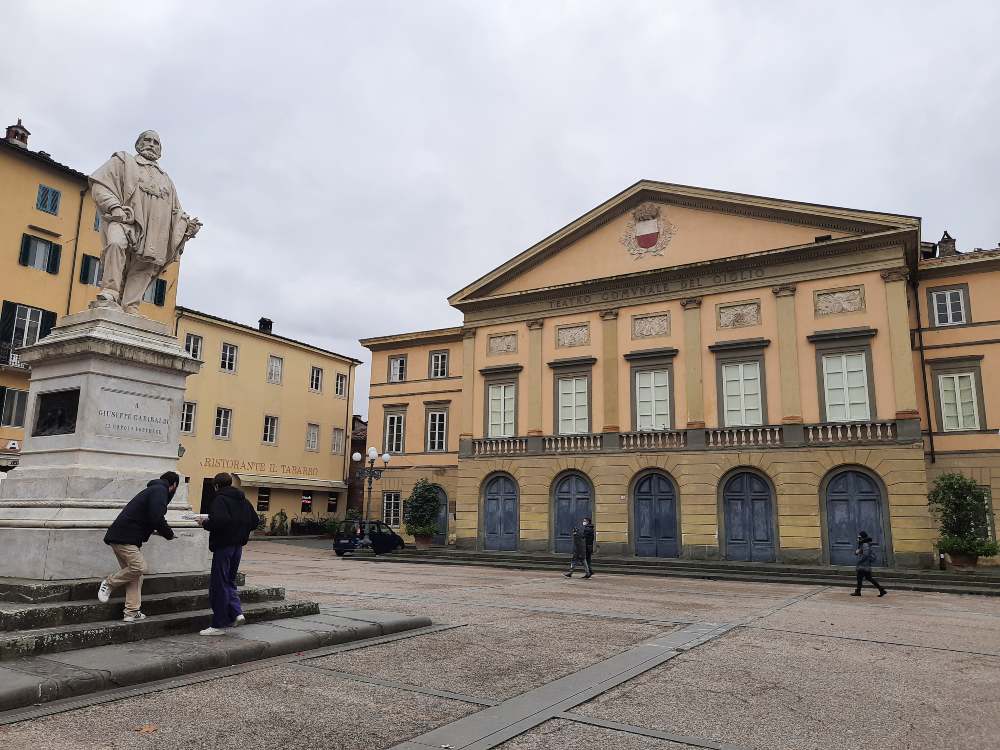
@RebeccaManzi/GreenMe
