
Animals may have colonized our planet before some of the most extreme glaciations on Earthor in Neoproterozoicwell 200 million years earlier than has always been thought. If confirmed, the study led byUniversity of Oxford (United Kingdom) would revolutionize the understanding of one of the great mysteries of evolution.
A great mystery of evolution
Scientists have not yet been able to explain why animals appear to appear “relatively suddenly” in the fossil record, just before the Cambrian (between 539 and 487 million years ago). But if some more complex life forms had really appeared 200 million years earlier, the puzzle would begin to be completed.
In fact, researchers led byUniversity of Oxford have questioned an assumption regarding one of the most extraordinary fossil deposits known, the Weng’an biotadating back to Ediacarian period (about 570-600 million years ago), so called because it is located in the county of Weng’anin the Chinese province of Guizhou.
In particular, it has never been demonstrated with certainty that any of these fossils belonged to animals, therefore scientists had hypothesized that, if animals had existed at the time of Weng’anwould have been preserved in the fossil record, moving the appearance of the first animals to a later time.
How the study was conducted and what it may have shown
©Science Advances
However, the analysis now conducted on exceptionally well-preserved microfossils from another deposit, the Kheseen Biotalocated in Mongoliacould make this “postulate fall: this site is in fact about 40 million years more recent than that of Weng’anand dates back to an era in which the presence of animal fossils is already documented in other parts of the world. And the study of over 140 specimens using scanning electron microscopy revealed new species of extraordinary quality, none of which, however, can be traced back to the animal kingdom.
The Kheseen Biota refutes the argument that the exceptional preservation of the Weng’an microfossils would necessarily imply the presence of animal fossils in the assemblage, if they had existed at the time – Ross Anderson, who led the research, explains to the Oxford Mail – The Kheseen microfossils present an equally high level of preservation, yet the animals continue to be absent, even though we know that they already existed at that point in Earth’s history
According to the scholar, it is possible that the animals lived in environments different from those that have preserved the fossils of Kheseen Biotaor that the chemical conditions of that site did not allow the conservation of animal remains. In other words, the same could be true for the site Weng’an: its fossil evidence does not necessarily prove the absence of animals at the time of its formation.
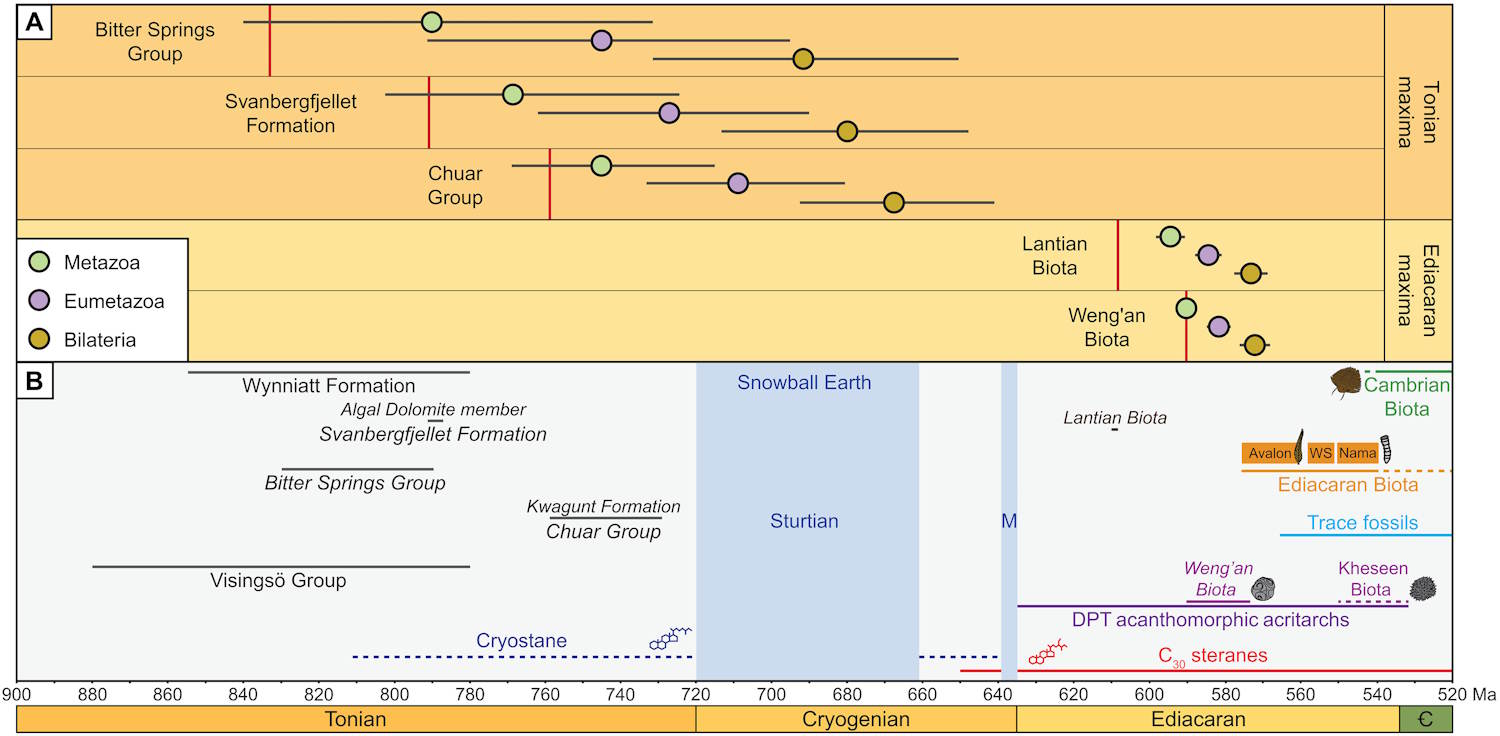
The researchers then looked at older deposits in Norway, Australia and the United States, dating back to a period between 850 and 730 million years agodeposits rich in fossils and potentially suitable for preserving animal remains, although none have been found so far.
©Science Advances
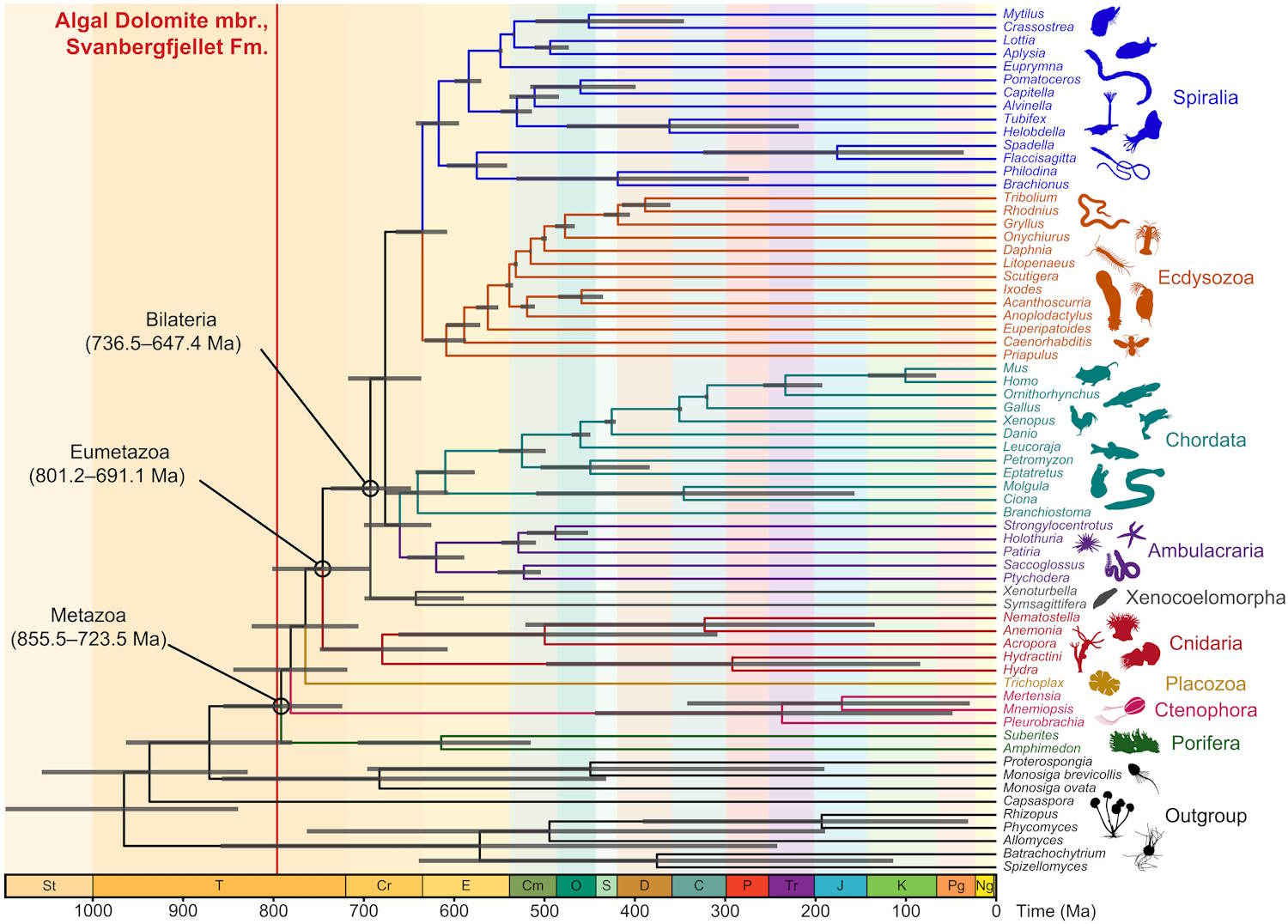
Through themolecular clock analysisa technique that compares genetic differences between living species and uses reference points from the fossil record to estimate when the species’ ancestors lived, the origin of animals has therefore been estimated back about 200 million yearsplacing it in a interval between 800 and 700 million years ago.
Anderson furthermore argues that there are already clues, in the form of biomarkers, of the existence of this hidden history: it is possible, in fact, that the first animals were of small in size and soft-bodiedcharacteristics that would have made it fossilization is more difficult.
©Science Advances
Doors open to fascinating scenarios
An origin that can be placed between 800 and 700 million years ago opens fascinating scenarios: Animals may have evolved before Earth entered some of the most extreme ice ages in its history, or even appeared during that inhospitable period.
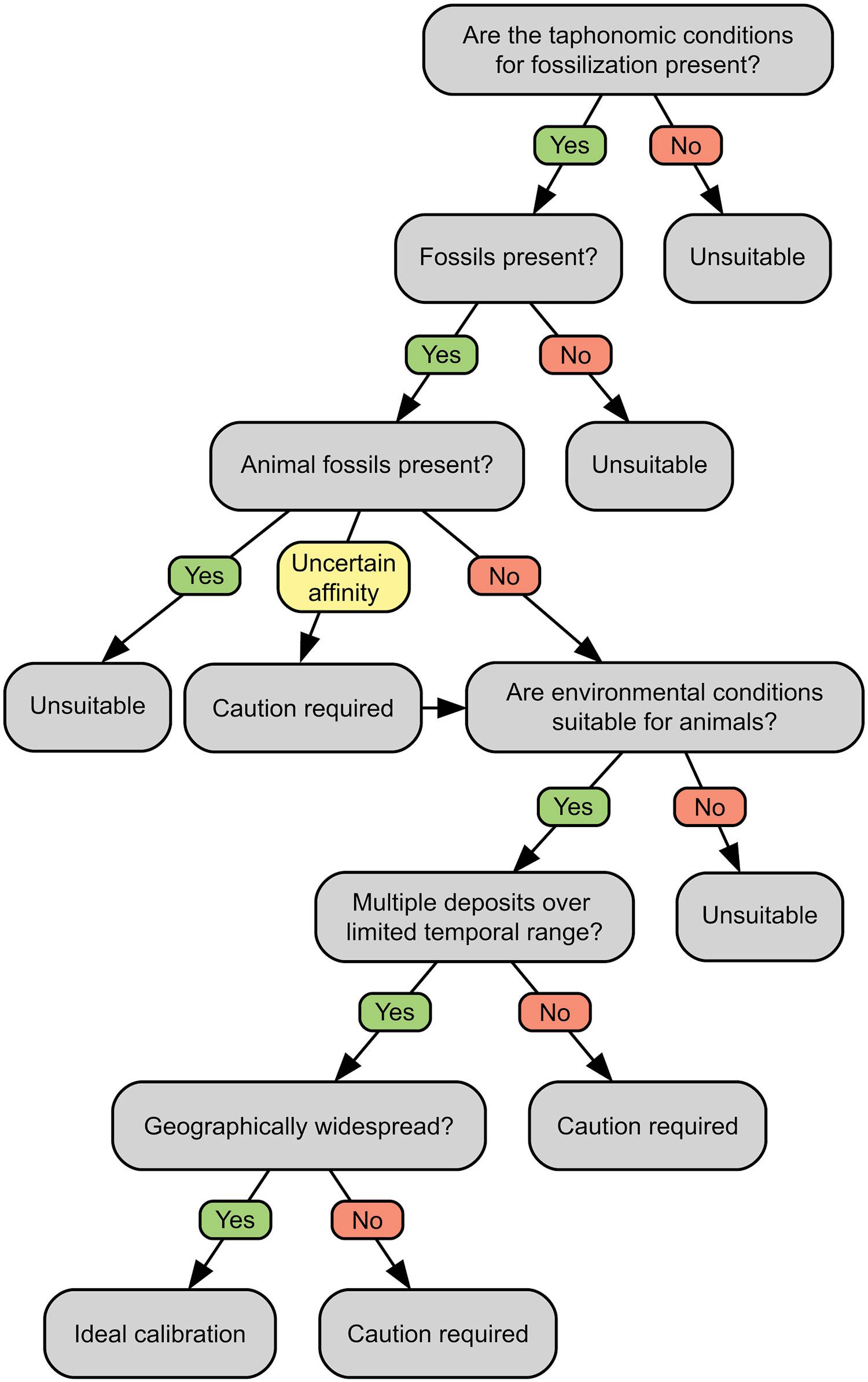
Future studies should therefore explore fossil deposits from different regions, representing different environments and modes of fossilisation, in search of animal origins.
©Science Advances
Until such evidence is available – Anderson concludes – the exact date of the appearance of the animal kingdom will remain uncertain
The work was published on Science Advances.
Sources: Oxford Mail / Science Advances
