
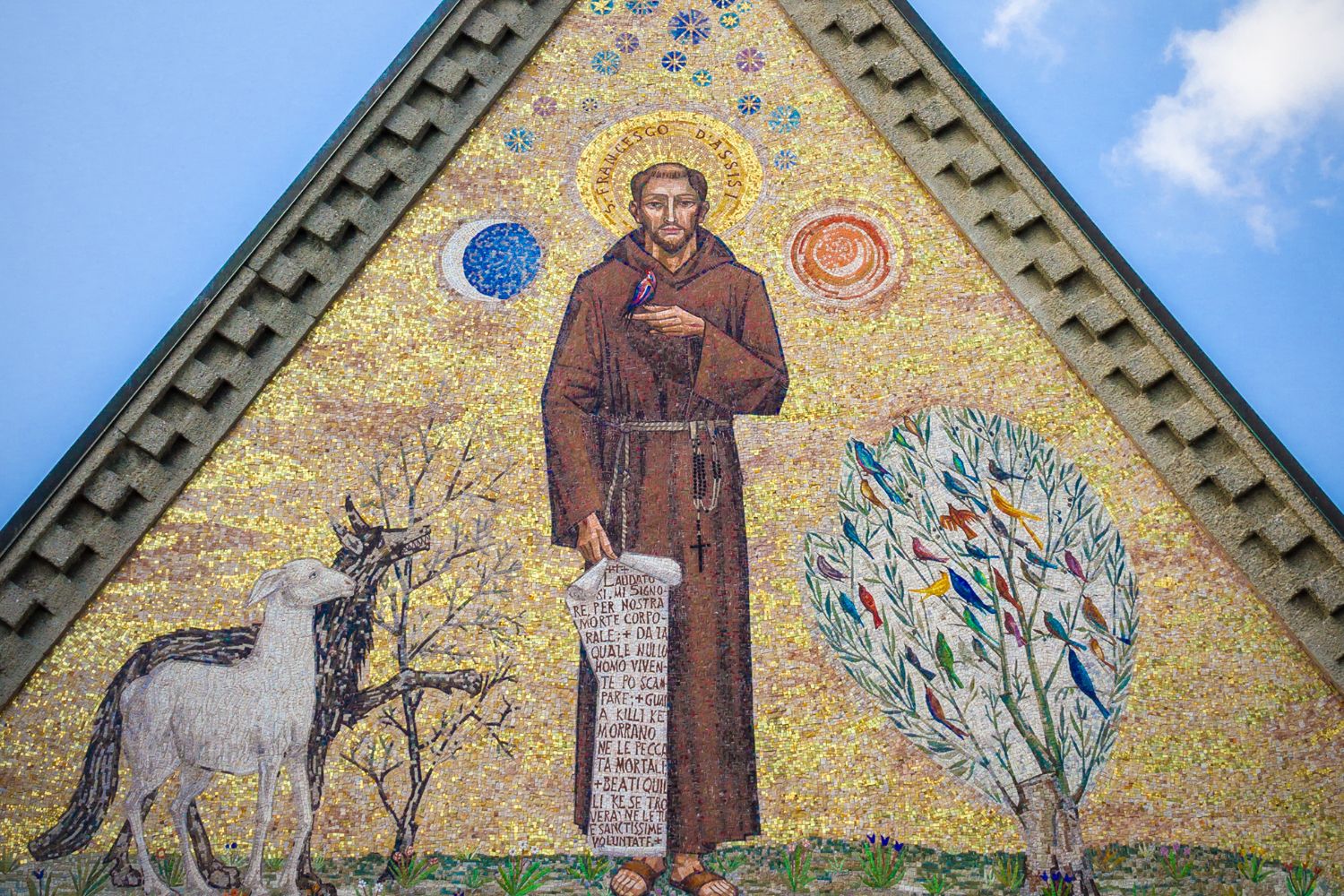
Saint Francis of Assisi is often associated with a profound relationship with nature and all living creatures, so much so that over time the idea has spread that he followed a diet completely free of meat and animal derivatives. But historical evidence tells a different reality: the saint was neither vegetarian nor vegan and his relationship with food was linked above all to poverty, sharing and the refusal of waste. The “poor man of Assisi”, born Giovanni di Pietro di Bernardone in 1181, chose a life of absolute simplicity after abandoning the family’s wealth. His attention was not directed at renunciation as an end in itself, but at a different way of living, in harmony with other living beings and with what the earth offered.
Saint Francis was not vegan: what he said about food
The idea of a vegetarian Saint Francis was born above all from his reputation as a man close to animals and nature. However, in the Unstamped rule of the Franciscan order, written around 1221, the saint does not establish a ban on the consumption of certain foods. On the contrary, in case of necessity, the friars were allowed to eat “all the foods that men can eat”. The fundamental principle was therefore not absolute deprivation, but rather the balanced use of resources and attention not to transform food into excess. Francis in fact invited his followers to sobriety, reminding them to avoid waste and excesses at the table. Food had to be welcomed as a gift and shared, without despising those who ate or judging those who, by choice or necessity, deprived themselves of certain foods. An episode reported in Franciscan sources also recounts that, when a friar pointed out that Christmas that year fell on a Friday and therefore meat should not be eaten, Francis replied that on such an important day even the walls should “eat meat”, underlining the joy of the celebration rather than the rigidity of the food rules.
What Saint Francis ate: simple and poor foods
Francis’ diet was typical of someone who had chosen a life of poverty and begging. He accepted what was offered to him and mainly consumed simple foods, such as bread, focaccias, cereals, herbs, roots, vegetables, soups and legumes, although there was no shortage of other foods, when available, and cheeses, eggs, meat and fish are also mentioned in the testimonies. His life choices did not in fact involve the elimination of specific food categories, but a renunciation of luxury and abundance. The relationship with food was therefore very far from the excesses of the tables of the nobles of the Middle Ages, because eating meant nourishing oneself, thanking and sharing, certainly not showing off wealth.
St. Francis’ favorite dish? The prawn pie and the pike
Despite his austere life, some sources also tell what foods Francis particularly appreciated. Among these would be pike, a freshwater fish, and especially prawn pie, considered one of his favorite dishes. Crayfish, together with fish, were foods present above all in the areas crossed by waterways and could also reach the tables of monasteries. They were therefore not necessarily a symbol of wealth, but were part of the food availability of the area. Alongside savory dishes, Francesco also loved some desserts, in particular almond mostaccioli.
Mostaccioli, the last wish before death
Among the foods most linked to the figure of Saint Francis are mostaccioli, sweets prepared with simple ingredients such as almonds, flour, honey, grape must, dried figs and raisins. According to tradition, a few days before his death in 1226 in Assisi, Francis asked Jacopa dei Settesoli, a Roman noblewoman very close to him, to prepare for him precisely these desserts that he loved so much. Now seriously ill and debilitated, the saint was only able to taste them, and for this reason the mostaccioli are often remembered as the last meal he consumed.
Saint Francis’ lesson on food: simplicity and no waste
Beyond personal preferences, Francis’ message on food remains linked above all to a principle that is still very current: use what you need without wasting. The poverty he had embraced was not a simple renunciation, but an invitation to recognize the value of things, including everyday and apparently banal ones, such as a piece of bread, or a shared meal. He did not ask his friars to eliminate who knows what food, but to live with balance, gratitude and attention towards others.
