
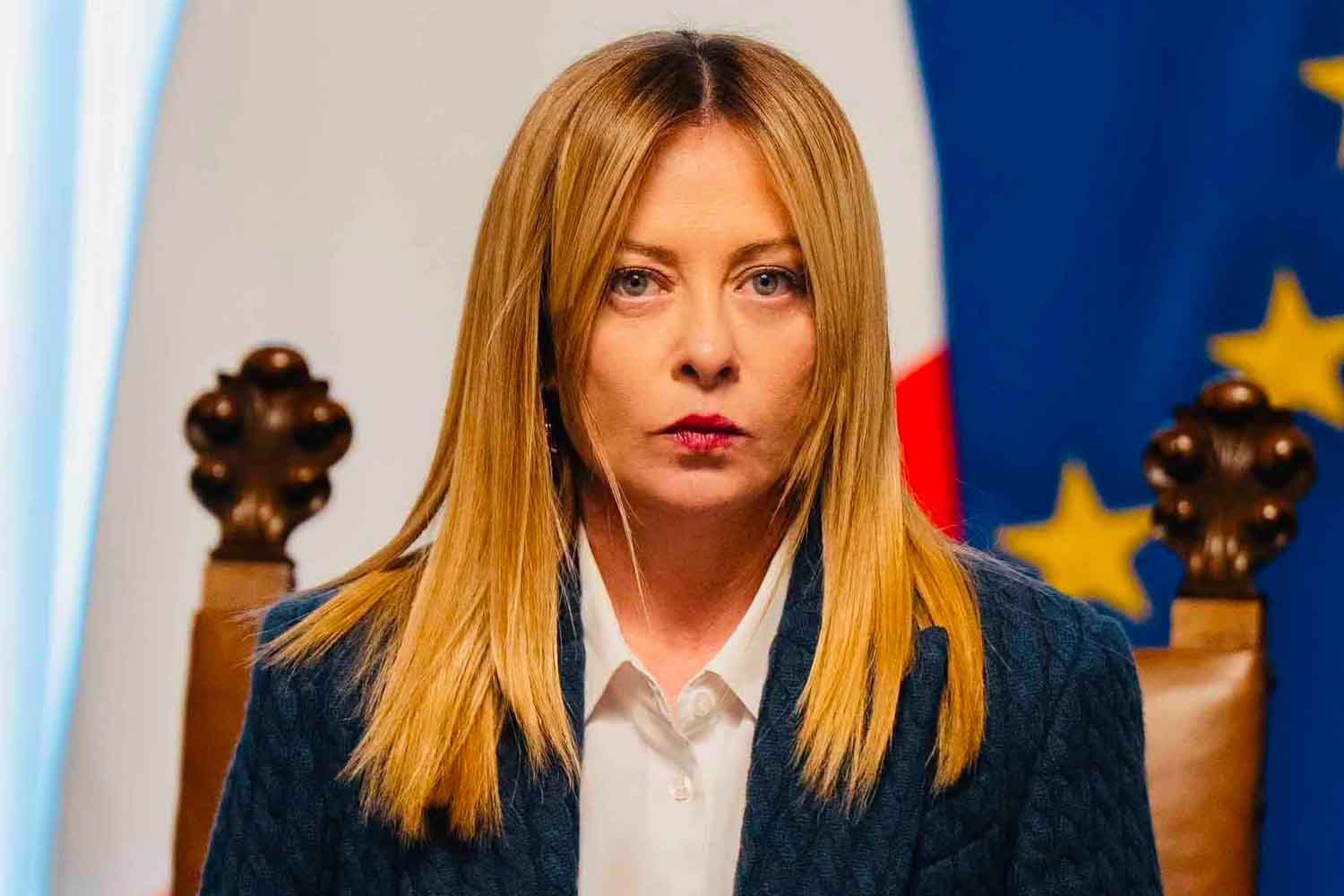
Four seconds and a phrase repeated twice: “I am Giorgia Meloni”. No, she didn’t follow up with “I’m a woman, I’m a mother…”. On 5 October 2026, the Prime Minister deposited a sample of her voice atEUIPOthe European Union Intellectual Property Office, with the aim of adding protection against artificial intelligence cloning. The application also concerns multimedia content and the organization of political demonstrations and is still “under examination”. So the entry was filed; the trademark, for now, has not yet been registered. And even if it is, it will not become a universal shield against any imitation of the voice: we are talking about a sound trademark, protected as a distinctive sign for the products and services indicated in the registration.
Timing helps to understand why those four seconds matter so much more than intellectual property. The hypothesis of political elections in May 2027 has just emerged from confidential discussions and entered public declarations: Lucio Malan, group leader of the Brothers of Italy in the Senate, spoke of the possibility of voting together with the municipal elections, only to then point out that the legislature expires in the autumn and that the dissolution of the Chambers is the responsibility of the President of the Republic. The date, therefore, is not there. There political campaign which will have to deal with artificial intelligence yes. And Meloni has already seen some previews on him too. Literally.
First the lingerie, then the Colosseum
In May, a fake photograph generated with AI circulated on social media: the prime minister’s face had been mounted on the body of a woman in lingerie and the image was shared as if it were authentic. Meloni, it must be said, did not seem to despise the algorithm’s work: he wrote that it had “improved it a lot”. Soon after, however, he brought the issue back to deepfakes and their potential for deception and manipulation.
In July the wardrobe changed a lot. The former general Roberto Vannacci published a video created with artificial intelligence and set in ancient Rome. He appears dressed as a general-emperor; next to them sit Giorgia Meloni and Ignazio La Russa. In the arena there are Elly Schlein, Giuseppe Conte, Romano Prodi and Laura Boldrini, represented as enemies destined for death. Here come gladiators, a lion and a thumbs down. Not exactly the classic electoral holy card.
Meloni had ended up there too without asking. The following day she wrote that she had been included in the film “without my knowledge” and distanced herself: that representation, she explained, does not belong to her way of understanding political confrontation. In the space of a few months the same person was transformed by AI into a woman in lingerie to build a credible fake and into a figure of ancient Rome within an openly fantastical content.
In the photo in lingerie the fake works if it looks real. Not in Vannacci’s video: it works even if no one believes for a second that he had Conte executed at the Colosseum. The difference also weighs when we move from images to standards.
Italian law looks above all at fakes that can deceive
Since 2025 the Criminal Code contains a specific crime. Article 612-quater, introduced by the Italian law on artificial intelligence, punishes with imprisonment from one to five years anyone who, without consent, disseminates images, videos or voices falsified or altered by AI, capable of deceiving as to their authenticity, causing unfair damage to the person represented. When the fact affects a public authority due to its functions, action is taken automatically.
The article requires, among other things, that the content is likely to mislead as to its authenticity and causes unjust harm. A politician dressed as a Roman emperor who sends his opponents to gladiators already starts with some difficulty in pretending to be a faithful record of the day. This, of course, does not automatically make any overtly fantastic synthetic content lawful: any other offenses must be assessed according to the rules applicable to the individual case.
From 2 August 2026, the transparency obligations set out in Article 50 of the European AI Act will then apply. For images, audio and videos that constitute deepfakes, the artificial or manipulated nature of the content must be declared. Even clearly artistic, creative, satirical or imaginative works remain within the obligation, in ways that do not compromise their enjoyment. However, the European Commission specifies that content produced before 2 August must not be labeled retroactively. Vannacci’s video is from July 20th: it arrived a dozen days earlier, luckily for him.
A law designed specifically for electoral campaigns has already fallen in the Chamber
In March, Parliament also had something much more specific on the table. The bill 2212, first signed by Anna Ascani of the Democratic Party, aimed to intervene directly on the manipulation of electoral and referendum campaigns through content produced with AI. The text provided for obligations of transparency, labeling and intervention powers of Agcom.
On March 11, the Chamber approved a series of suppressive amendments presented by the majority. Having eliminated the articles that made up the text and rejected the last additional article, the president on duty declared the measure “rejected as a whole”: no final vote, because by then there was essentially nothing left to vote on.
Fratelli d’Italia justified that choice by recalling the rules already approved. Alessandro Urzì he cited the Italian law on AI, the new crime on deepfakes and the European legislation destined to become applicable in August 2026, arguing that a framework already existed to protect citizens even during elections. Anna Ascanithe first signatory of the proposal, instead defended the need for rules built specifically for electoral propaganda generated with AI. The result was very concrete: the articles were suppressed and the proposal was declared rejected as a whole.
Since August, at least on the transparency front, one of the pieces of that European framework has actually been operational: anyone exposed to a deepfake must be able to know that they are watching or listening to artificially generated or manipulated material. The European Commission explains that Article 50 obligations serve to counter the risks of deception and manipulation and also concern the labeling of deepfakes.
The next problem begins when deception no longer serves. The video of the Roman emperor, however, does not need to fool anyone. It can be perfectly recognizable as artificial and continue to do the job for which it was published: transforming real political opponents into characters of a constructed scene, produced in a few minutes and ready to move from Instagram to the reactions of other parties, to newspapers, to talk shows and back to social media. The “AI generated” label tells you where the image comes from: .
If there really will be a vote in 2027 in May, it will be decided by political and constitutional steps that have not yet taken place. One thing, however, is already visible several months before: the next Italian electoral campaign will have at its disposal a tool capable of manufacturing voices, photographs and entire political scenography at low cost.
Meloni, at least for his own voice, sought additional protection. For everything else there are the Criminal Code, the AI Act, labels and rules on transparency. For the centurions, at the moment, it’s all about feeling.
