
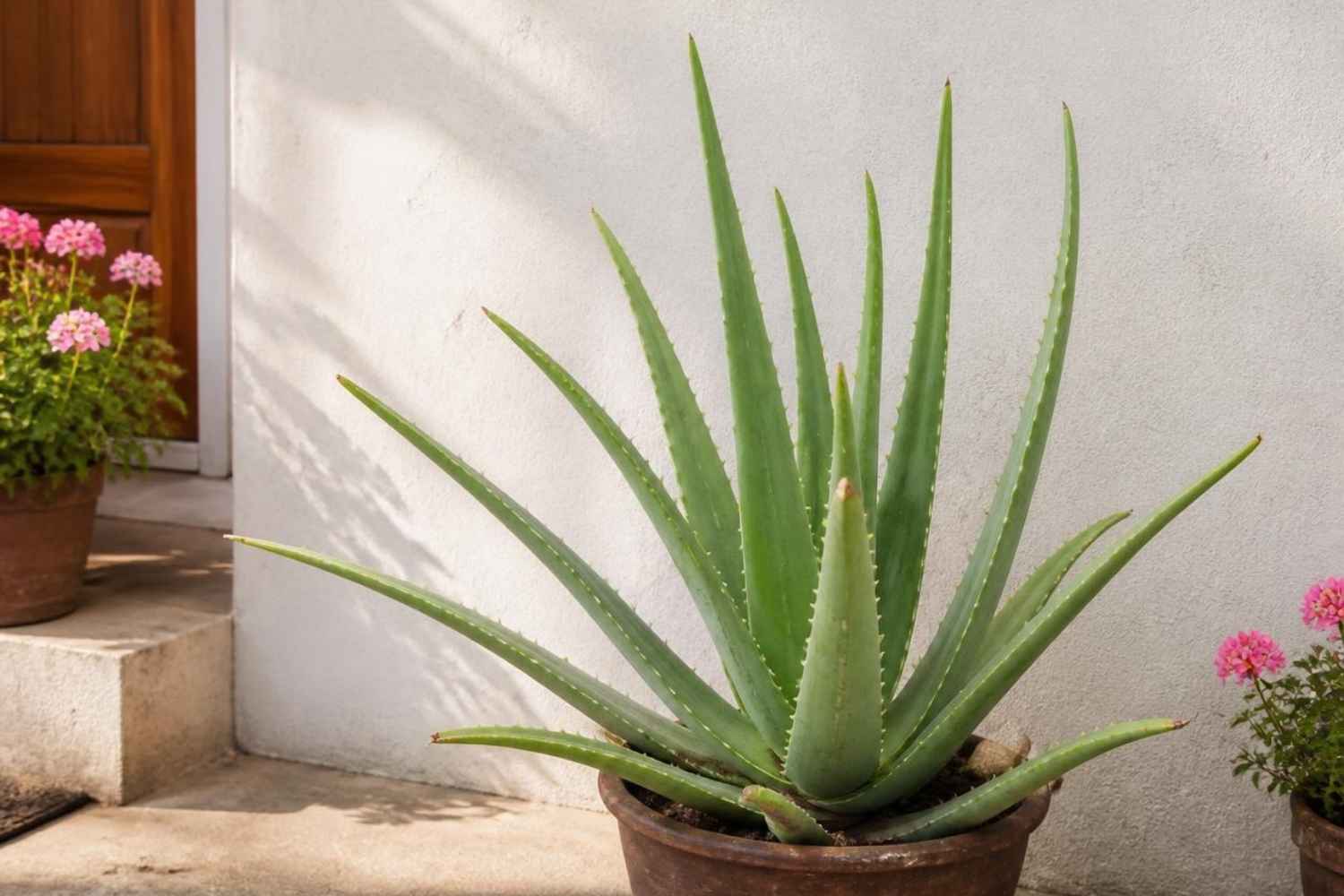
An aloe vera plant near the entrance to the house is an image that is still found today on many balconies, terraces and courtyards. Its fleshy and pointed leaves, capable of storing water inside them, have made it one of the most recognizable and loved plants.
Behind a simple vase, however, there is also a long history made up of popular traditions, beliefs and small domestic rituals. In various cultures, aloe has been considered a symbolic plant, linked to the protection of the home, good luck and the ability to overcome difficult times.
An ancient plant that has arrived in our homes
Aloe is a plant native to the arid areas of Africa and the Arabian Peninsula, but over the centuries it has spread throughout the Mediterranean thanks to its resistance and its multiple uses.
The ancients already knew this plant and appreciated the gel contained in the leaves. Greeks and Romans used it in their traditional practices, while in subsequent centuries aloe entered domestic gardens, especially in areas with a mild climate.
Its ability to survive with little water has contributed to building a particular image around it: that of a strong plant, capable of resisting even when conditions become difficult.
The aloe near the door: symbol of protection
In some popular traditions, aloe was placed near the entrance to homes. The door, as with many other plants considered symbolic, represented the point of passage between the external space and the family one.
According to some beliefs, an aloe plant in front of the house would have helped protect the inhabitants and attract positive energy. In some areas of the Mediterranean it was hung or positioned near the entrance as a good luck gesture.
These customs belong to folklore and local traditions: the value of aloe, in this case, is above all symbolic and tells of the way in which people attributed meanings to the plants that were part of their daily lives.
A plant associated with luck and rebirth
Over time, aloe has also developed a link with the idea of renewal. Its leaves continue to grow, it manages to recover after periods of drought and can be easily multiplied through the new shoots that arise at the base of the plant. Precisely this ability to regenerate has contributed to fueling its symbolic meaning: a plant associated with strength, continuity and new beginnings. In some cultures, especially in the Middle East and some areas of Asia, aloe is considered an auspicious presence in homes and workplaces.
The practical side: an easy to grow plant
Beyond traditions, aloe is a very practical choice for those who want to have a green corner at home. It is a resistant plant, suitable even for those who do not have much experience with gardening. It loves light and prefers dry, well-drained soil. Its main enemy is excess water: the roots can suffer if the soil remains too wet. A pot near a bright window or at the entrance, if well exposed, can become the ideal place for this plant that requires little care.
Does aloe really help purify the air?
Aloe vera is often listed online as one of the plants capable of improving home air quality. The theme also derives from some studies conducted in controlled conditions, but the contribution of a single plant in a real environment is very limited. The true value of aloe at home therefore remains linked above all to its beauty, the ease of cultivation and the history it brings with it.
Aloe vera and small sunburns: what the gel can really do
The clear gel contained in aloe vera leaves is probably the best-known part of the plant. Traditionally it is used on the skin to provide relief in case of irritation, redness and small superficial burns, including those caused by the sun. Its fresh, water-rich consistency can have a soothing and hydrating effect and some studies have observed possible benefits in the healing processes of minor burns, although the scientific results are not always uniform.
However, this does not mean that aloe can replace medical treatment: for serious burns, deep wounds or in the presence of extensive blisters it is necessary to consult a healthcare professional. Even when using a fresh leaf, it is best to use only the transparent internal gel, avoiding the yellowish latex present immediately under the peel, which can be irritating.
Perhaps this is also why aloe has remained on the threshold of our homes for so long. Not only because, according to ancient beliefs, it should have kept away what was harmful, but because behind those robust leaves there was really something useful. A plant to which we have attributed symbolic meanings for centuries and which, even today, silently continues to find a place in our vases.
