
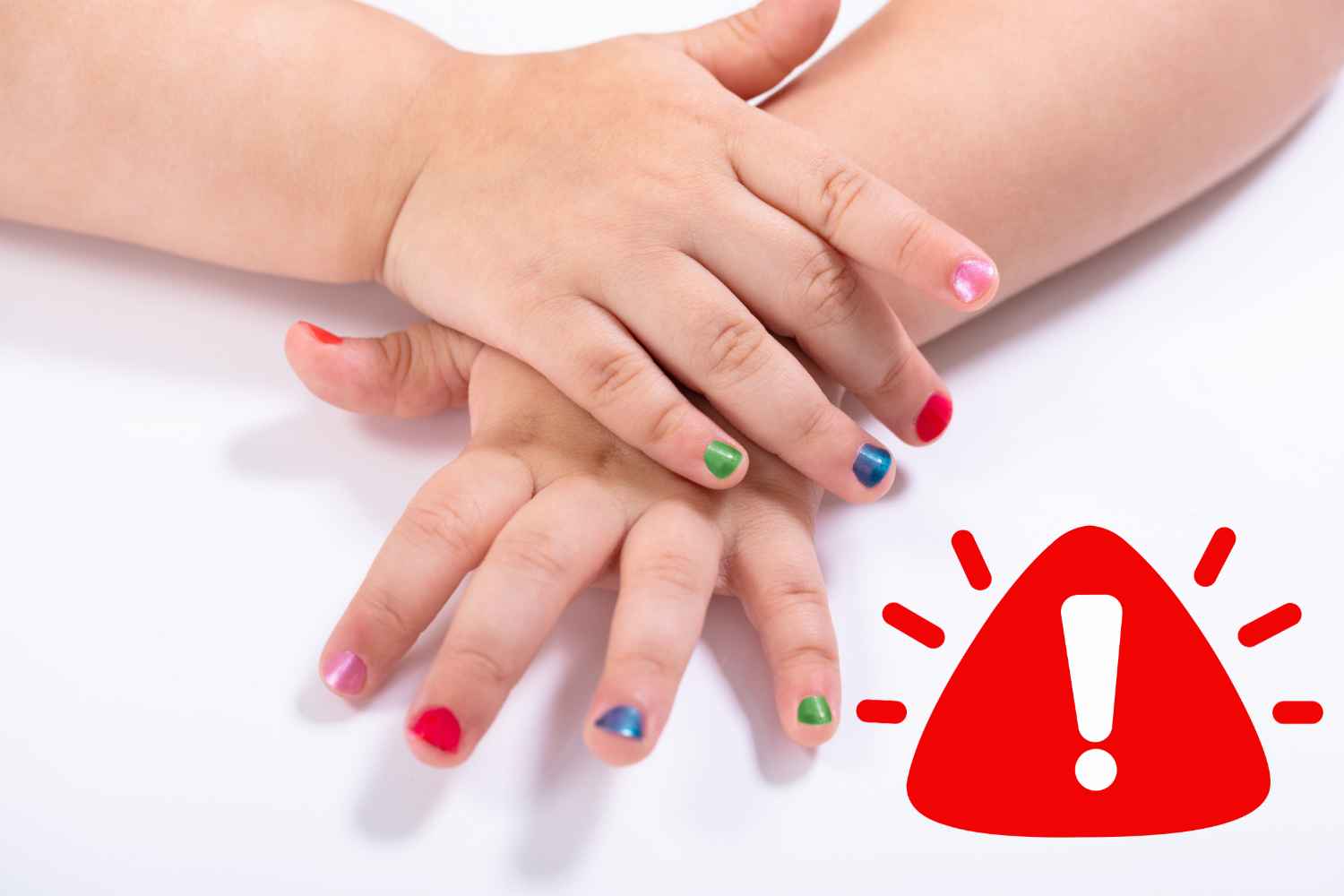
Playing with make-up and nail polish is a way to imitate adults, but when these products are specifically intended for little ones, can we really consider them harmless? The fact that they are sold as suitable for children, perhaps in colorful play kits, does not necessarily mean that they are free of ingredients that need to be carefully evaluated. He tried to clarify the issue The Lifesavercomparing 8 brands of children’s nail polish whose ingredient lists it analyzed.
The investigation revealed that some products contain controversial substances, including phenoxyethanol and titanium dioxide. Ingredients that require some clarification, especially considering the habits of children, who may put their hands in their mouths, bite their nails or accidentally spread nail polish even on their skin.
The test results
To carry out the comparison, the magazine selected 8 products sold in clothing stores, toys, pharmacies and online, examining the ingredients declared on the label. The objective was to understand which substances were found in products designed for small consumers and identify the most problematic elements.
Among the results that attracted attention is the presence of phenoxyethanol in 5 out of 8 nail polishes. It is a preservative also used in other cosmetics to counteract the proliferation of microorganisms. As reported by Lifebuoy, this substance can cause irritation and allergic reactions and some studies have hypothesized possible neurotoxic effects and interference with the hormonal system.
The test also indicates the presence of titanium dioxide in 4 out of 8 products, while in two other cases the generic wording “may contain” appears, which does not allow us to establish with certainty whether the substance is actually present in the formulation. In cosmetics this ingredient is used mainly as a white pigment and can be indicated in the INCI with the name Titanium Dioxide or with the acronym CI 77891.
Titanium dioxide has been at the center of discussions about its safety, in particular due to possible genotoxicity if ingested. In 2022 the European Union banned its use as a food additive, but this measure is not equivalent to a general ban on the substance in all products. To assess the risk, the route and level of exposure must also be considered.
The investigation also took into consideration other categories of ingredients. Parabens, petrolatum and silicones were detected overall in only one product among those examined, while in some sets there are perfumes that can represent a problem for those who suffer from allergies or have particularly sensitive skin.
Silicones include dimethicone, present in the Snails set. Used in cosmetics to form a film on the surface of the skin, it is one of the substances that Salvagente also reports for their environmental impact, linked to their lack of biodegradability.
As for fragrances, the Manucurist Paris set contains the wording parfum. It is a generic item that does not allow us to know in detail all the scenting substances used, some of which can cause sensitization.
The four nail polishes with the lowest ratings
Of the eight products tested, four received low scores. These are:
Why nail polishes can be problematic for children
When nail polish is applied correctly to the nail plate, exposure to the substances contained in its formulation through the nail is generally limited. The situation changes if the product ends up on the skin or is ingested.
And this is precisely the point that should not be underestimated when talking about children. During play, nail polish can be applied inaccurately, reach the cuticles or come into contact with other areas of the body. Furthermore, putting fingers in the mouth or biting nails are common behaviors in young children, which can encourage the accidental ingestion of small residues.
It is therefore important to prefer products expressly formulated for children, avoiding using nail polishes intended for adults on them. It is also important to follow the instructions on the package and supervise the little ones during application and removal.
A further precaution concerns children predisposed to allergies: if redness, itching or other skin reactions appear after use, it is advisable to contact your pediatrician or a specialist, without improvising home remedies.
Also be careful with solvents to remove nail polish
The removal phase should not be neglected either. Removers can irritate or dry your skin and nails, especially if used frequently. Acetone, in particular, is an effective solvent but can promote dehydration of the nail surface and surrounding skin.
But even formulations advertised as “acetone-free” are not necessarily free of potentially irritating substances, they may in fact contain other solvents, including alcohol. For this reason it is important not to automatically consider a product more delicate just because it bears this wording.
The advice is to use solvents only when necessary, following the manufacturer’s instructions and always keeping the products out of the reach of children. Also in this case, the intervention of an adult is essential to prevent children from coming into contact with the liquid or accidentally ingesting it.
In the end, the most prudent choice remains to limit the use of nail polishes, prefer specific formulations for children and ensure that application and removal always take place under the supervision of an adult.
