
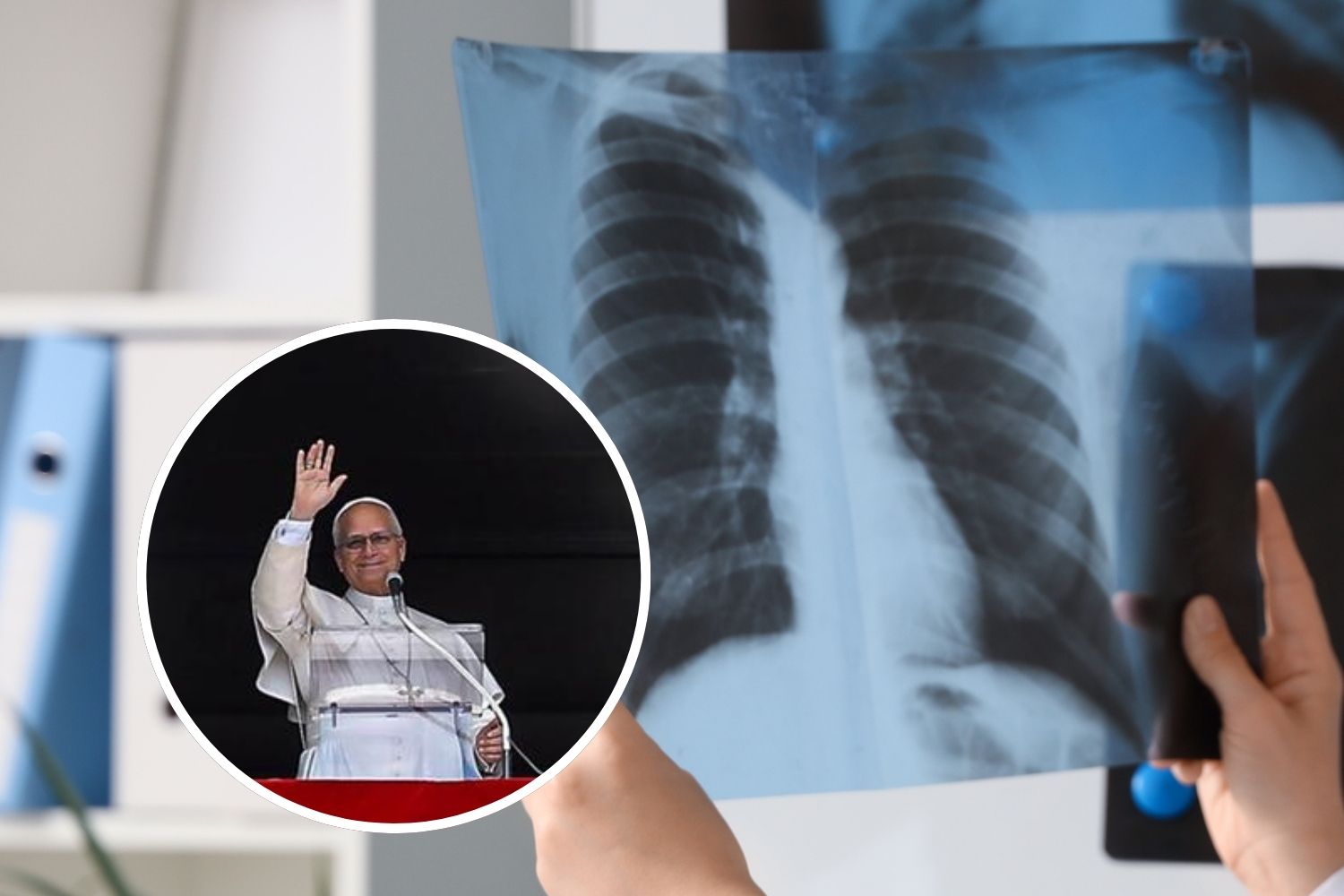
The doctors suspected it even before entering the operating room. The histological examination performed during the operation put it in black and white: the nodule that Pope Leo XIV had announced at the Angelus on Sunday 11 October was a lung adenocarcinoma. The confirmation comes from the medical bulletin released Tuesday evening by the Holy See Press Office. It was signed by Luigi Carbone, director of the Vatican Directorate of Health and Hygiene, and Stefano Margaritora, head of thoracic surgery at the Gemelli Polyclinic. On the afternoon of October 13, the 71-year-old Pontiff had the lower lobe of his right lung removed using a video-assisted technique. The doctors explain that the choice was to make the operation “radical”. The operation lasted approximately ninety minutes, the stay in the theater approximately three hours, without complications.
When he woke up, Leone was alert. Spokesman Matteo Bruni said that, as soon as he returned to the room on the tenth floor, the Pope asked for dinner. The expected hospital stay remains approximately one week. The post-operative exams and complete analysis of the removed tissue will arrive in the next few days.
A lump discovered by chance
The Press Office had specified that the lesion had emerged from routine checks and not due to any symptoms. It’s a frequent script. The National Cancer Institute reminds us that lung cancer often gives no signs and is detected with tests done for other reasons. When it occurs, there is a persistent cough, shortness of breath, chest pain or blood in the sputum.
What is adenocarcinoma
It belongs to the family of non-small cell lung cancers. It arises in the cells that line the alveoli, the tiny sacs where oxygen passes into the blood, i.e. the same cells that produce substances such as mucus. Smoking, current or past, remains the main risk factor. However, passive smoking, radon, asbestos, air pollution and familiarity also have an impact. Exposing yourself to one of these factors does not condemn anyone, and their absence does not guarantee immunity.
How to treat it in the initial stages
If the tumor is confined to the lung, surgery is the best option. A wedge-shaped portion, a segment or an entire lobe can be removed, as in the case of the Pope. The operation can then be followed by targeted therapies or chemotherapy and immunotherapy, to reduce the risk of the disease recurring. The choice depends on the stage and molecular profile of the tumor, for example on mutations in the EGFR or ALK genes. Stage, histotype and genetic characteristics also determine the prognosis. This is why the data that really matters has not yet come out of Gemini.
