
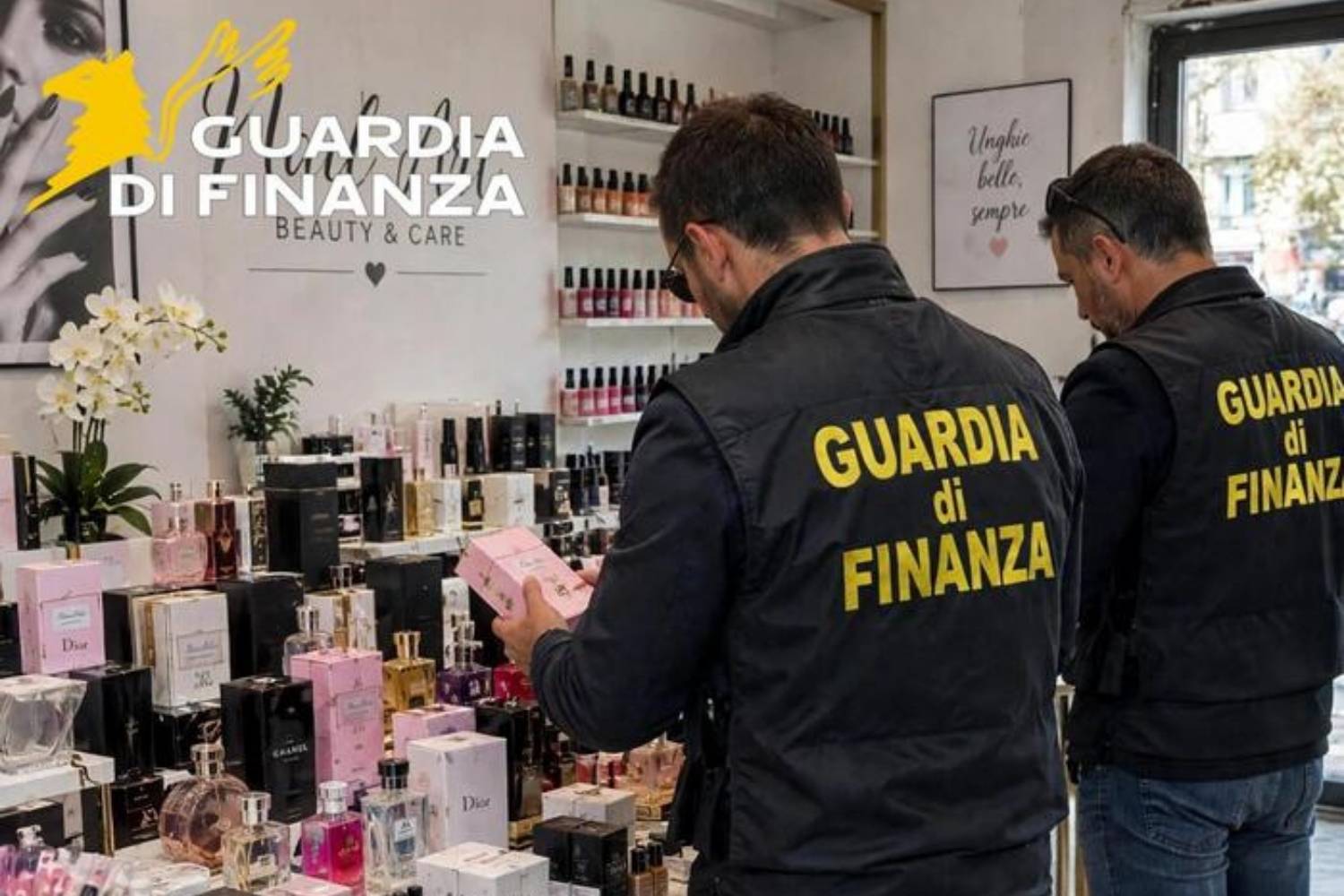
In an era where personal care and beauty are often at the center of attention, the urgency of greater awareness of the products we choose emerges forcefully. A recent operation conducted by the Guardia di Finanza of Rovigo, as part of a broader campaign against illegal activity, revealed a disturbing scenario of illegality that threatens the health of consumers and the integrity of the market. The action, the result of collaboration with various trade associations, led to the seizure of almost 200 beauty products, including counterfeit perfumes and potentially harmful cosmetics, with three people reported.
The discovery: fake perfumes and harmful cosmetics
The investigation, launched by the financiers of the Tenenza di Loreo, brought to light an association – made up of a 64-year-old, a 37-year-old from Contarina (RO) and a 43-year-old from Rovigo – who, according to the first accusatory hypotheses, marketed counterfeit perfumes on social media and used cosmetic products considered dangerous for human health in a ‘nail-art’ beauty centre. The checks, aimed at combating the underground economy and unfair competition, made it possible to identify a private home, a warehouse and two commercial activities, all in Rosolina (RO), the hub of illicit activities.
Counterfeit perfumes and illicit shipments
During the search of the house, the financiers found and seized around 100 perfumes and some clothing accessories from well-known brands, including Parma water, Balenciaga, Bulgarians, Cartier, Chanel, Hermès And Louis Vuitton. These allegedly counterfeit products were already ready to be shipped to customers via post. The lack of quality controls and production under unregulated conditions make these items not only an economic detriment to legitimate companies, but also a potential risk to those who use them, given the uncertainty about their composition and provenance.
Dangerous nail cosmetics, the threat of TPO
Even more alarming is what was discovered inside the nail-art beauty center run by the 37-year-old. Here, almost 100 packs of cosmetics used for the ‘gel reconstruction’ of nails, containing TPO (Trimethylbenzoyl Diphenylphosphine Oxide). This substance has been identified by the European Union as potentially toxic and carcinogenic and is on the list of dangerous ingredients for cosmetics. The use of such products not only exposes customers to serious risks to their health, but also undermines trust in industry professionals who operate in compliance with regulations.
Risks not to be underestimated
The overall commercial value of the seized products is estimated at over 15,000 euros, a significant figure that highlights the extent of the phenomenon. The three responsible were reported for complicity in receiving stolen goods, counterfeiting and possession or trade of cosmetics harmful to human health. But beyond the immediate legal implications, this operation raises crucial questions about product safety and market sustainability.
Counterfeit cosmetics or those containing banned substances represent a serious threat to public health, potentially causing allergic reactions, irritation and, as in the case of TPO, more serious long-term risks. From an economic point of view, illegal practices and counterfeiting fuel phenomena such as undeclared work, tax evasion and money laundering, distorting competition and damaging honest companies that invest in quality, safety and sustainability.
