
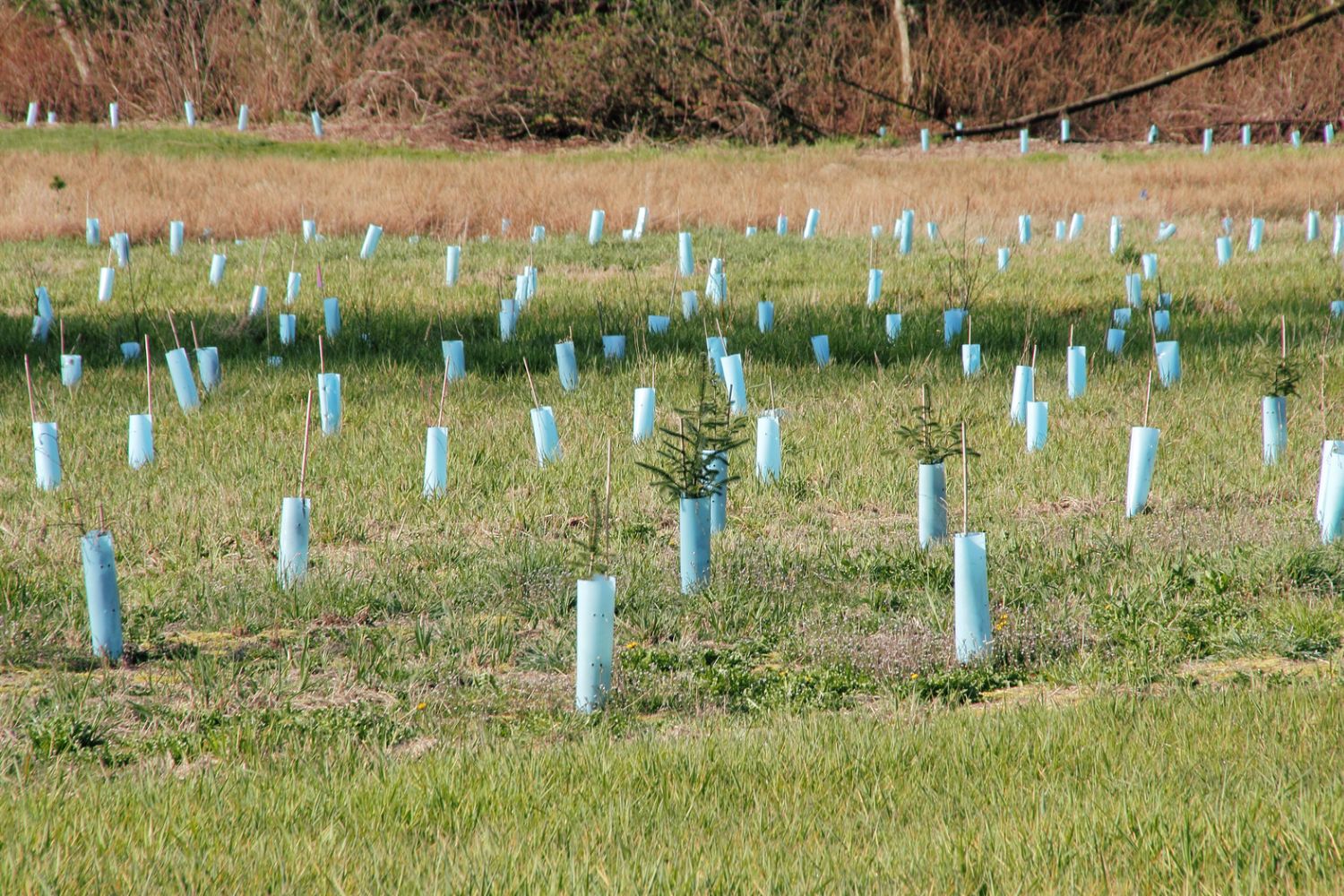
Half a million trees in the next three years. This is the response that England has decided to implement against the increasingly evident effects of the climate crisis. Not only to make cities and countryside greener, but above all to combat heat waves, limit flood damage and protect territories from drought.
The British government has announced a 79 million pound plan, equivalent to approximately 94 million euros, intended for the planting of new trees and the recovery of natural ecosystems fundamental for environmental balance. It was presented last September 30th by the Minister of the Environment Angela Eagleduring the Labor Party conference in Liverpool.
The objective is to start from an awareness that is now difficult to ignore: nature is not just something to be protected, but can become one of our most effective allies in dealing with the consequences of global warming.
Half a million trees to protect cities and communities
Of the £79 million allocated, £53 million will go towards planting 500,000 trees in cities, towns, parks and rural areas. The other 26 million will finance local strategies for the restoration of natural environments, with particular attention to the areas most exposed to extreme weather events.
A central role will be entrusted to municipal administrations, mayors, environmental associations and local entities, called upon to identify the interventions best suited to the needs of their respective communities.
The choice to directly involve the territories is not accidental. It is the local communities who know best the areas most exposed to the risk of flooding, the streets that become hot during the summer and the natural spaces that need to be recovered.
The plan, therefore, will not limit itself to planting trees, but will aim to rebuild a network of green infrastructure capable of making England better prepared for the effects of climate change.
Not just trees
The government also intends to finance the restoration of wetlands, riverbanks, meadows and other natural habitats, capable of retaining water during periods of heavy rain and helping to mitigate the effects of drought.
A particularly significant choice for a country that, in the last century, has lost over 90% of its wetlands. These ecosystems, in fact, perform an essential function: they absorb and store water, slow down floods, support biodiversity and contribute to keeping the hydrological cycle more balanced.
An approach that overturns a consolidated conception of land management: the solution is not always to build new barriers, sometimes it is to allow nature to return to carrying out its functions.
The drought of summer 2026 has shown why action is urgent
The consequences of the drought that hit England during the summer of 2026 also pushed the British government towards this initiative.
We talked about it here: Forget English meadows, Stonehenge and green mountains, everything has dried up in the UK too. The images of the drought are impressive
In her speech in Liverpool, Angela Eagle recalled how areas where natural ecosystems have been preserved have shown a greater capacity to retain water, while tree-lined streets have benefited from lower temperatures compared to areas without vegetation. And when the rains came, the same trees helped reduce the risk of flooding.
The message is clear: protecting nature also means protecting people, homes, economic activities and water resources.
In any case, environmental associations are ready to ask that this allocation represents only the first step of a broader strategy, with long-lasting financing and greater involvement of companies that benefit from the protection offered by ecosystems.
The British plan comes at a time when the country’s environmental protection policies continue to show some contradictions. This is demonstrated by what happened to Sustainable Farming Incentivethe incentive program aimed at farmers who engage in habitat conservation, soil protection and tree planting. In September, the £253m available was sold out within just six hours of applications opening, leaving many farmers without funding.
An episode that demonstrates how high the demand for economic support is for the ecological transition of the countryside and how necessary it is to accompany the announcements with adequate resources and administrative continuity.
Sources: British Government / The Guardian
