
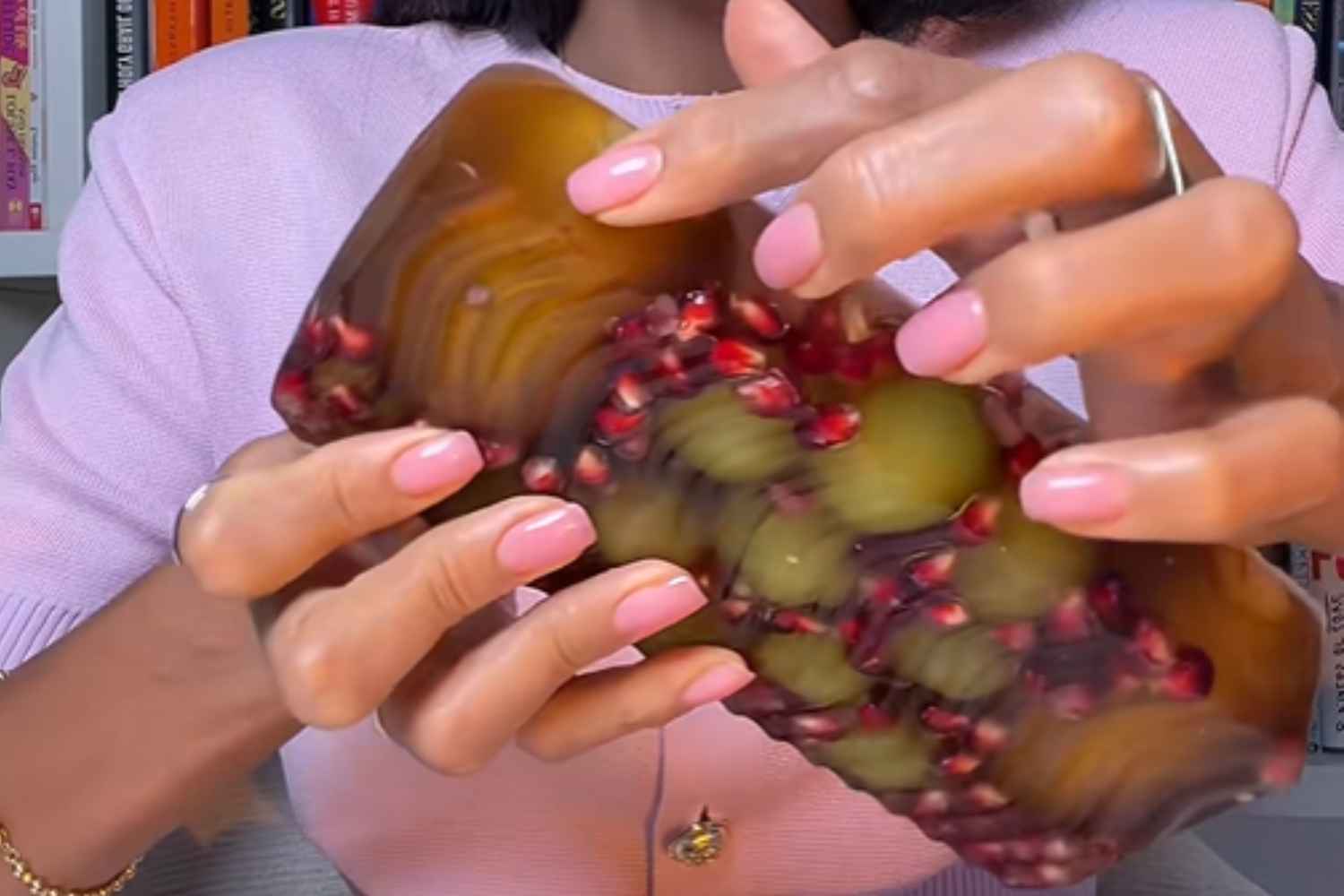
It is prepared in a few minutes, left to harden in the refrigerator and cut into colored cubes, often enriched with fruit. On social media it is presented as a small beauty recipe to be consumed every day to have firmer, brighter and smoother skin. It is the so-called “Botox to eat”, which has gone viral on TikTok and Instagram with the names homemade Botox And Botox jellyi.e. Homemade Botox and Botox Jelly. But can this jelly really help fight wrinkles?
The trend has been circulating on social media for some time, but in recent months it has gained new visibility thanks to videos in which creators and wellness enthusiasts show how to prepare these jellies, accompanying the recipes with anti-aging promises.
The starting point is a common ingredient, edible gelatine, obtained from animal collagen. Hence the idea that eating it regularly can help keep your skin young. An apparently simple explanation, which however confuses two very different mechanisms: the role of collagen in the structure of the skin and the action of botulinum toxin, which acts on the muscles to temporarily attenuate some expression lines.
View this post on Instagram
The “botox to eat” recipe was also made popular on social media by the creator Mariana Smith who showed in several videos how to prepare these snacks based on edible gelatine and other ingredients.
The recipe is simple and scenic, costs relatively little and lends itself well to being filmed on video. But above all it is part of a broader trend, that of looking for solutions for well-being (in this case of the skin) in everyday cooking, possibly natural and economical. Instead of creams, serums and beauty treatments, foods and do-it-yourself preparations are introduced, presented as shortcuts to obtaining a younger face.
The versions are not all the same. In some videos, gelatin is mixed with fruit juices or colorful ingredients, such as pomegranate and berries; in others, chia seeds are added or a dose of collagen powder is incorporated. The result is a sort of soft candy or protein dessert, often without added sugar.
What makes the name Botox jelly popular is above all the promise implicit in the recipe. If collagen is an important protein for the structure of your skin and gelatin is derived from collagen, eating it should help keep your skin firm. The reasoning, however, skips some fundamental steps and does not demonstrate that the snack produces the effects attributed to it.
Jelly and Botox do not work the same way
Some US healthcare professionals cited by the WWD newspaper in an in-depth analysis dedicated to the trend also downplay the promises of the so-called Botox jelly. Catherine Cardone, director of clinical operations at VIO Med Spa, questions the expression natural Botox, because no food has been shown to reproduce the mechanism of action of botulinum toxin. Carol Eisenstat, doctor and founder of Line Eraser MD, also invites us to distinguish the possible nutritional value of an ingredient from its ability to produce cosmetic results.
The difference is substantial. Botox temporarily acts on the nerve signals that control the contraction of specific muscles, attenuating some expression lines. Gelatin, on the other hand, is a protein food that is digested: it does not block the contraction of the facial muscles and cannot be considered an alternative to injections.
This doesn’t mean that gelatin has no nutritional value, but that there is no solid clinical evidence to attribute the effects promised in the viral videos.
What do we really know about oral collagen?
Collagen is an important structural protein for the skin, but when we eat it it does not arrive intact in the areas where we would like to improve elasticity and firmness. During digestion it is broken down into amino acids and small peptides, which the body uses according to its needs.
It is also necessary to distinguish edible gelatin from hydrolyzed collagen supplements, in which the protein is fragmented into smaller molecules. The two products derive from collagen, but they are not necessarily equivalent and we cannot attribute any benefits observed in studies of specific supplements to homemade gelatin.
Dermatologist Farah Moustafa, a professor at Tufts University School of Medicine, noted that oral collagen supplements are not currently recommended to treat aging skin. Some research has found possible improvements in hydration and elasticity, while others have not confirmed the same results.
A meta-analysis published in July 2026 on Journal of Cosmetic Dermatologywhich reviewed 35 studies on oral collagen peptide supplements, found possible benefits for skin hydration and elasticity. The results on wrinkle reduction, however, were not robustly confirmed by sensitivity analyses. However, the study did not evaluate the viral recipe based on edible gelatine, so its results cannot be applied directly to this preparation.
Can gelatin become an anti-aging remedy?
A fruit jelly can be a snack to include in your diet every now and then, depending on the ingredients and quantities used. But there is no evidence that eating Botox jelly every day will eliminate wrinkles or make your face firmer. Research on some collagen supplements is not enough to demonstrate that this homemade preparation produces the same effects.
To take care of your skin, important habits remain such as protecting yourself from the sun, avoiding smoking and following a balanced diet, with an adequate intake of proteins and vitamin C.
View this post on Instagram
Viral jelly can therefore remain a curious recipe, to try if you like it, but without expecting anti-aging results. The fact that a food contains proteins derived from collagen does not mean that it can combat wrinkles or even replace an aesthetic treatment such as Botox.
