
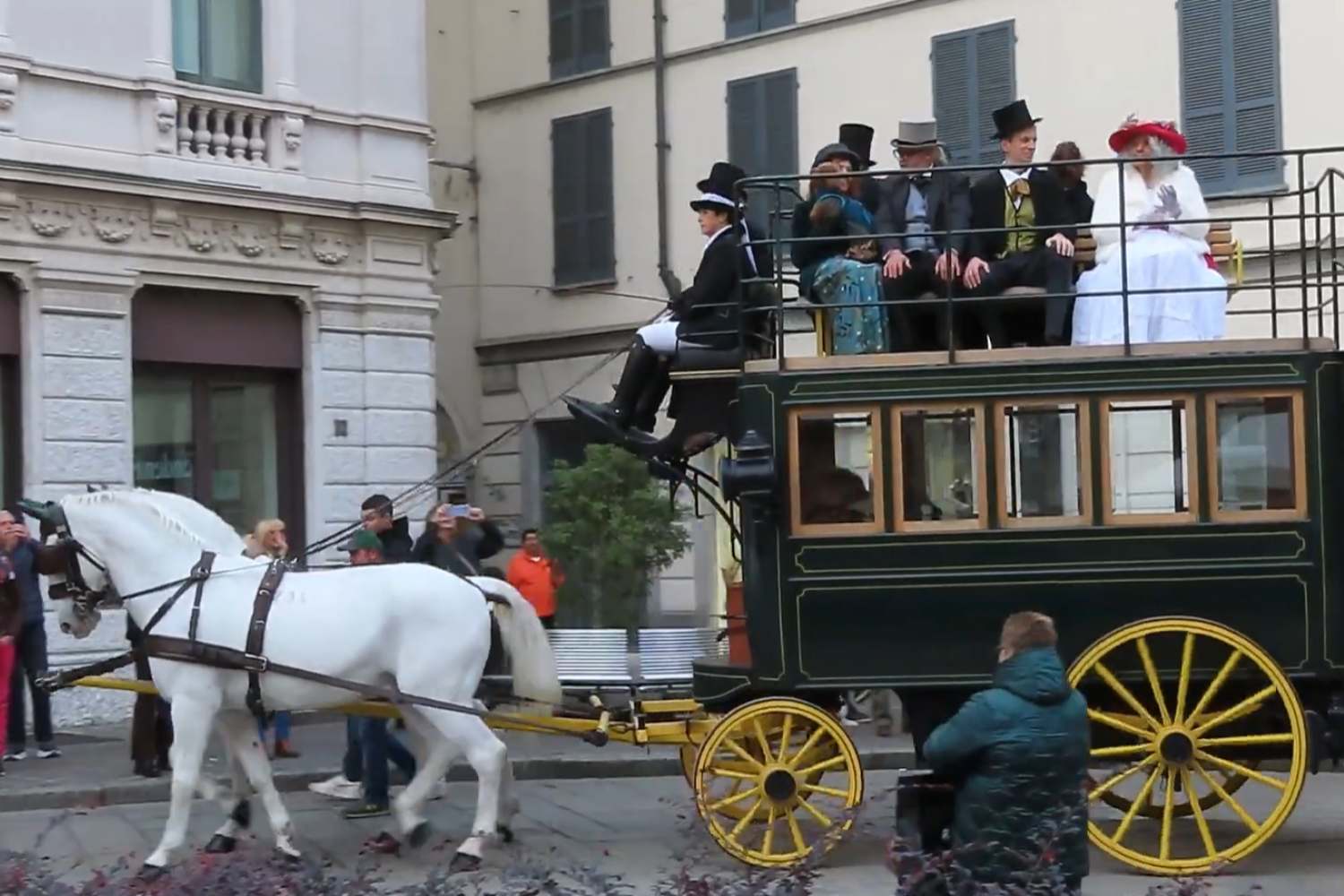
A real dive into the past that has vehemently reignited the ethical clash on animal exploitation in historical re-enactments. On Sunday 25 October, the streets of the center of Monza, from Largo Mazzini to Arengario along Via Italia, were transformed into the theater of celebrations for the 150th anniversary of the historic Milan-Monza tramway, inaugurated in 1876.
The initiative, entitled 150 years on the road together – The Tramway is back in action and organized by the Connetti Monza and Brianza and Mnemosyne associations with funding from the Municipality, saw an 1880 omnibus pulled by two gray horses parade, accompanied by figures in period clothing, live music and tastings of the traditional Pan Tramvai.
The harsh protest of LAV and the requests to the mayor Paolo Pilotto
The event raised a wave of indignation led by the Anti Vivisection League. Nadia Zurlo, head of the LAV Equine Area, sent a formal warning to the mayor Paolo Pilotto, asking for an immediate stop to the use of horses and finding the support of hundreds of outraged citizens. In 2026, it seems unacceptable to disguise cruelty and forced labor under the guise of tradition and folklore.
The claim of taking a leap into the past cannot and must not justify the restoration of anachronistic forms of animal coercion: the historical memory of a territory can and must be handed down through the use of restored vintage carriages, mannequins, figures and multimedia technologies, without transforming living beings into mere entertainment tools for the crowd.
The response of institutions and the cultural debate on animal welfare
Faced with the media storm, Mayor Paolo Pilotto specified that the economic contribution was assigned by an independent technical commission as part of a call for culture on the theme of transport, edited among others by Ettore Radice and Giada Turato, and that the granting of authorizations followed the ordinary process with the Local Police and SUAP.
However, the case raises a fundamental question about the role of institutions. Continuing to allow the use of horse-drawn carriages in public events means fueling an outdated anthropocentric vision. It is time for politics and civil society to say enough to the exploitation of horses once and for all, promoting a culture of respect and empathy that truly looks to the future.
