
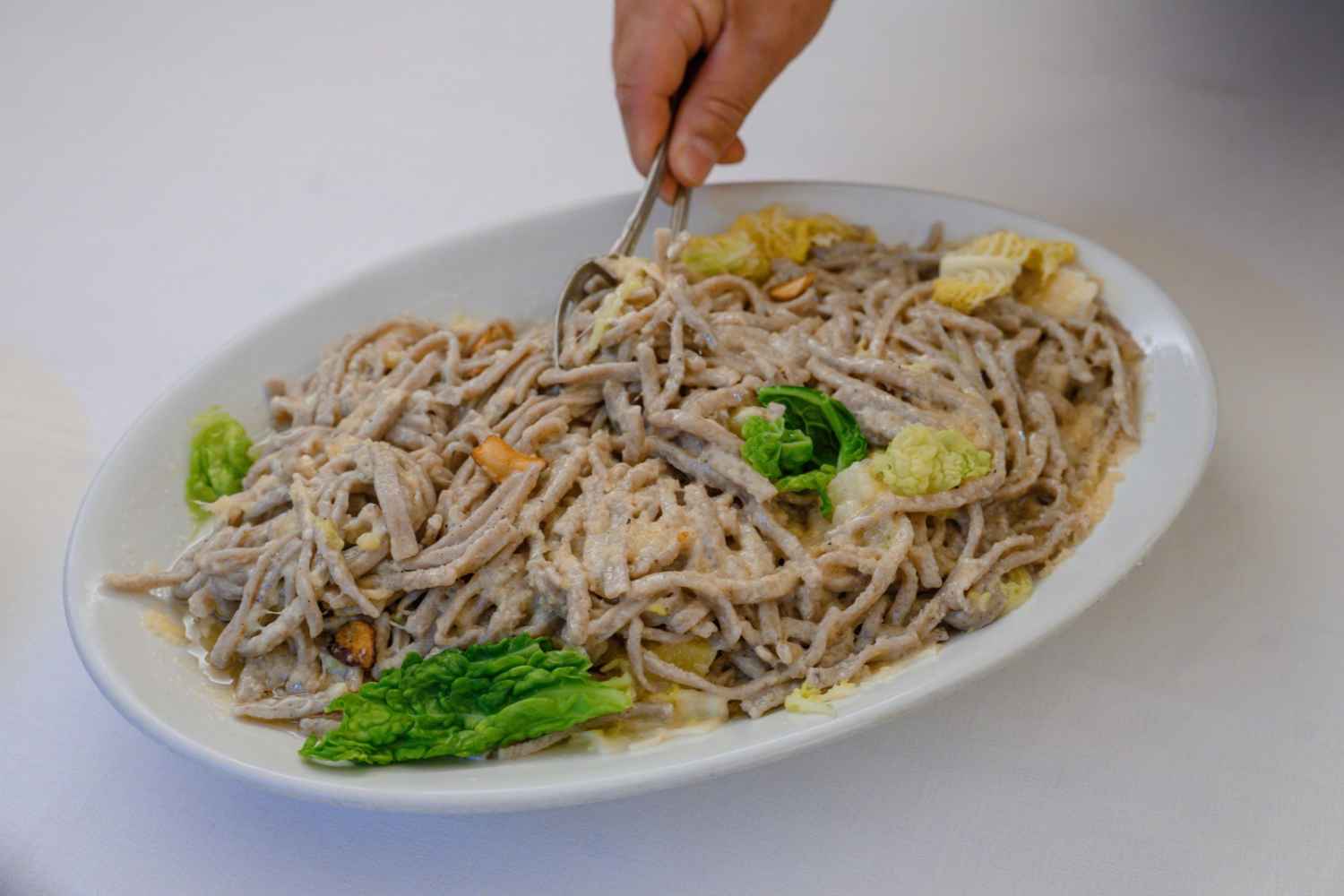
In mid-October, above 1,000 metres, the air already has another consistency. And it is there, after a few hours on the trail, that a plate of pizzoccheri stops being a specialty and becomes a necessity.
You order them upon arrival and wait: if they are made on the spot, they take about 25 minutes. Then the dish arrives steaming, with the cheese melted between the dark strips of pasta, the cabbage, the potatoes and a scent of butter (lots of it) and garlic.
We ate them at Cascina Biancotti, in Villa di Tirano, at 1,500 meters above sea level and just 5 km from Aprica, along the road to Trivigno. It is a substantial recipe, born when nothing was thrown away in the kitchen and what the fields and stables provided.
And although today pizzoccheri can be found in restaurants throughout Italy, to discover their history you have to return to Valtellina, and in particular to Teglio, the village considered the homeland of this specialty.
Because pizzoccheri are the symbolic dish of Valtellina
To understand how pizzoccheri were born you need to look at the Valtellina landscape, the mountains surrounding the valley and the terraces cultivated for centuries by peasant families, and where other cereals struggled, buckwheat grew, thus over time it has become one of the most representative ingredients of local cuisine.
However, buckwheat is not a true cereal but a pseudocereal; its flour, dark and with a slightly toasted flavour, gives pizzoccheri their colour.
The rest was provided by the garden and the stable: potatoes, cabbage, butter, mountain cheeses. A meal that had to last a day of work in the fields.
What makes the difference is the Valtellina Casera DOP: a cow’s cheese, made from partially skimmed milk, which melts between pasta and vegetables without becoming stringy like mozzarella.
In Teglio the pizzoccheri recipe is a tradition to be cherished
For pizzoccheri you have to go up to Teglio, in the heart of Valtellina, where the Accademia del Pizzocchero was founded in 2002, which preserves the traditional recipe.
Because making pizzoccheri by hand requires a certain amount of experience, especially when it comes time to roll out the dough. It’s the so-called scarellaturaworking with a rolling pin which allows you to obtain dough of the right thickness (about half a centimeter wide), before cutting it into the characteristic short and wide strips.
A gesture that in the kitchens of the past was learned by watching, and which today the Academy tries to preserve and pass on by involving the new generations and bringing the Valtellina gastronomic culture into schools too.
The original recipe for Valtellina pizzoccheri
Preparing pizzoccheri at home is not particularly complicated, it takes about an hour and a half, almost all of which is for the dough and the pastry. The traditional recipe for Pizzoccheri della Valtellina PGI requires few ingredients, with precise proportions, and does not require additional condiments.
Ingredients for 4 people
How to prepare pizzoccheri, step by step
We start with the pasta, mix the buckwheat flour with the white flour and gradually add the water to obtain a compact dough, to be kneaded for about five minutes.
Once ready, roll out with a rolling pin until it reaches a thickness of 2-3 millimetres, then cut the pastry into 7-8 centimeter wide bands. Overlap them and cut them widthwise to obtain the typical pizzoccheri strips, about half a centimeter wide.
In the meantime, put a large pan with salted water on the heat, in which the potatoes cut into chunks and the cabbage cut into small pieces are cooked.
After five minutes, add the pizzoccheri and let the cooking continue for about ten minutes.
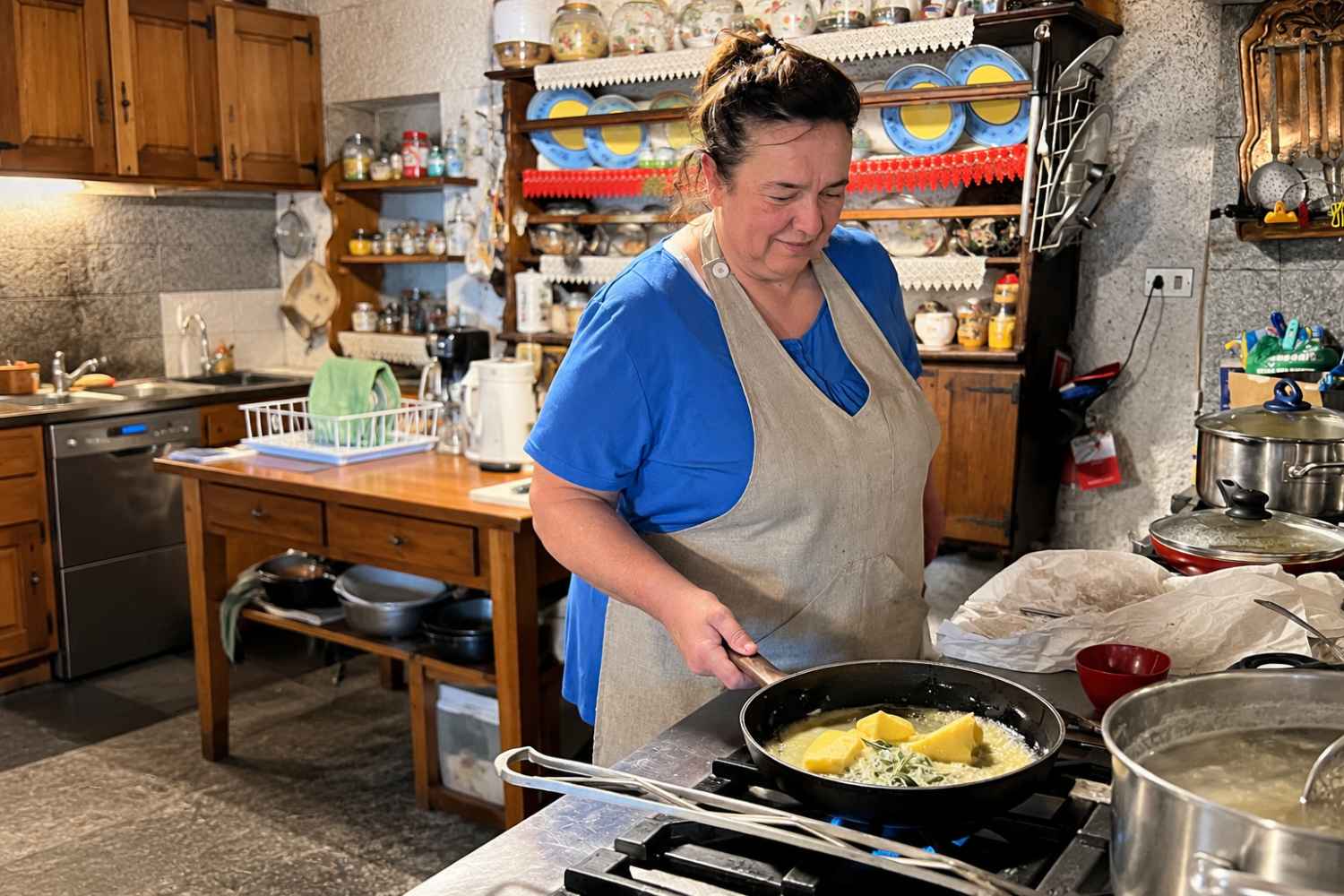
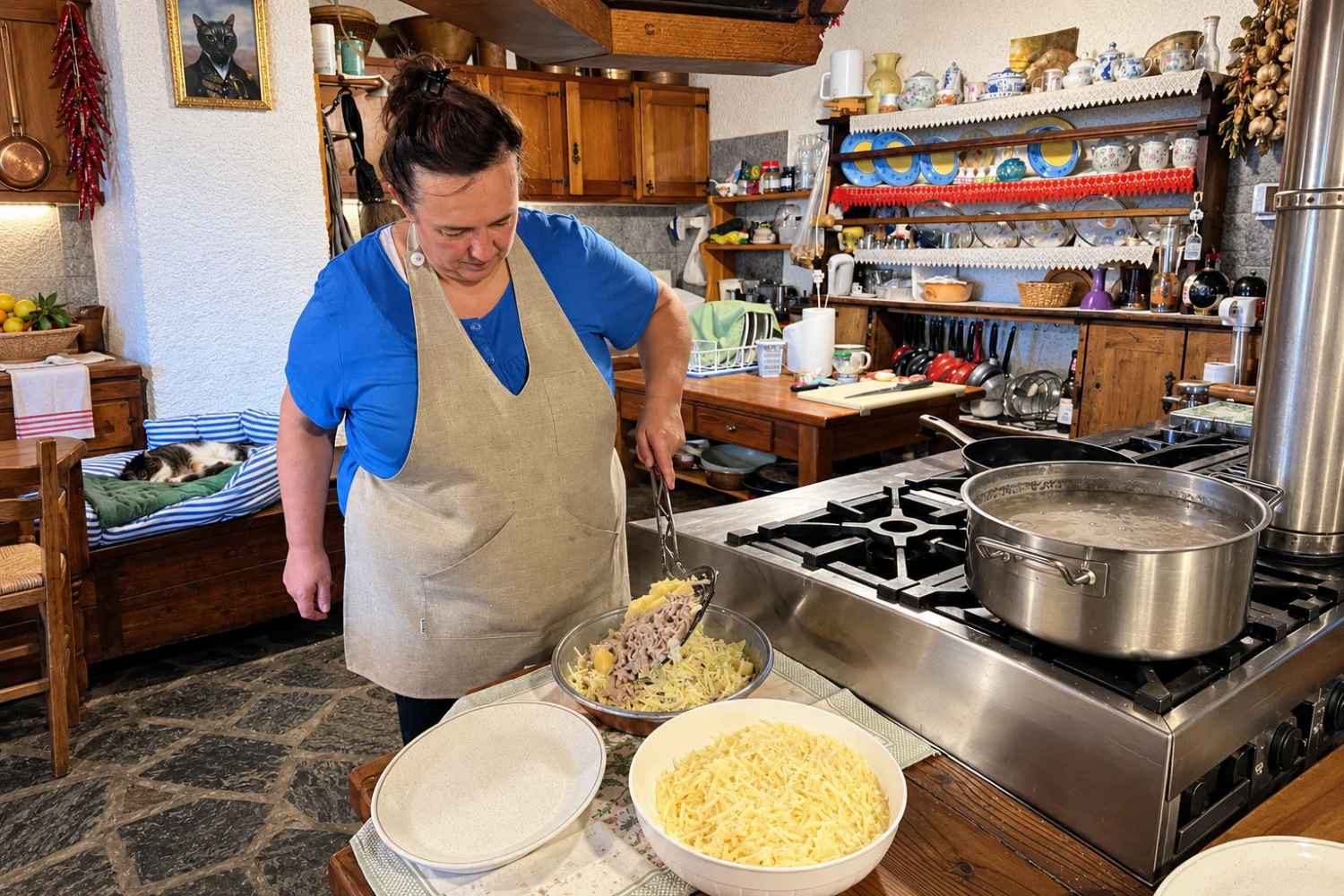
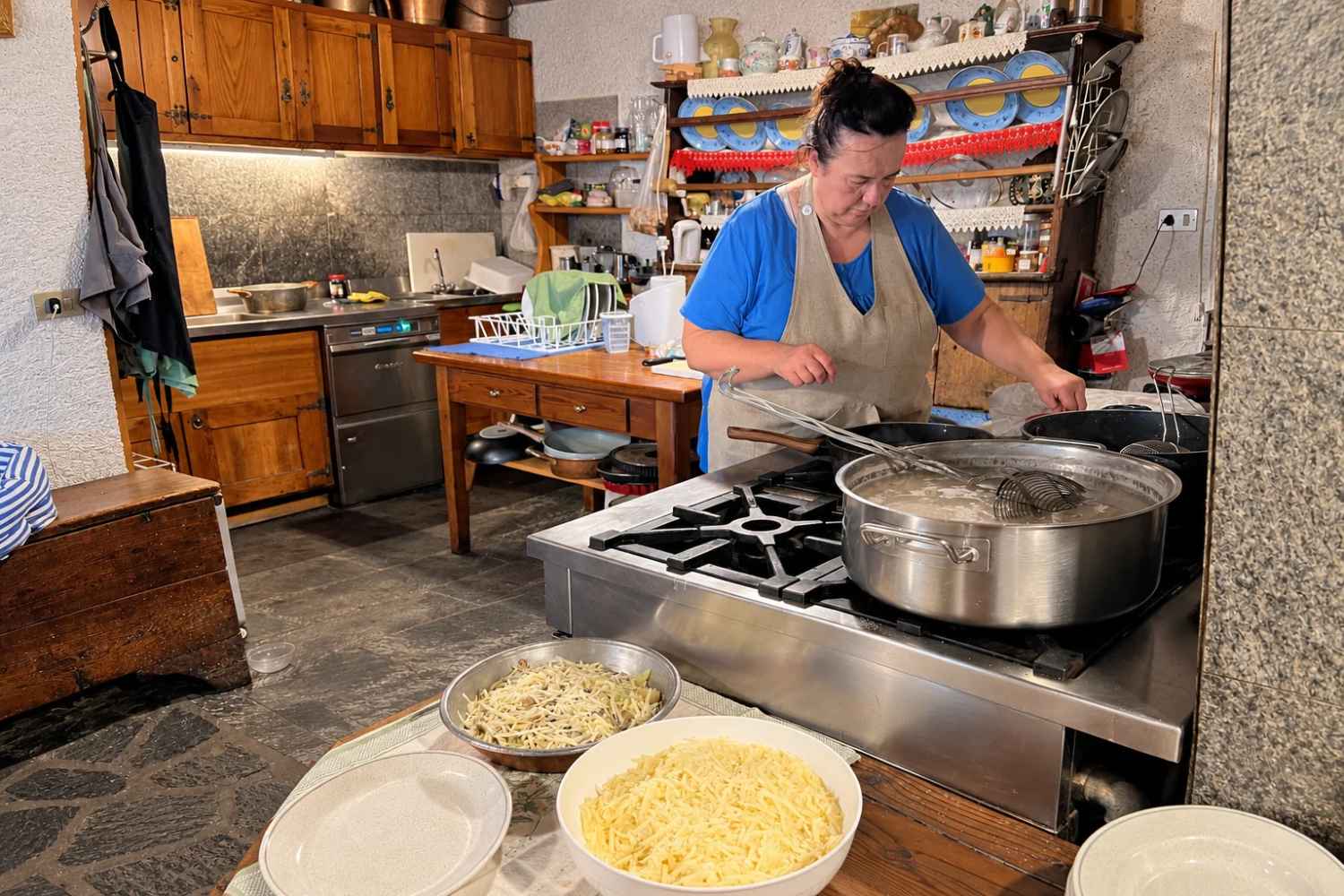
When the pasta is ready, collect the pizzoccheri and vegetables with a slotted spoon and transfer them, little by little, into a hot pan. The Valtellina Casera DOP cut into flakes and the grated parmesan cheese are distributed between one layer and the other, so that the heat of the dough makes them melt.
@GreenMe
In a saucepan, melt the butter with the garlic clove and let it go until the butter becomes nutty and the garlic toasts a little. Pour it immediately, hot, onto the pizzoccheri.
La pesteda and sage: the variations that make purists turn up their noses
Then there are those who put a pinch of pesteda on the pizzoccheri, the typical Grosio condiment based on garlic, pepper, salt and mountain herbs, including wild thyme and yarrow muscat. And who, when melting the butter, also adds a few sage leaves.
All delicious, of course, but woe betide you to talk about it in front of the purists of the Accademia del Pizzocchero di Teglio: in the traditional recipe there is butter, garlic and pepper. Sage and pesteda are not included, then at home everyone does as they want, the important thing is to know that the original recipe is different.
Savoy cabbage, ribs or green beans? How the recipe changes with the seasons
Pizzoccheri are often associated with autumn and winter, also due to the presence of cabbage, which lends itself well to preparations in the colder months; in other seasons the potatoes remain a fixed ingredient, and the cabbage can be replaced with the ribs or green beans.
A dish to eat at least once in a mountain refuge
@GreenMe
Pizzoccheri can also be prepared at home, with handmade or purchased ready-made pasta, but after a walk in the mountains, when it starts to get cold outside, they have a decidedly different flavour.
If you find yourself near Aprica, it is worth stopping at Cascina Biancotti, in Pian di Gembro, along the road to Trivigno. It is located at around 1,500 meters above sea level, 5 kilometers from Aprica, and offers home-style cuisine linked to the Valtellina tradition.
A piece of advice, after our experience: order the pizzoccheri as soon as you sit down. If they are freshly prepared, you have to wait about twenty minutes. In the meantime you can order something else, or finally enjoy a well-deserved rest after the walk.
