
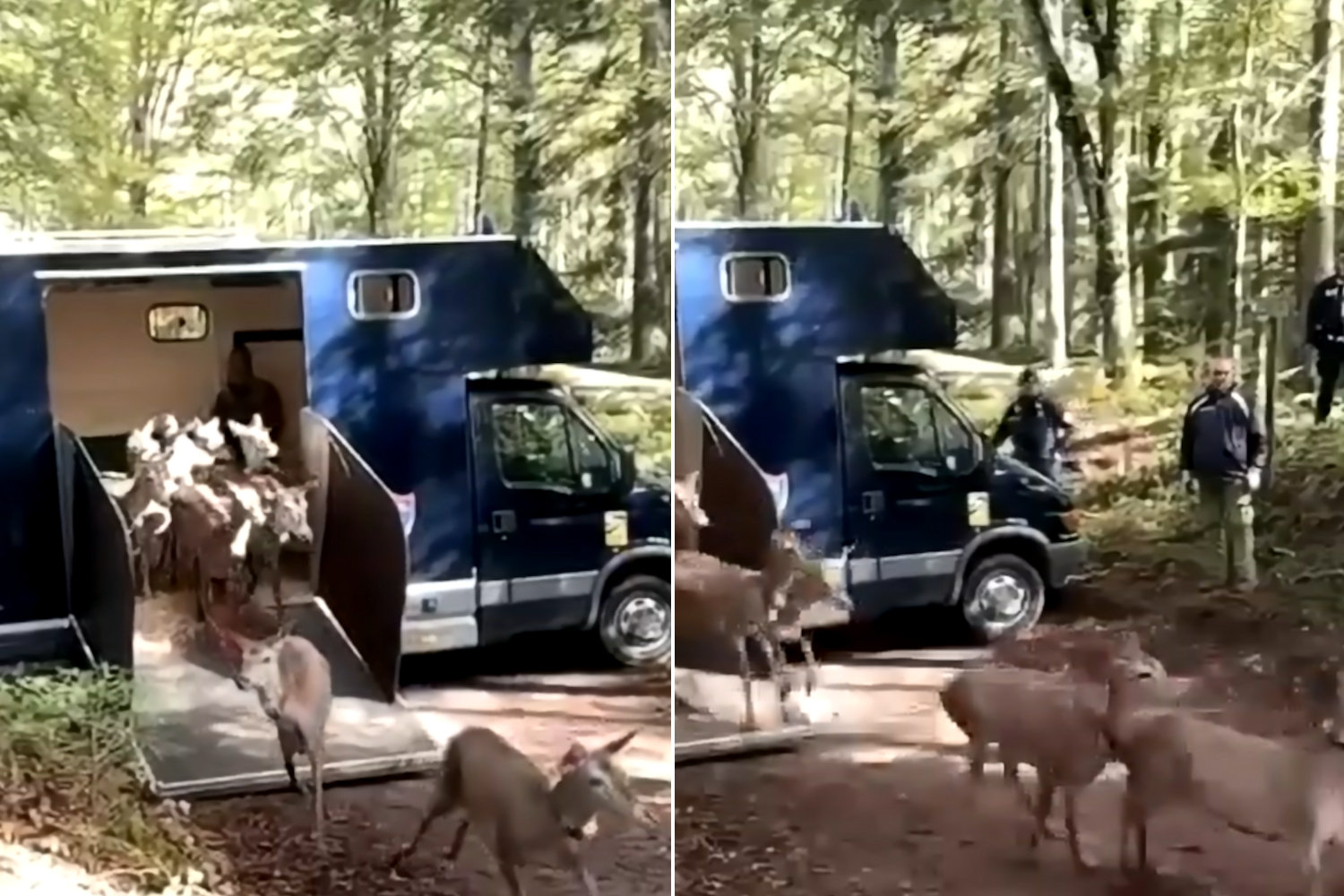
A new hope for survival makes its way into the forests of Southern Italy. Between 22 and 25 October 2026, the fourth phase of Operation Cervo Italico was successfully concluded, an ambitious scientific project which saw the transfer of 17 specimens of Italic deer (11 females and 6 males) from the Bosco della Mesola Nature Reserve, in the province of Ferrara, to the Serre Regional Park, in Calabria.
These new arrivals will strengthen the small community already present in the Calabrian territory, made up of approximately 33–34 individuals. Promoted and supported by funding from the Calabria Region through the regional program FESR ESF+ 2021-2027, the initiative sees scientific and protection bodies of the caliber of WWF Italy, the University of Siena, Dream Italia, the Carabinieri Biodiversity Group and the Serre Regional Park collaborate in synergy.
History and scientific vulnerability of an exclusive subspecies
The Italian deer (Cervus elaphus italicus) represents a completely unique native subspecies in the world, characterized by smaller size and less branched antlers compared to other European populations. Once widespread in the plains and forests of much of north-eastern Italy, this relict population risked definitive disappearance due to uncontrolled hunting and the progressive anthropisation of the habitat.
Between 1945 and 1947, according to historical data collected by ISPRA, just about ten specimens survived confined to the Ferrara area alone. Geographic isolation in a single ecosystem has kept the risk of extinction caused by localized fires, epidemics or low genetic variability very high. To overcome this danger, in 2023 experts started the creation of a second “safety” population among the warm and protected forests of Calabria.
Already 12 births in three years
The effectiveness of the repopulation operation has already provided exceptional answers on a scientific level. From 2023 to today, nature has taken its course with a total of 12 births recorded in the field: 2 cubs in 2024, 6 in 2025 and 4 in 2026. Researchers at the University of Siena constantly monitor the reproductive success, movements and habits of the deer through the combined use of camera traps and sophisticated GPS collars applied to the specimens.
In addition to the biotechnological component, a fundamental element concerns peaceful coexistence with farmers in the area to prevent any damage to crops. In the coming months, the WWF and the managers of the Serre Regional Park will hold a series of public meetings aimed at citizens to inform them on the correct behavior to adopt and celebrate the return of this faunal presence.
