
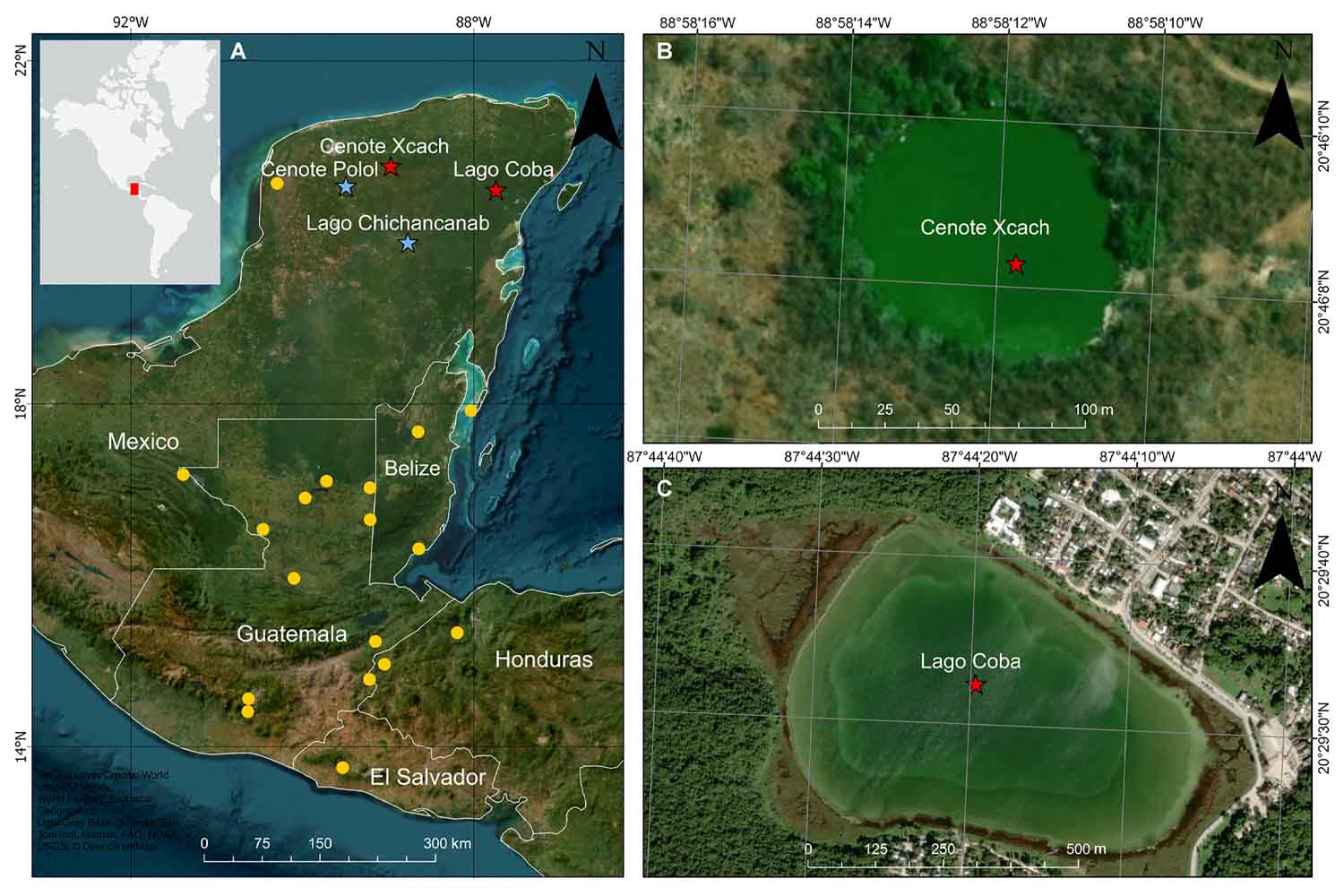
Almost two thousand years ago, mercury began to accumulate in Lake Cobá, in present-day Mexico. As the centuries passed, concentrations increased until they reached levels dangerous for aquatic organisms. In the same period, algae and small animals that populated those waters drastically decreased. And one possible explanation leads directly to the Maya and one of their most precious substances: cinnabar, an intense red mineral used to decorate buildings, sacred objects and tombs.
This story is told by a study published in Science Advances, coordinated by Matthew Neal Waters of Auburn University in the United States. Analyzing the bottom of two basins on the Yucatán Peninsula, researchers found mercury concentrations much higher than the thresholds considered dangerous for aquatic life today, along with traces of a serious impoverishment of ecosystems.
A discovery that adds a chapter to the environmental history of the Maya, a civilization capable of building large cities, monumental temples and ingenious systems for collecting water. Some of their activities, however, may have contributed to contaminating the very natural resources on which they depended.
That red so precious that it could become poisonous
Red had an important meaning in Mayan culture. It was used in religious ceremonies, on building decorations and in funerary rituals. To obtain that intense hue, the Maya also used cinnabar, a mineral that contains mercury. The problem is that Mercury is a toxic metal.
Its danger changes depending on the form in which it is found and the transformations it undergoes in the environment. According to the researchers, some of the mercury used by ancient communities may have been washed into surrounding basins by rain. Year after year, the metal would have settled to the bottom, accumulating in the sediments.
To find out what had happened, the scholars examined the seabed of Lake Cobá and the Xcach cenote. The latter is a natural cavity in the limestone rock that collects water, a very common formation in the Yucatán Peninsula. The researchers extracted samples of mud and other materials deposited over time from the bottom. Each layer tells something about the period in which it was formed: the deeper you go, the further you go back through the centuries.
By analyzing fragments of wood and charcoal, they were able to establish the age of the deposits, some of which dated back over two thousand years. Then they measured the amount of mercury and looked for traces of organisms living in the water. The results showed contamination lasting hundreds of years.
In the two basins the mercury reached dangerous levels
In Lake Cobá, mercury concentrations began to increase around 40 AD, reaching a maximum between 250 and 300 AD. Only around 520 AD did they return to close to previous levels. In the Xcach cenote the situation was even more serious. Concentrations remained high for several centuries, peaking around 720 AD
To understand how dangerous those values were, the researchers compared them with the thresholds used today to evaluate sediment contamination. In some periods, Mercury concentrations far exceeded levels associated with possible harm to aquatic organisms. But the most interesting data comes from observing what happened to life in the basins. In layers with more mercury, the researchers found far fewer traces of algae, bacteria and small aquatic animals, such as tiny crustaceans, snails and insect larvae.
It was therefore not just a question of the decline of a species. What seemed to be affected were different organisms that, together, allowed the ecosystem to function. Algae, for example, constitute a source of nourishment for numerous small animals, which in turn can become food for other organisms. When one part of this chain becomes impoverished, the consequences can affect the others too.
The authors of the study talk about a collapse of aquatic food webswhich occurred during the same periods when mercury concentrations were highest. The coincidence is significant and supports the hypothesis of a toxic effect. However, the sediments do not allow us to establish with absolute certainty that mercury was solely responsible for the deterioration of ecosystems.
There’s also another detail: In samples taken from two lakes used for comparison, the researchers found no similar increases in mercury. This suggests that the contamination was linked to activities carried out near the two basins, rather than to a widespread phenomenon across the entire region.
Mayan villagers may also have been exposed to mercury
The contamination of the basins could also have posed a problem for the people living nearby. Water was a fundamental resource for Mayan communities, especially during the drier periods of the year. If contaminated, it could become a source of mercury exposure.
Some forms of this metal can in fact accumulate in aquatic organisms and pass from one animal to another through food. As a result, humans may also have come into contact with harmful amounts of mercury. According to the researchers, inhabitants of the Cobá and Xcach areas may have suffered prolonged exposure, lasting decades or even centuries.
On this aspect, however, direct evidence is still lacking. The study analyzed the sediments of the basins, without examining human remains to identify any traces of intoxication. We therefore do not know how many people have been exposed to the metal nor what consequences they may have suffered. The suspicion of contamination of Mayan water resources, however, already has some precedents.
In Tikal they had already found contaminated water supplies
In 2020, a study published in Scientific Reports identified high concentrations of mercury in two large water supplies in the ancient city of Tikal, in what is now Guatemala. In some samples, the level of the metal exceeded the threshold used to identify heavily contaminated sediments by more than ten times. The researchers had also found traces of cyanobacteria, microorganisms that under certain conditions can produce toxic substances.
The presence of these contaminants had led to the hypothesis that some of the city’s water reserves had become dangerous for the inhabitants, just as Tikal was going through a difficult phase, also marked by long periods of drought. The new research shows that similar problems may have affected other areas of Mayan territory.
The environmental consequences of human activities, moreover, are not something new introduced by factories and cars. Ancient civilizations also profoundly modified the territory in which they lived, through agriculture, the construction of cities and the use of natural resources. In the case of the Maya, scholars already knew the effects of deforestation, soil erosion and droughts. Now we must also consider the possible contamination of the water.
This does not mean that mercury caused the decline of the Mayan civilization. The research concerns two specific basins and does not demonstrate a direct link between pollution and the abandonment of cities. It shows, however, that the deterioration of the environment could also have origins linked to the activities of the communities themselves.
Cinnabar was used to color buildings and sacred objects. Some of the mercury may have ended up in lakes, where aquatic organisms declined as the metal continued to accumulate. Time then covered those deposits with new layers of sediment. Almost two thousand years later, researchers managed to find traces of that contamination. The color disappeared, the mercury remained.
