
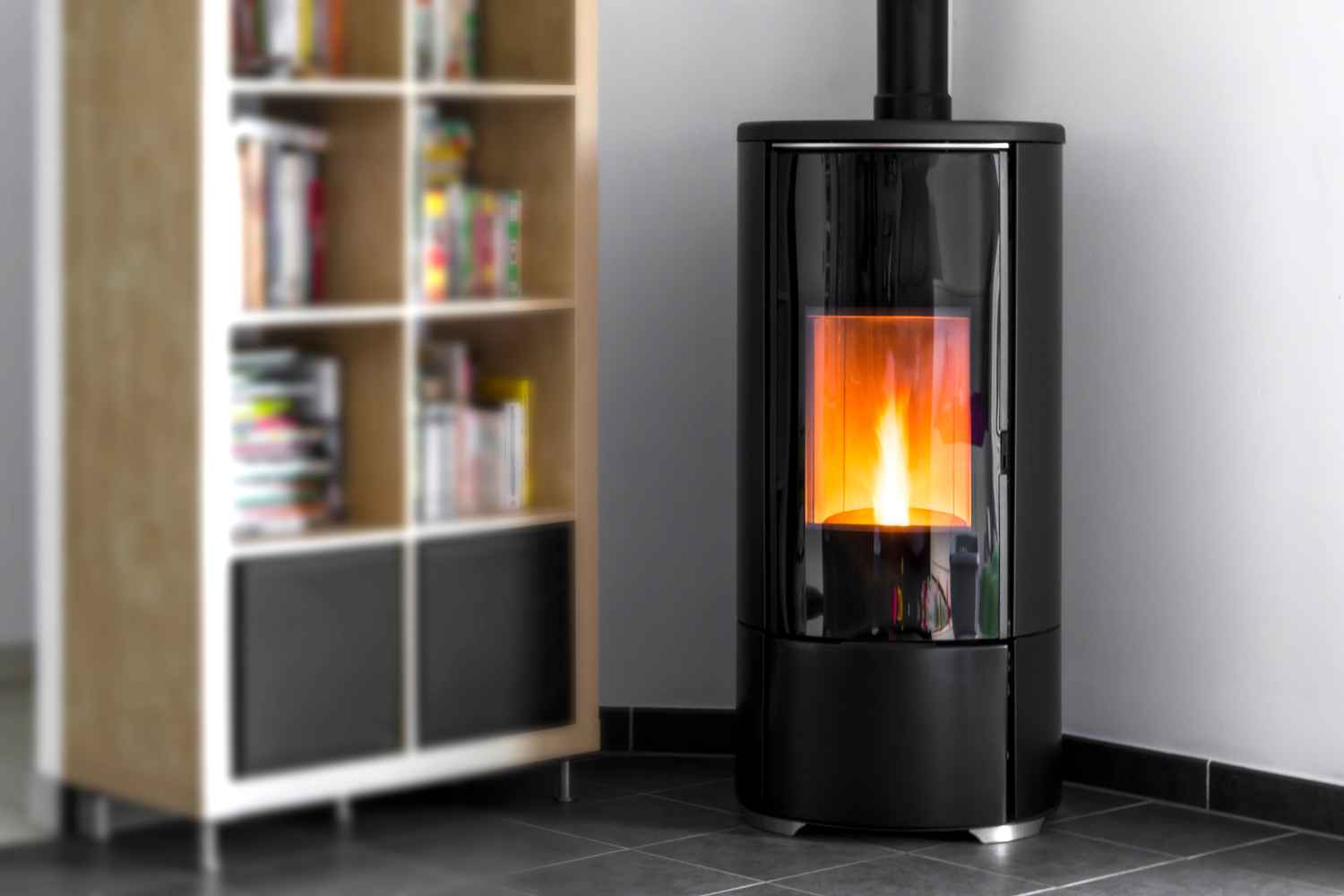
You turn on the pellet stove, the flame begins to heat the room and everything seems to work perfectly. Then, after a few hours, the glass is already covered with a black patina that prevents you from even seeing the fire.
It is one of the most common inconveniences for those who use this heating system. A slight deposit of soot, especially after several uses, is normal. However, if the glass turns completely black in a short time or you have to clean it practically every day, there may be something to check.
The cause is not necessarily dirty glass, it often depends on the way the pellets burn inside the stove. And understanding why it happens can help you avoid unnecessary consumption, malfunctions and more expensive maintenance.
Why does the glass of the pellet stove turn black?
During combustion, the pellet produces gases and particles which, if not burned correctly, can deposit on the colder surfaces of the combustion chamber, including the glass.
Modern stoves are generally equipped with a system that conveys a flow of air along the internal surface of the door, creating a sort of barrier against the accumulation of soot, it is the so-called system air wash.
If the air passage is reduced or combustion does not take place in optimal conditions, this protection may become less effective. The result is that annoying dark film that appears even shortly after turning on the stove.
The pellet you use could be the problem
Before thinking about a fault, check the fuel. A pellet that is too humid, of poor quality or with a high percentage of ash can compromise combustion and encourage the formation of residues.
This is why it is important to choose a certified product, possibly ENplus A1, checking the characteristics shown on the packaging and the compatibility with your stove.
The way in which it is stored also matters: leaving the bags directly on a damp floor, in the garage or in the cellar, can damage the granules, which tend to swell and crumble. If you notice a lot of dusty material at the bottom of the bag or visibly deteriorated pellets, it is better not to use it.
Pay attention to the air and door seals
Another possible cause is the poor circulation of air necessary for combustion. When the fire pit is full of residue or the air passages are blocked, the flame can become less regular and produce more soot.
Door seals also play an important role. If they are worn or do not guarantee correct closure, they can alter the air intake and the functioning of the stove. Observe the flame: if it appears unusually weak, dark or accompanied by very rapid blackening of the glass, there may be a combustion problem.
However, avoid modifying the technical parameters, draft or air vents yourself. These are adjustments that must be checked by qualified personnel, also to prevent possible problems related to fumes.
Even using it all the time at minimum can encourage soot
Keeping the stove constantly at the lowest power may seem like a good strategy to consume fewer pellets, but this is not always the case. In some models, prolonged idling can lead to lower combustion temperatures and increased residue build-up, especially if the adjustment is not adequate.
It does not mean that you must always use the stove at maximum power. The best choice is to follow the manufacturer’s recommendations, keep the appliance efficient and have the settings checked when recurring anomalies occur.
How to clean the glass of your pellet stove without ruining it
If the glass is already blackened, the first rule is to wait until the stove is completely turned off and cold. To remove light deposits you can use a soft, slightly damp cloth or a specific product for stove glass, as long as it is compatible with the manufacturer’s instructions.
There is also an old home remedy of dipping damp paper in fine ash and rubbing it on the glass. It is a popular method, but not suitable for all devices: any abrasive particles can scratch the surface. Better to avoid it if the manual does not allow it.
Do not use metal scourers, blades or aggressive detergents and be careful not to get the seals wet. Routine cleaning of the brazier and accessible parts, carried out according to the manual, helps to limit the accumulation of residues. However, it does not replace periodic maintenance of the appliance and the smoke evacuation system.
If the glass continues to blacken quickly even after cleaning and with good quality pellets, it’s time to contact a technician.
