
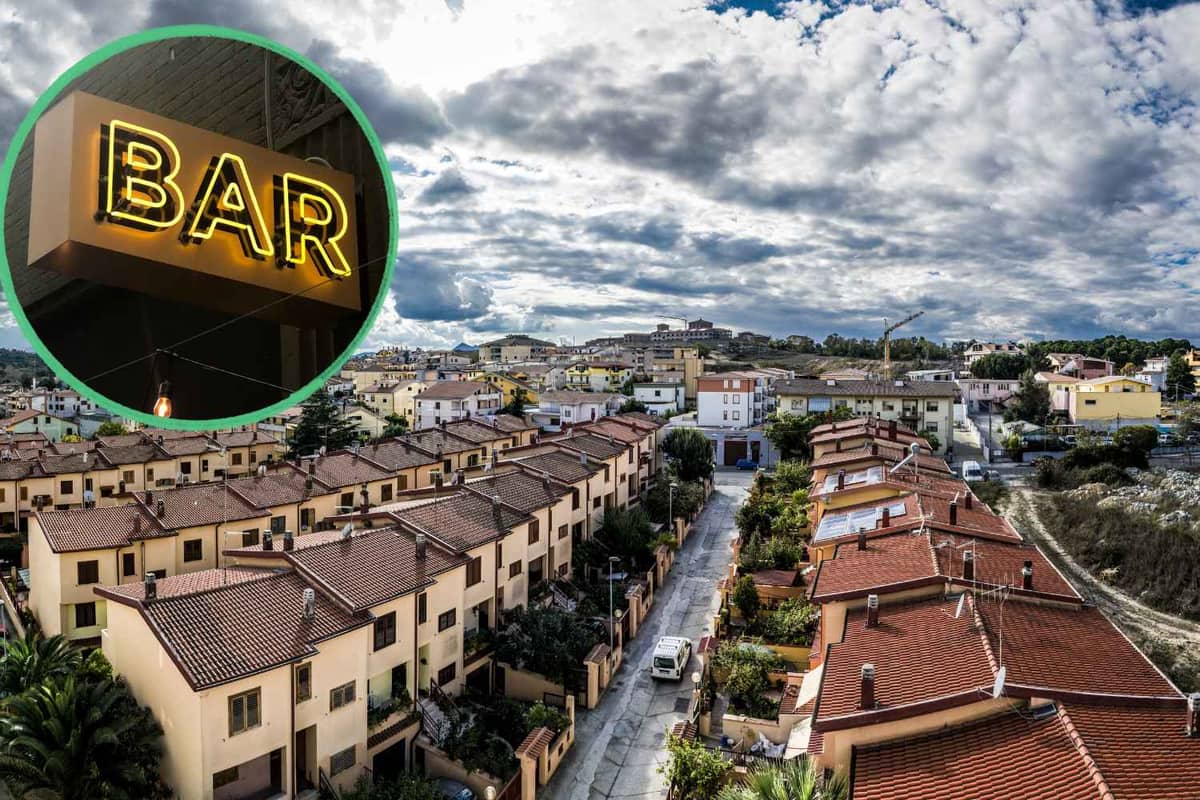
It is not Naples nor Rome or Milan. The Italian province with the most bars in relation to the population is Nuoro, in Sardinia. This is confirmed by the 2025 Quality of Life ranking of the Sole 24 Ore, which places the Nuoro area in first place nationally with 5.59 bars per thousand inhabitants.
A figure significantly higher than the Italian average, equal to 2.92, and sufficient to even surpass two Ligurian provinces historically characterized by a high concentration of bars: Savona, second with 5.39 bars per thousand residents, and Imperia, third with 5.32.
The record concerns the entire provincial territory and not just the capital municipality. The data also measures the number of activities in relation to the resident population, not the quantity of coffee consumed or the actual attendance of the premises.
Why are there so many bars in the Nuoro area?
To understand this concentration we must also look at the structure of the territory. The province includes numerous small towns, where the bar is often one of the main meeting points.
In villages, the venue can perform functions that go beyond serving coffee and drinks. It is the place to meet friends, read the newspaper, discuss local issues or simply spend time together.
Population also affects the outcome. In a municipality with few residents, the presence of two or three bars can determine a high density, without this necessarily meaning having more bars concentrated in the streets compared to a large city. Furthermore, the relationship between bars and inhabitants does not measure how much coffee is consumed or how many people frequent the establishments daily.
From zilleri to the hope of becoming a bartender: the Sardinian tradition
The link between the bars and the social life of the Nuoro area also emerges from a curiosity told by Repubblica in a 2024 report.
Once upon a time, among the wishes addressed to newborn children, there was a particular one: to become zilleraiuthat is, bartender. A profession that in the local culture could represent an activity recognized and rooted in the community.
The term comes from zillerithe traditional Sardinian bars, often characterized by simple furnishings and regularly frequented by the inhabitants of the town.
Alongside these historic venues, today there are modern bars, cafes and businesses offering breakfasts, aperitifs and small restaurant services. Environments and habits change, but in smaller towns the bar continues to represent a meeting space.
And the other Italian provinces? The record previously belonged to Savona
The ranking has not always seen Nuoro in first place. In 2022 the record belonged to the province of Savona, with 5.28 bars per thousand inhabitants. Imperia followed, with 5.11, and Sassari, with 4.89. Nuoro occupied fourth position, with 4.44 rooms per thousand residents.
In 2023 the Sardinian province took first place, overtaking Savona, which for years had stood out for the high presence of commercial establishments linked to catering.
The rankings may change over time, both due to the opening and closing of businesses and due to changes in the resident population.
How many bars are there in Italy? Updated data
While Nuoro continues to stand out for the number of bars compared to inhabitants, at a national level the sector is going through a phase of contraction.
According to the FIPE-Confcommercio Catering Report 2026, at the end of 2025 in Italy there were 124,917 active businesses classified as bars and other similar establishments without kitchens, 2.2% less than the previous year.
In absolute terms, Lombardy confirms itself as the region with the highest number of companies, 19,546, followed by Campania with 13,850 and Lazio with 12,119. Sardinia instead has 4,583.
They are two different photographs of the same sector: the large regions concentrate the greatest number of activities, while in the less populous territories the ratio between bars and residents can reach much higher values. It is precisely this difference that allows the province of Nuoro to maintain its national record.
