
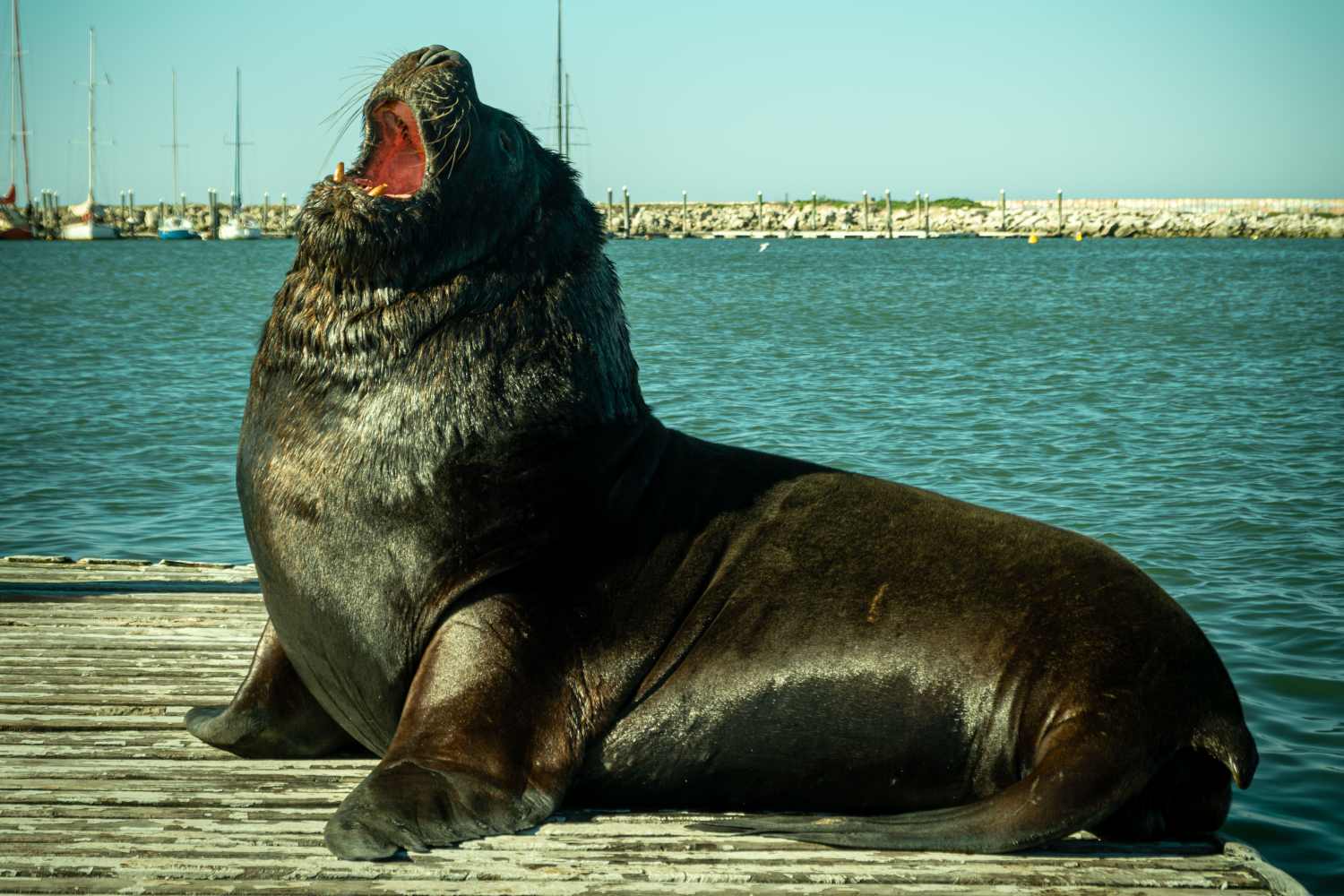
An unprecedented and disturbing scene on the coasts of Cape Town, South Africa: in September, on the very popular Muizenberg beach, a Cape fur seal (Arctocephalus pusillus pusillus) emerged from the water, attacking a group engaged in a surfing lesson and biting 9 people, including 6 children. The episode – reported on November 24 by the British newspaper The Times and preceded on November 23 by a new official National Sea Rescue Institute (NSRI) recall ahead of the summer season – marks the first persistent transmission of rabies ever documented within a wild population of marine mammals.
According to data provided by Gregg Oelofse, head of marine and coastal management of Cape Town, in 2026 there were around 19 bite incidents in the city, while in the Western Cape province, since the start of systematic monitoring at the end of 2021, there have been 189 recorded attacks, with a trend defined by Oelofse himself as a slow combustion made up of isolated groups of sick animals that appear and disappear.
The trail of the caparisoned jackal and the studies of the WOAH and the CDC
A study published in October 2026 on Emerging Infectious Diseases of the US Centers for Disease Control and Prevention (CDC).
The analysis of the genetic material has identified the black-backed jackal as the most probable source of the initial leap towards a coastal colony, detecting in the viral sequences of the seals a genetic identity of 99.79% compatible with a single introduction which took place years before 2024 and even documenting a reverse passage from a seal to a domestic dog. In parallel, a South African investigation of 216 brain samples collected between March 2023 and November 2025 found 85 positives, well above the historic previous isolate from an Arctic seal in 1980.
How contagion occurs and the health protocols of the NICD and WHO
Since it is not possible to distinguish with certainty an infected specimen only by aggression or neurological disorientation, the National Institute for Communicable Diseases (NICD) and the World Health Organization (WHO) invite swimmers, divers and surfers to always keep their distance, without approaching, touching or feeding seals and keeping dogs away. The virus is transmitted through saliva through bites, scratches or contact with open wounds and mucous membranes – not simply by swimming in the sea – and, despite having caused over 100 human exposures without confirmed human clinical cases until the most recent updates, it almost always remains lethal once symptoms appear.
In the event of a bite, it is necessary to immediately wash the wound with running water and soap for at least 15 minutes and immediately go to hospital to promptly start post-exposure prophylaxis with anti-rabies vaccine and any immunoglobulins, also evaluating preventive vaccination for those who regularly frequent those waters with a view to One Health integrated surveillance.
