
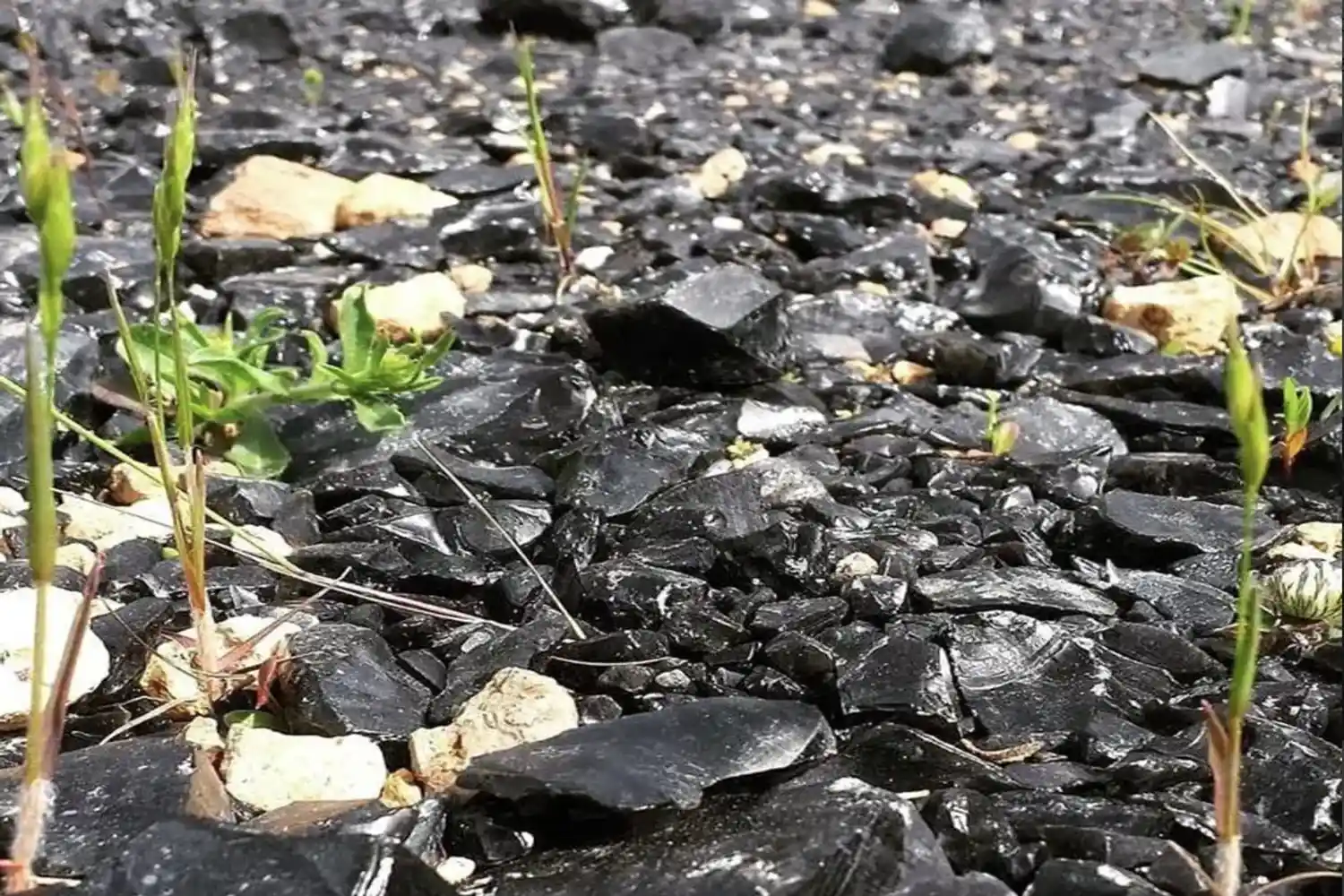
Monte Arci is not the Sardinia of postcards. No beaches, no turquoise coves: here there are holm oak forests, the soft hills of the Marmilla and a black and shiny stone which, already in the 6th millennium BC, attracted people from all over the Mediterranean. It is called obsidian, and in Masullas (Masuddasin Sardinian), in the province of Oristano, there is an entire park dedicated to her.
We have just been there, to walk the path of the Obsidiana Park of Conca ‘e Cannas, because the best period is this, the one considered “out of season” for Sardinia. I return with one certainty: it is one of those trips that work for everyone, from children to those who know nothing about archaeology. Indeed, especially for them.
The black glass that made the Mediterranean travel
Obsidian is a volcanic glass, on Monte Arci, an ancient volcano now covered in woods, it was formed by lava flows and for Neolithic men it was a kind of black gold: it chips with precision and cuts like a blade. Tools, tips, scrapers were made from it.
This was not a local affair, obsidian artefacts from Monte Arci have been found in Neolithic villages in Sardinia, Northern Italy and Southern France. It means that the stone started from here, crossed the sea and passed from hand to hand for hundreds of kilometers.
@MarioNotaro
How do you know? Each obsidian deposit has its own chemical fingerprint: by analyzing the trace elements of a splinter, archaeologists trace the source from which it comes. And in the central-western Mediterranean there were just four sources, all on Italian islands: Lipari, Pantelleria, Palmarola and Monte Arci, which is the largest of the four.
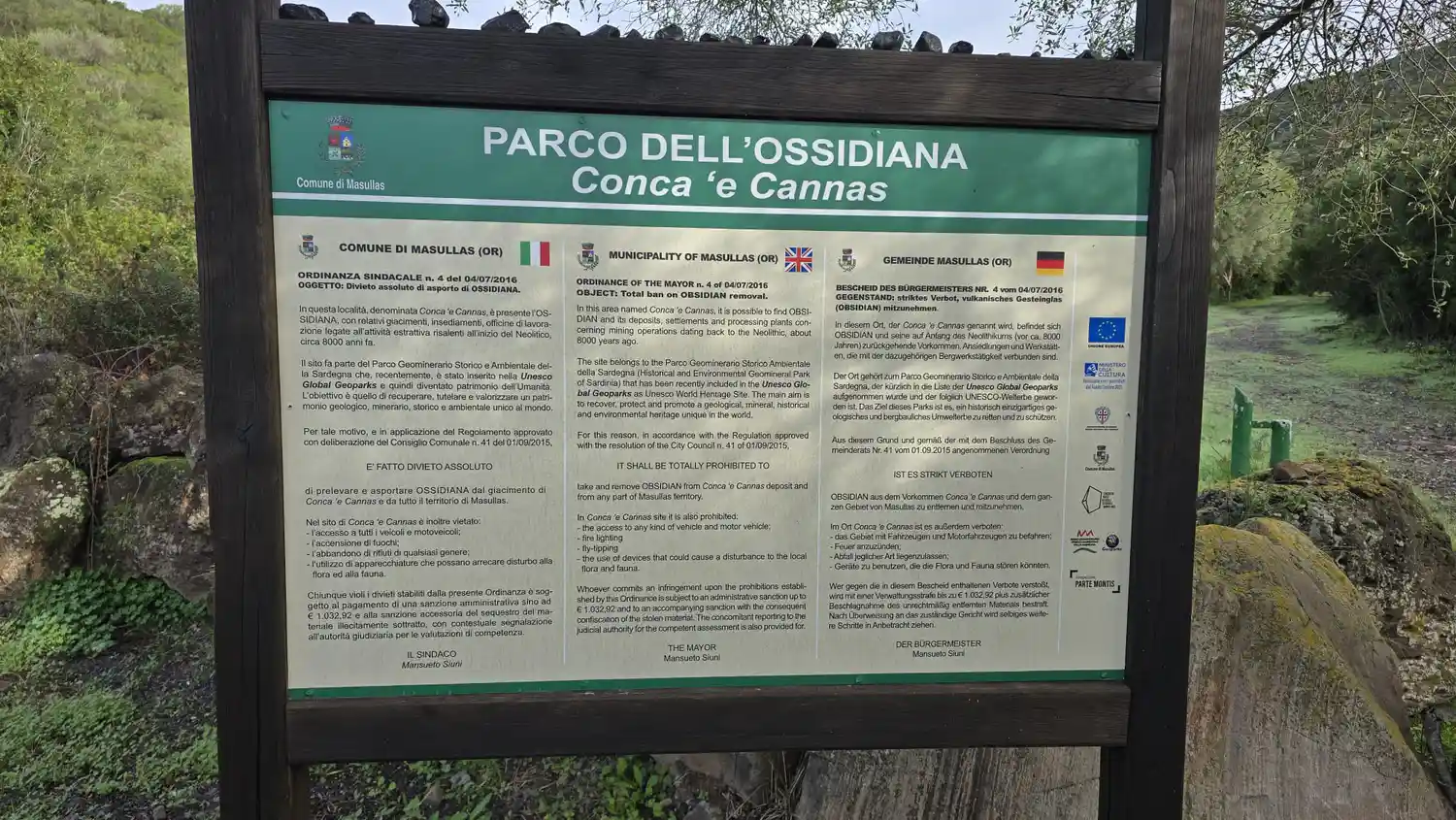
Conca ‘e Cannas is the heart of this story. At least three obsidian flows are known in the Arci volcanic complex, and this is one of them. In the second half of the 5th millennium BC a large workshop of specialized chipperers was installed here, among the first traces of systematic exploitation of the resource. In practice, a small prehistoric outdoor industry. Monte Arci, moreover, is one of the eight areas of the Historical and Environmental Geo-mining Park of Sardinia, established in 2001.
The path: five kilometers within everyone’s reach
Getting there is simple: follow the signs for the tourist resort Taraxi, where there is a car park, and immediately afterwards the sign for the Conca ‘e Cannas park appears. The trek starts from there.
@MarioNotaro
The route is approximately 5 kilometers round trip, without challenging slopes or difficult passages. It is also good for families with children. You need comfortable shoes and a water bottle, nothing more.
I did it with a guide, and I recommend it. The park can also be visited independently, but without someone to explain what you are looking at, a splinter of obsidian remains a black stone. With guidance, that stone becomes a tool, a workshop, a trade route from six thousand years ago. It’s a whole other walk.
A recommendation that shouldn’t be useful, but I’ll write it anyway: you look at the splinters, photograph them and leave them where they are. If you want to take a souvenir with you, it could cost you a lot (fines of up to more than €1,000).
The GeoMuseo: before or after the path, but not to be skipped
The park and the museum go well together, and in my opinion they should be seen as a couple. The Monte Arci “Stefano Incani” GeoMuseum is located in the center of Masullas, in the premises of the former Capuchin convent, a mid-seventeenth century building with the church of San Francesco next to it.
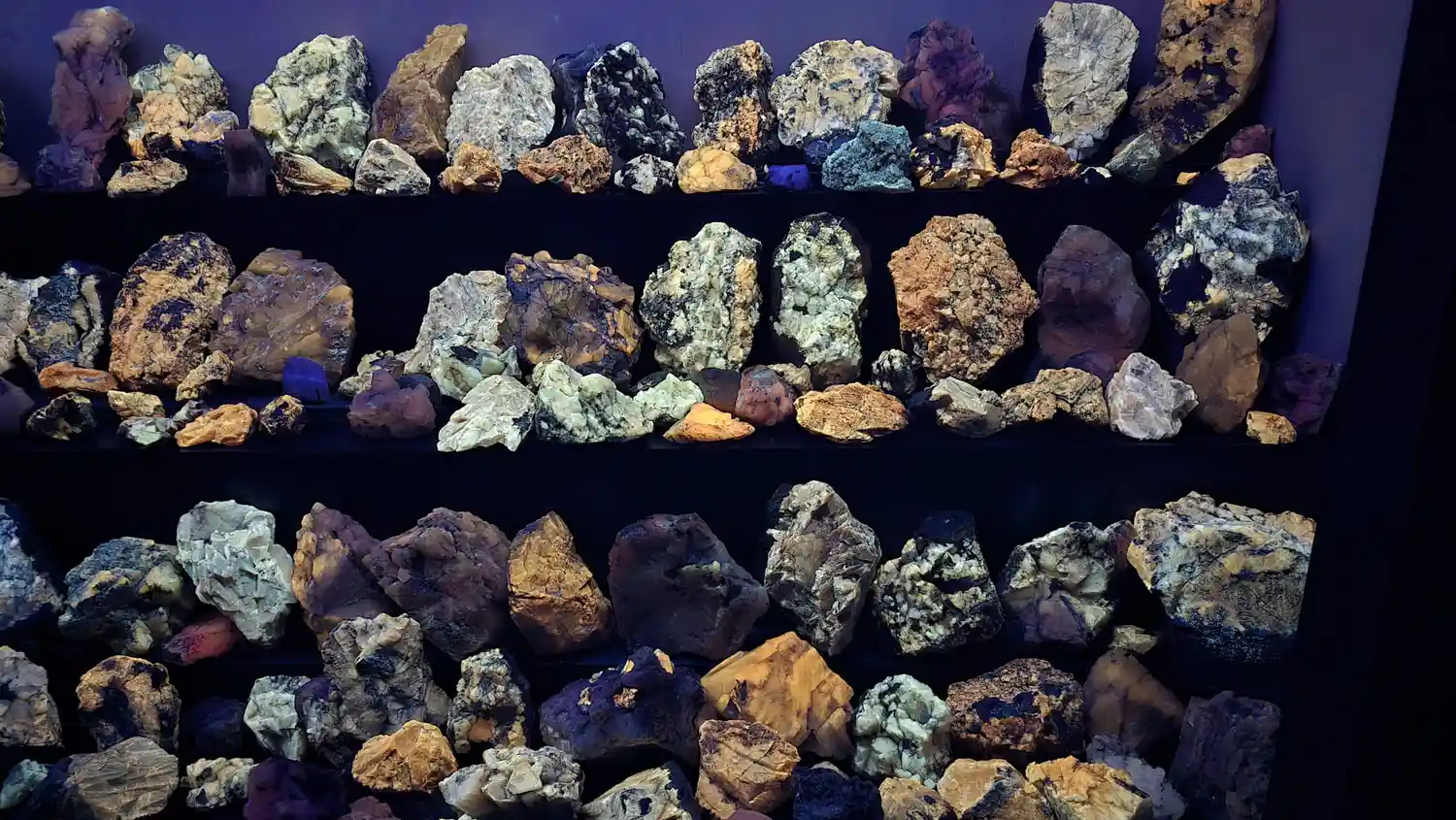
The route starts very wide, from the formation of the emerged lands, and then narrows on Sardinia and the Arci. It turns out, for example, that an enormous underwater volcano extending for 30 kilometers was formed in this area, and that its pillow washes they can still be seen in Su Carongiu de Fanari, on the outskirts of the town. Then there is the “fluid room”, with fluorescent minerals: it is the room that children will remember.
@MarioNotaro
The ticket costs 6 euros (5 euros reduced). The museum is open from Tuesday to Sunday, from 10am to 1pm and from 3pm to 6pm in winter; from March to October the afternoon extends until 7pm.
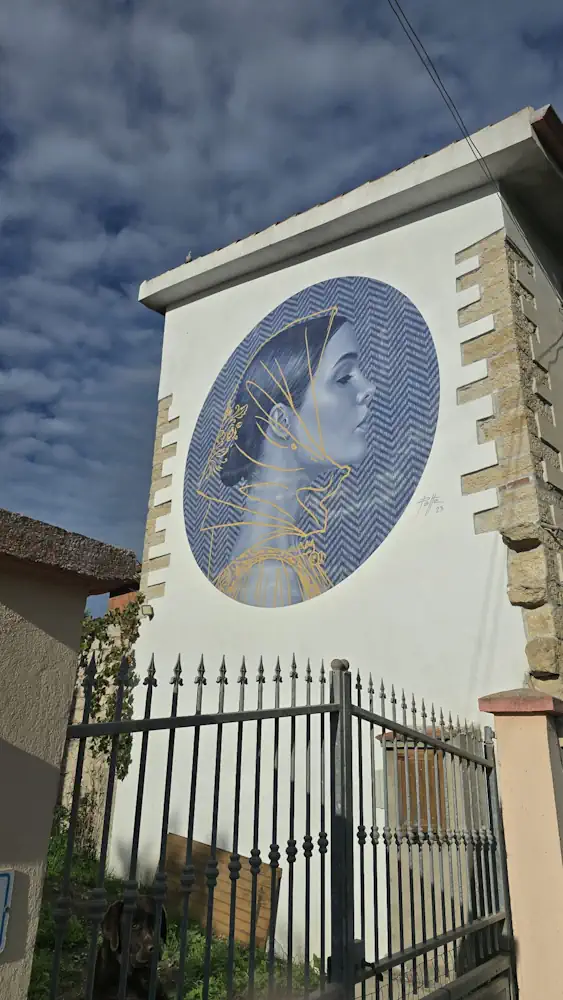
If you have an afternoon left after the museum, pop into nearby Siris. The Bidda Festival, a public art exhibition created to bring artists and small communities into dialogue, has left murals and installations on the walls of the town that are worth a walk with your nose in the air. Among these there is also a mural by Mauro Patta, one of the best-known Sardinian street artists, famous for the walls that tell the life, crafts and traditions of the small towns of the island.
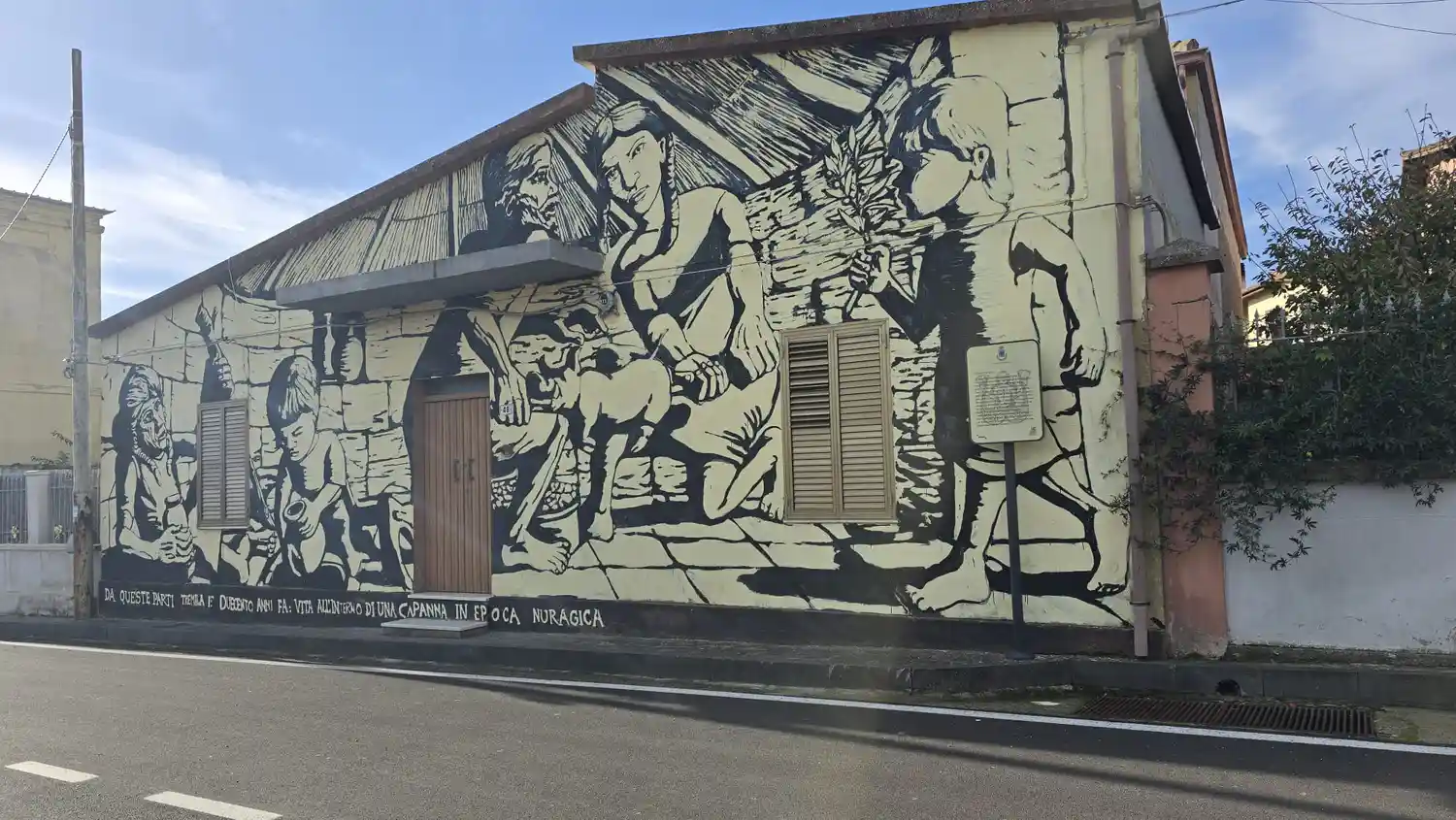
@MarioNotaro
Where to eat and sleep (and why book at Michele’s)
To organize yourself, it is best to think not by single country but by territory: the Parte Montis, the union of four small municipalities in the Marmilla at the foot of Monte Arci (Masullas, Morgongiori, Pompu and Siris), which together also manage museums and hospitality. They are very small centers and you can move from one to the other in a few minutes by car. The pace is the right one to break away from.
To sleep we chose the Parte Montis hotel, with rooms scattered between the center of Masullas, right in front of the town hall, and Pompu, above the Bread Museum. It is the best way to experience these countries from the inside, and not as a passing guest.
At the table, two addresses. The first is Fattorie Cuscusa, managed by Michele Cuscusa and his brothers. Michele is a character: very nice, a great talker, someone who talks about the territory with the same passion with which he cooks it. The dishes are traditional and above all local, with ingredients that mostly come from the family farm. The only rule, and it is not negotiable: booking is mandatory and a few days in advance.
Whichever table you choose, one of these two dishes must be ordered. The first are the lorighittas, hand-woven dough rings that come from nearby Morgongiori, on the slopes of Monte Arci: the name recalls traditional Sardinian earrings, and the technique is so meticulous that no machine has ever managed to replicate it. The second is fregula, the toasted semolina balls that are found throughout the island but which in these parts are prepared with particular care. When booking, please also mention your food preferences.
The other address is the Taraxi restaurant, simpler and more traditional: meat, fish and pizza, low prices and good quality. Perfect for the evening when you don’t feel like planning anything.
In short, the sea can wait for a weekend. Obsidian has been waiting for a few millennia, and it doesn’t seem to be in a hurry.
For information: Parte Montis Foundation
