
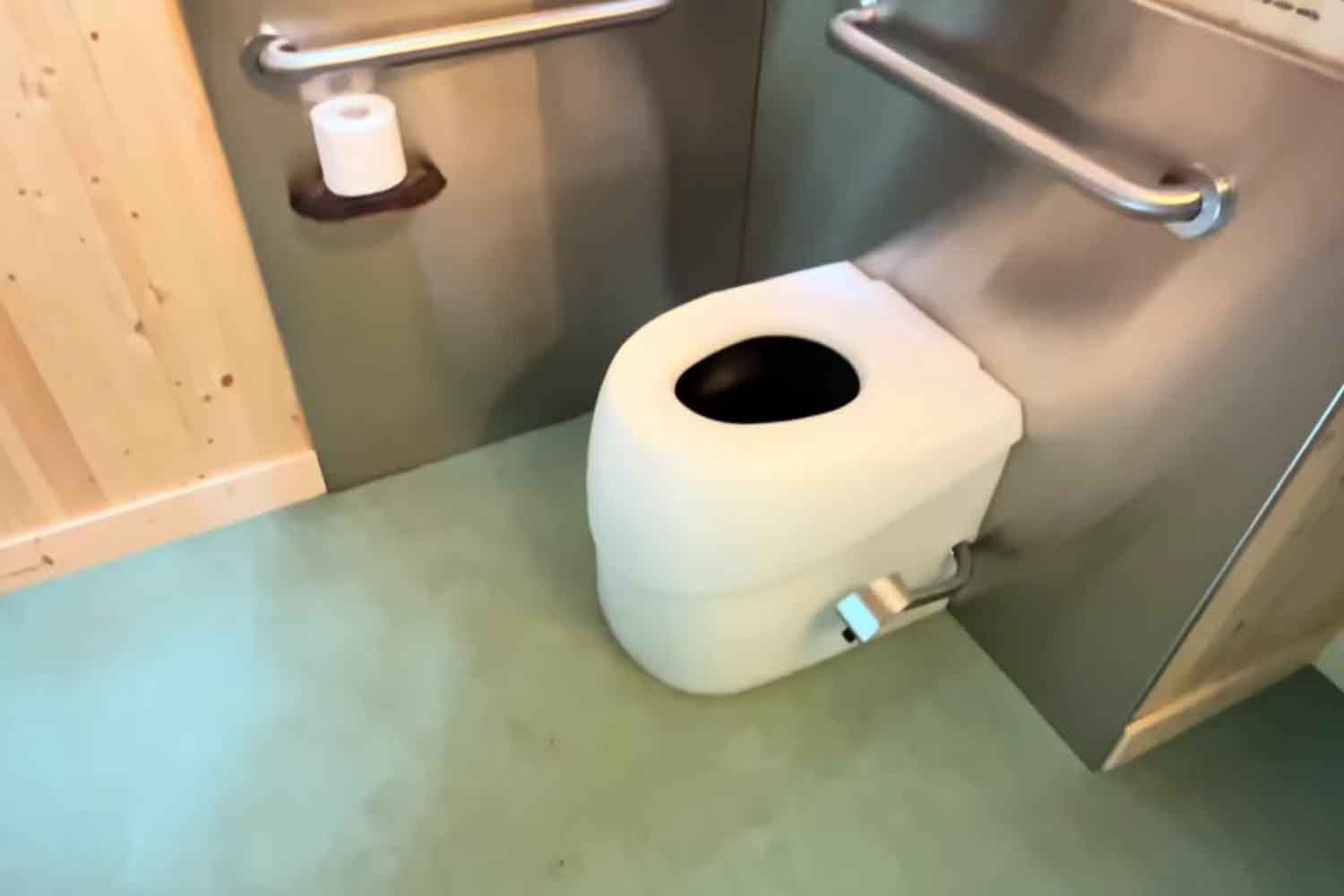
Forget about flushing toilets and wasting liters of water with each use: the Waterless toilet made from mushrooms created by researchers at the University of British Columbia could change the way we think about the bathroom forever. Is called MycoToilet and it is the first modular toilet that uses the myceliumthe underground network of fungi, to decompose organic waste and turn it into a nutrient-rich fertilizer.
The idea was born from the desire to make the more acceptable and practical compost toiletseliminating the critical issues that often make them unpopular: bad smells, complicated maintenance and unattractive design. The result is a system clean, eco-friendly and surprisingly elegantdesigned to offer a real alternative to traditional sewerage infrastructure, especially in rural areas or areas without a water network.
How it works
Inside the MycoToilet, a system separates solid waste from liquid waste. The solid part is then conveyed into a compartment lined with myceliumwhere mushrooms begin their silent transformation. The mycelium, thanks to its network of filaments and microbial communities that accompany itdecomposes organic matter without the addition of water, electricity or chemicals.
Steven Hallamprofessor of microbiology and immunology at UBC, explained:
Fungi are masters at breaking down biomass: they produce enzymes that degrade organic materials and facilitate the formation of simpler compounds.
According to tests conducted in the laboratory, the system manages to eliminate more than 90% of the molecules responsible for bad odorsthus ensuring a clean and hassle-free user experience. In other words, the bathroom of the future smells of the forest, not ammonia.
Sustainable design and minimal maintenance
The MycoToilet is not only a scientific experiment, but also a design object. The structure is made in heat-treated cedar woodresistant to mold and has antimicrobial properties. Inside, wood and stainless steel alternate to create a modern and welcoming environment, while the green roof contributes to thermal regulation and landscape integration.
A low consumption fan helps air circulation and the natural drying of organic materials. Everything has been designed to reduce maintenance to a minimum: that’s enough four interventions a year to keep it in perfect condition. Joseph Dahmenproject manager, said:
We have eliminated the uncertainties that hold back the adoption of these solutions: integrated ventilation, scheduled maintenance cycles, guaranteed efficiency.
The toilet is accessible to people with disabilities and designed to be installed in public parks, isolated communities or areas where it is not possible to connect a sewer system.
From testing to production
A six-week pilot test has already shown promising results. UBC scientists are now analyzing the interactions between mycelium and microbes to further optimize the composting process. If the project were to be approved on a large scale, MycoToilet could produce approximately 600 liters of soil and 2,000 liters of liquid fertilizer every yearwhile reducing dependence on chemical agrochemicals.
An approach that transforms waste into a resource, closing the circle of a natural and virtuous cycle. Because, ultimately, true innovation is not inventing something new, but learn to give back to the Earth what belongs to it — with the help of mushrooms.
