
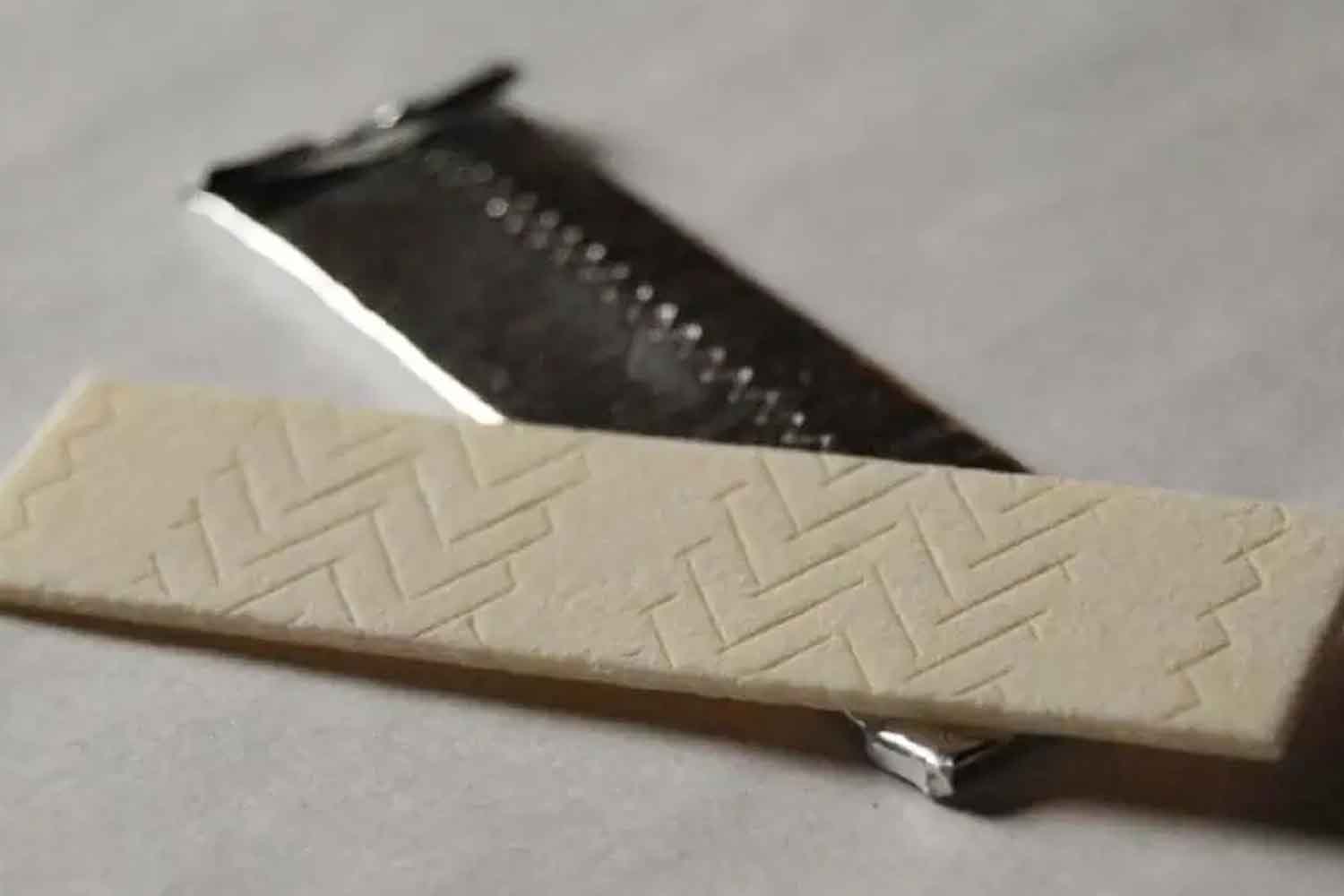
Chewing gum made from beans managed to trap the human papillomavirus (HPV) in 13 out of 14 saliva samples collected from patients with head and neck cancers. And by adding a second ingredient, the researchers also achieved a greater than 99% reduction in two bacteria associated with these cancers. Chewing gum as a possible ally in the prevention of infections linked to some tumors. The idea is curious, but the laboratory results are quite interesting.
The research, published in the journal Scientific Reportswas coordinated by Henry Daniell, professor at the School of Dental Medicine at the University of Pennsylvania. The goal is to develop a system capable of releasing antiviral and antibacterial substances directly into the mouth, where some microorganisms can contribute to the development or progression of certain tumors.
And to achieve this, scientists chose a rather unusual ingredient: Lablab purpureus, also known as hyacinth bean. A plant that naturally contains a protein capable of binding to viruses and hindering their activity. Hence the idea of incorporating it into an experimental chewing gum.
How a bean protein traps HPV
Human papillomavirus is one of the most widespread sexually transmitted infections in the world. In most cases the immune system manages to eliminate it spontaneously, but some persistent infections can cause cellular alterations and, over the years, favor the development of tumors. Among these are carcinomas of the oropharynx, which mainly affect the tonsils and the base of the tongue. According to the Centers for Disease Control and Prevention (CDC), approximately 60-70% of these cancers in the United States are attributable to HPV.
American researchers therefore tried to intervene on the viral particles present in saliva, using a protein called FRIL, naturally contained in the hyacinth bean. This protein belongs to the lectin family and has a particular characteristic: it is able to recognize and bind to certain sugar structures present on the surface of viruses.
When it encounters viral particles, FRIL links them together to form larger aggregates. In practice, a kind of molecular network that traps viruses and could hinder their entry into cells. To verify its effectiveness, the research group used samples of saliva and oral rinse fluids collected from a total of 44 patients with squamous cell carcinomas of the head and neck.
The scientists mixed these samples with extracts of the FRIL-containing gum, then separated the aggregates and measured how many virus particles remained detectable in the liquid. The result was encouraging: HPV aggregation was observed in 13 out of 14 saliva samples. In ten samples the reduction of the viral signal in the liquid exceeded 85%, while in five it reached 100%.
Even in HPV-positive oral rinse samples, a reduction of approximately 80% was observed. The experiments therefore showed that the protein is able to capture the viral particles present in saliva, at least in the conditions reproduced in the laboratory. A result that could be particularly useful for developing new oral infection control systems.
Why chewing gum?
The choice of chewing gum has a very practical reason: to bring the active substances directly where they are needed. A medicine taken by mouth is generally absorbed and distributed throughout the body. Chewing gum, on the other hand, could gradually release antiviral proteins into the saliva, keeping them in contact with the mucous membranes of the mouth.
After all, we are used to using chewing gum to freshen our breath, stimulate salivation or take nicotine during our journeys to quit smoking. The idea of exploiting the same system to transport antiviral proteins is less outlandish than it might seem. The group led by Daniell has been working on this technology for some time. In previous experiments, formulations containing FRIL had already shown antiviral activity against some influenza and herpes simplex viruses.
Then there is the advantage of plant production. The beans can be grown and the protein is made from a relatively cheap raw material, an important aspect if the goal is to develop accessible treatments even in countries with fewer health resources. And we are not even faced with a simple theoretical formulation. As explained by the University of Pennsylvania itself, researchers have already created chewing gum tablets containing the antiviral protein.
A second ingredient eliminates over 99% of two bacteria
The research yielded another surprise. The scientists decided to extend the experiments to two bacteria present in the oral microbiota: Porphyromonas gingivalis And Fusobacterium nucleatum. The former is known above all for its involvement in periodontal diseases, while the latter has also been studied in relation to colorectal cancer.
Both have been associated with inflammatory processes and a worse prognosis in some patients with head and neck cancers. Their presence, of course, does not mean that they are necessarily responsible for the appearance of a tumor, but it represents an element of interest for oncology research. To combat them, scientists added an antimicrobial peptide called protegrin-1, capable of damaging bacterial membranes, to the formulation. After one hour of treatment, the combination reduced viable bacteria in the analyzed samples by more than 99%.
A remarkable result, accompanied by another interesting detail: some streptococci normally present in the mouth proved to be more resistant to the action of the compound. The researchers hypothesize that this resistance depends on particular protective structures that cover the bacteria and defend them from the action of the peptide.
The possibility of targeting certain bacterial species without indiscriminately eliminating other microorganisms could be particularly useful in cancer patients, especially considering that treatments such as radiotherapy can profoundly modify the balance of the oral microbiota. It should be noted that the bean protein alone did not show an effective bactericidal action: the result of over 99% was obtained thanks to the addition of protegrin-1.
The next step will be to have patients chew gum
The results are promising, but the research is still in the experimental phase. The scientists worked on biological samples collected from cancer patients, subsequently processing them in the laboratory. It will therefore be necessary to verify whether chewing gum can produce similar effects in people’s mouths, how long the proteins remain active and whether repeated use can actually reduce the presence of microorganisms. The researchers’ goal is to carry out clinical studies that evaluate chewing gum as a possible support for existing therapies or as an additional tool to limit certain infections.
The prevention of cancers associated with HPV, meanwhile, already has a fundamental tool: vaccination. In Italy the Ministry of Health recommends and offers the anti-HPV vaccine free of charge to girls and boys aged 11 and over. The experimental gum, if it confirms its effectiveness in clinical studies, could one day complement the prevention and treatment strategies already available, intervening directly on the microorganisms present in the oral cavity.
For now we know that a protein contained in beans manages to trap HPV in saliva samples and that, combined with an antimicrobial peptide, contributes to a formulation capable of drastically reducing two bacteria linked to unfavorable oncological outcomes. The next step will be much easier to describe than to verify: put that gum in a patient’s mouth and measure what actually happens.
