
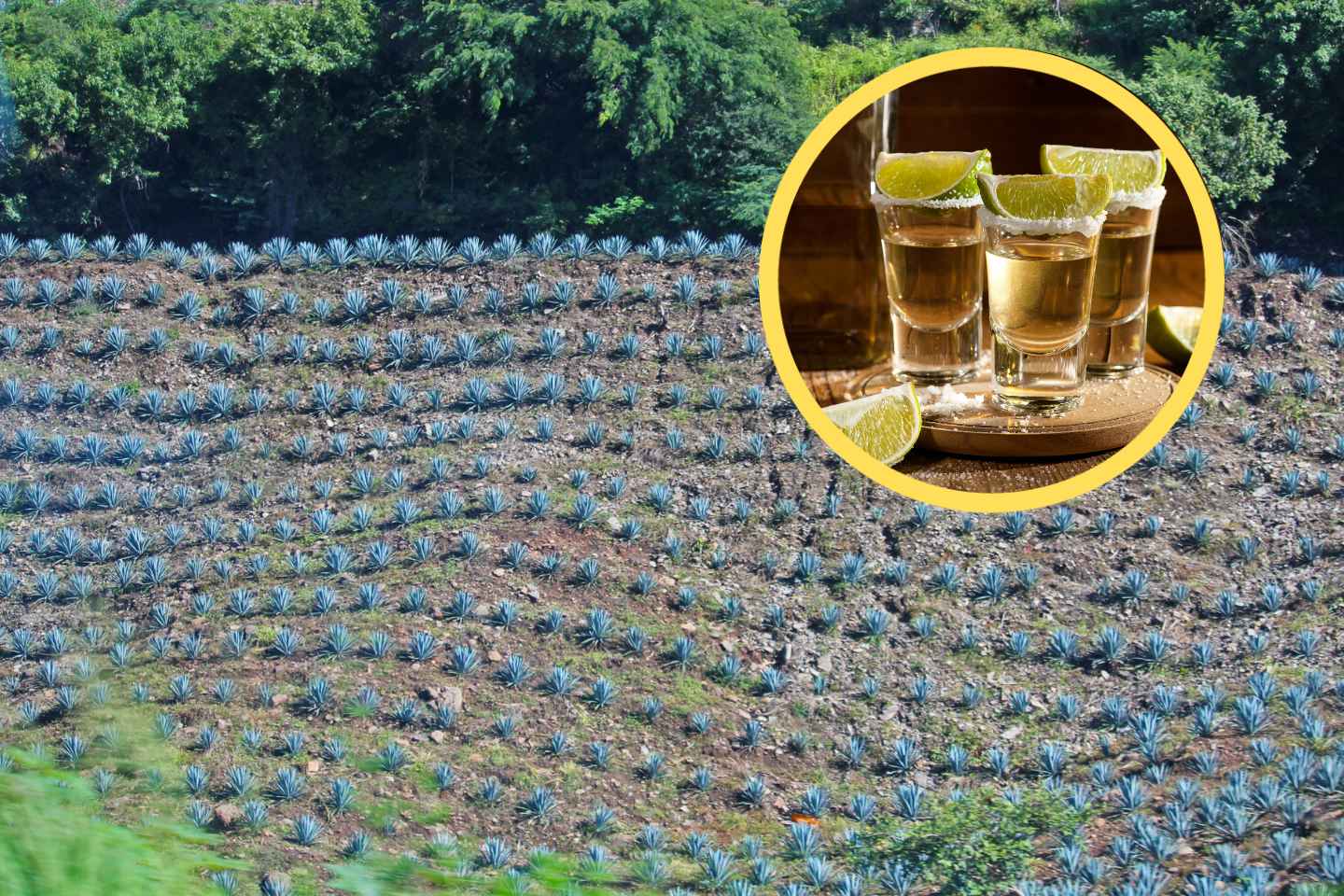
Behind a bottle of tequila there are at least seven years of agricultural work and, increasingly often, land taken from Mexican forests. The international success of the distillate, also favored by the spread of high-end brands, has profoundly transformed the landscape of the regions where blue agave, the plant from which the drink is obtained, is grown.
According to data from the Mexican Ministry of Agriculture and Rural Development, between 2017 and 2025 the surface area dedicated to this crop increased by 218%, reaching over 276 thousand hectares. Documenting the environmental and social consequences of this expansion is an investigation by the Mongabay newspaper, written by journalist Mariana González-Márquez.
Where forests once grew
Mexican tequila production has more than doubled in less than ten years, rising from 273.3 million liters in 2016 to 583.5 million in 2025, according to the Tequila Regulatory Council (CRT).
The situation in the state of Jalisco, the main production area of the distillate, is particularly critical. Between 2019 and 2021, in the years of the sector’s greatest expansion, the region lost an average of 23,368 hectares of forest per year. A 2023 report, produced with the contribution of the University of Guadalajara, identifies the growing demand for agave for tequila and mezcal as one of the main causes of deforestation. Satellite images analyzed by researcher Maximiano Bautista Andalón show how some plantations have arisen on land previously affected by fires and deforestation. Others are located near water resources essential to local communities.
The use of herbicides and pesticides in monocultures also threatens the survival of pollinating insects, including the state’s 20 native bee species.
The collapse of prices and abandoned fields
For many Mexican farmers, investing in agave seemed like an opportunity to improve their economic conditions. Entire families have given up traditional cultivation of corn, beans and pumpkins, in some cases going into debt. Between 2017 and 2025 the number of producers registered with the CRT went from around 6 thousand to over 43 thousand. The resulting overproduction has caused prices to plummet: from 32 pesos (around 1.50 euros) per kilogram in 2021 to just one or two pesos (between 5 and 9 euro cents) in 2025.
Many growers have thus abandoned the fields, where today they risk the proliferation of parasites such as the agave weevil, a beetle that can compromise even healthy plantations. The return to traditional crops will have to deal with the possible impoverishment of the soil.
What to know before buying tequila
In 2021, the Environmentally Responsible Agave (ARA) certification was introduced, created to combat deforestation linked to the production of tequila. The violations, however, continue. In November 2025, federal authorities blocked an illegal cultivation that had affected 202 hectares of oak forest.
For those who choose to buy a bottle of tequila, even during the holidays, it is therefore worth finding out about the origin of the agave, the traceability of the supply chain and the agricultural practices adopted by the producer. The designation of origin, alone, does not guarantee the absence of environmental damage. It is also useful to verify the existence of documented commitments for the protection of pollinators, the reduction of pesticides and the conservation of local ecosystems. This is because the high price of a bottle does not, in itself, constitute a guarantee of sustainability.
