
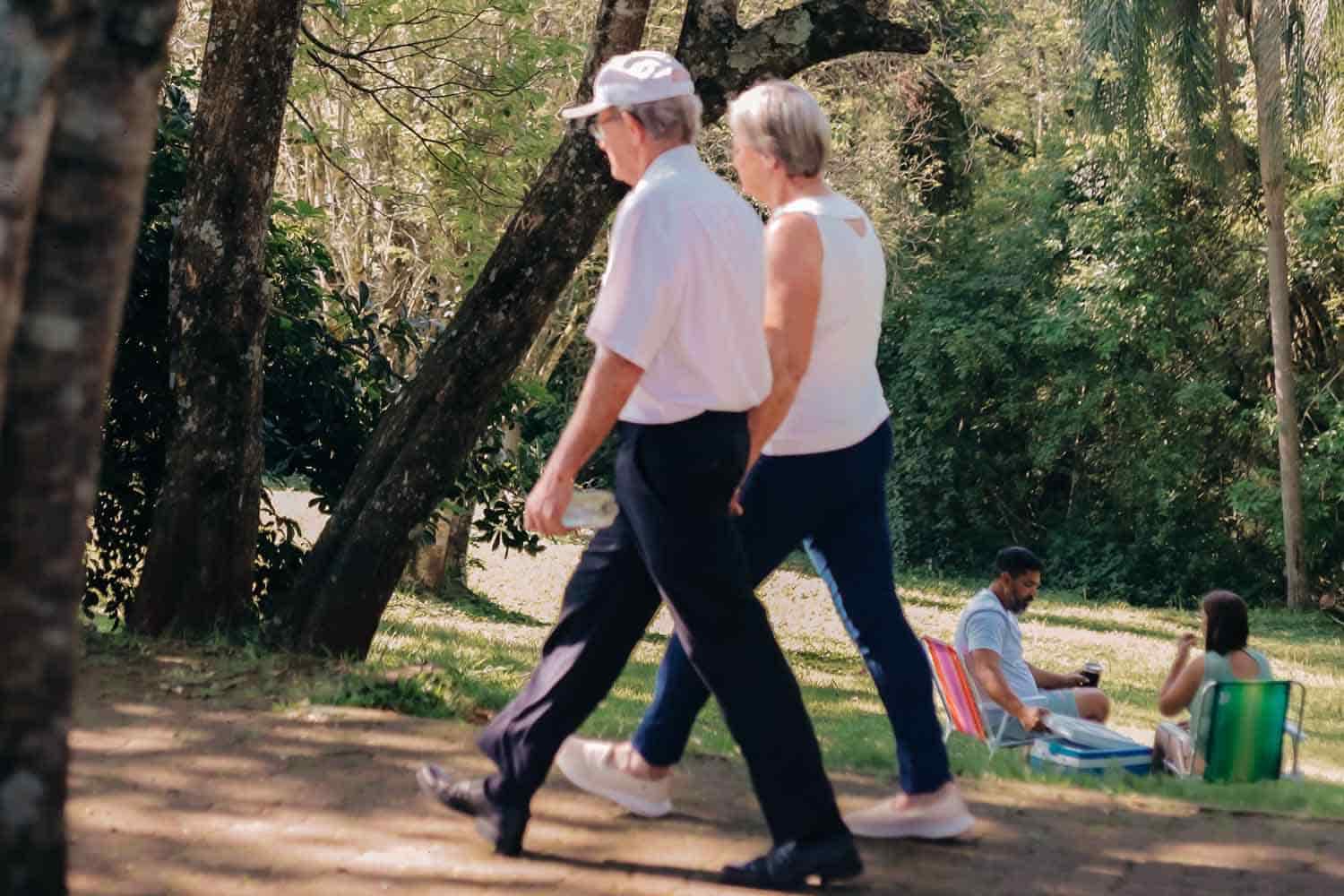
Forty-five minutes of walking together or five minutes at a brisk pace every hour. The time dedicated to movement is essentially the same, as is the energy expenditure, yet our body could respond differently. According to a new study in the scientific journal Obesitybreaking up long sessions spent in the chair with short walks can promote better blood sugar regulation in sedentary adults with overweight or obesity.
This was dealt with by an international group of researchers, including scholars from the Universities of Colorado and Strasbourg, who wanted to investigate a rather interesting aspect of physical activity: its distribution throughout the day. Because even those who take a nice walk at the end of working hours may have spent the previous eight hours practically glued to their chairs.
Five minutes of walking every hour, for six weeks
The researchers involved 30 adults, 16 women and 14 men, aged between 18 and 45, all physically inactive and overweight or obese. Before the experiment, participants reported spending an average of ten and a half hours a day sitting and walked, on average, fewer than 5,000 steps daily.
Randomly divided into two groups, they received the same prescription: 45 minutes of brisk walking a day, five days a week, for six weeks. What changed was the way those minutes were spent.
The first group could freely choose when to take their walk, as long as it was done without interruptions. The second was asked to get up and walk for five minutes approximately every hour. The program included ten daily breaks, already taking into account the possibility that some would be skipped or shortened.
No slimming diets or changes in eating habits. The participants carried out the experiment in their normal daily lives, wearing devices to monitor physical activity and, during blood sugar measurement periods, special sensors applied to their arms.
What happens to blood sugar when we get up more often
After six weeks, the time spent with glucose values between 70 and 140 mg/dL in the short walking group went from 82% to 94%. In the single walk group, however, it dropped from 89% to 80%.
Those who regularly got up from their chairs also achieved a reduction in glycemic variability, i.e. the fluctuations in glucose levels throughout the day, and more favorable results in some laboratory parameters used to evaluate the body’s ability to manage glucose. The curious fact is that blood sugar became more stable above all because it dropped to very low values less frequently. Maximum peaks remained essentially unchanged, as did insulin sensitivity.
According to the researchers, repeated muscle contractions could promote the absorption and use of glucose by the muscles. Short walks may also repeatedly stimulate the body’s production of glucose, helping to avoid excessive drops throughout the day. A possible mechanism that the authors intend to investigate further.
Why it is important to stop long sedentary hours
At the end of the experiment, both groups had increased the number of daily steps, on average by around 3,200, and reduced the overall time spent in sedentary conditions. Only those who walked at regular intervals, however, had significantly reduced the periods spent sitting for at least one consecutive hour.
It is an interesting result especially for those who have a sedentary job. We often concentrate all physical activity in a small portion of the day, even for a purely organizational reason. The rest of the time we spend moving from the office chair to the car seat, and then landing on the sofa at home.
The study, conducted on a small group of adults with initially fairly normal glycemic values, suggests that the frequency with which we interrupt inactivity may also play a role in metabolic health. The researchers now intend to investigate the possible benefits in people with prediabetes, insulin resistance or type 2 diabetes.
The evening walk therefore remains an excellent habit, which we can combine with some short walks during the day. Maybe taking advantage of a work phone call, going to talk to a colleague in person or taking a walk around the block. The good news is that five minutes at a time might be enough to start with.
