
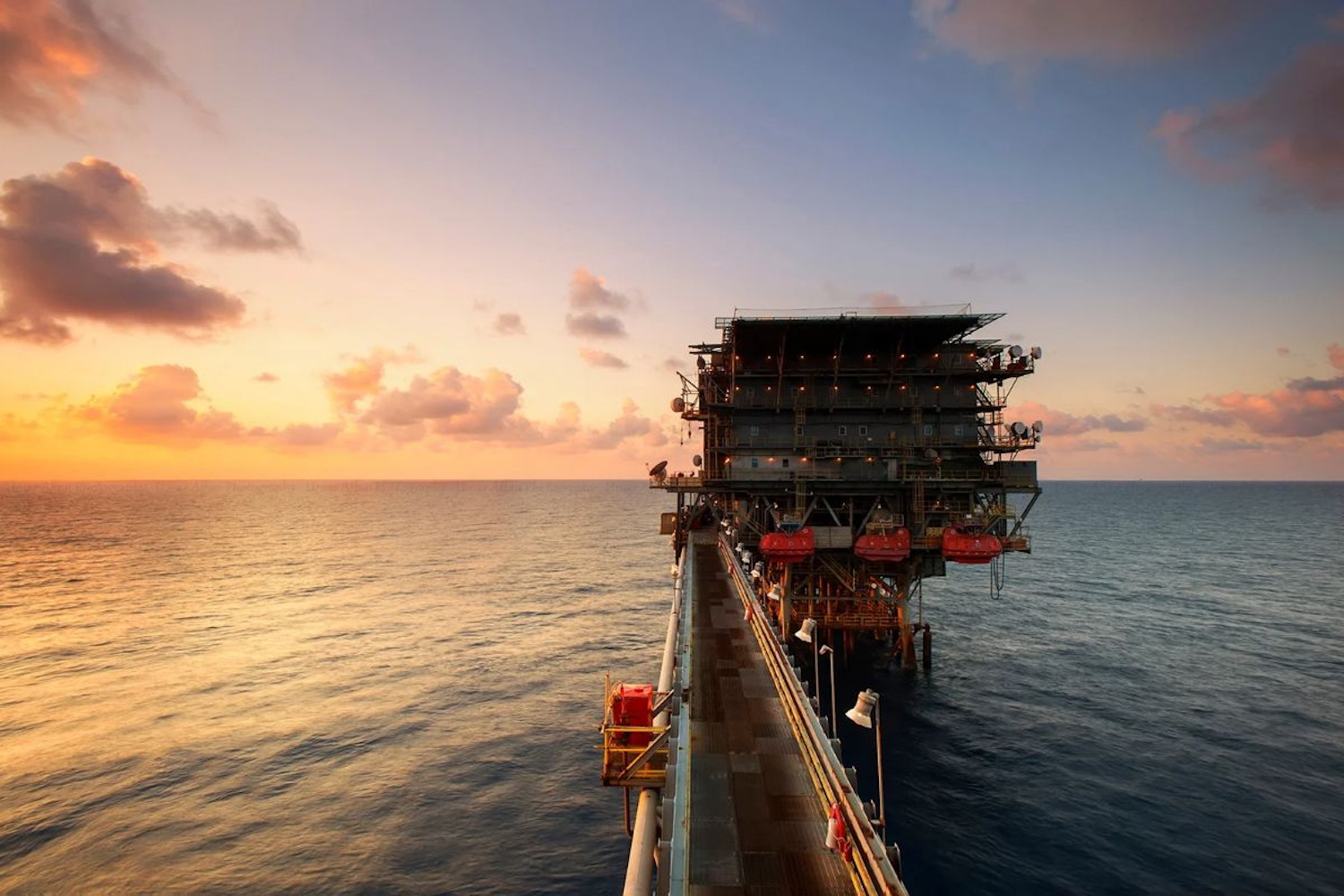
Sea Lion, the oil project with which the United Kingdom aims to search for oil in the seabed 220 km off the coast of the Falkland Islands, will not stop: the International Tribunal for the Law of the Sea rejected Argentina’s appeal presented on September 28th. What happens now?
Argentina’s request to temporarily suspend the project’Sea Lion‘ was rejected on Saturday 28 November with 18 votes in favor and 3 against: the Court, however, maintains that it does not have the necessary jurisdiction to order the requested measures. In fact, a conflict of sovereignty continues to weigh on the territory: the islands have been disputed for some time, being under British control but claimed by Argentina, being geographically close.
The dispute of sovereignty
The archipelago of Falkland Islands it is located approximately 400-500 km from the coast of Argentine Patagonia which, uninhabited at the time of European contact, were disputed for some time between France, Spain and Great Britain, but also by Argentina itself.
Indeed Le Provincias Unidas del Rio de La Plata (today’s Argentina) after declaring their independence from Spain in 1810, they also claimed sovereignty over the islands and Argentina also considered that territory, together with other countries remaining from Spanish possessions, part of its borders.
Thus in 1820 the government of Buenos Aires sent a military ship to officially take possession of it, taking over from Spain and in 1823, Luis María Vernet he was appointed governor of the archipelago.
But the United Kingdom reacted very soon: in 1833, the British army occupied the islands, expelling the Argentine soldiers, also declaring its sovereignty over the South Georgia Islands and on South Sandwich Islandsuninhabited at the time.
The world wars were later the scene of further disputes between European countries, but the London government maintained its hegemony.
In 1982, Argentina, whose government at the time was a military dictatorship, invaded the archipelago, starting a conflict that lasted 10 weeks and ended with Argentina’s surrender to Great Britain (this event, among other things, accelerated the fall of the military junta).
The territory, which currently has around 3,660 inhabitants, mostly of British origin, is geographically similar to Argentina, but still British (also after a referendum held in 2013), even if it has wide autonomy.
The most recent tensions and the Sea Lion project
©Sea Lion
As Reuters reports, tensions between Argentina and Britain have intensified in recent months, following the presentation last September by the government of Javier Mileiof legislation aimed at limiting oil exploration off the islands, which the London government claims was passed to hit its economy.
Ownership of the project Sea Lionin particular, is of Navitas Petroleum Development and Production Ltd (NPDP), a company controlled by Navitas Petroleumbased in the United Kingdom. Oil production is scheduled to start in March 2028, with an expected lifespan of more than 30 years.
The company intends to begin the first phase with the drilling of 11 subsea wells, connected to a repurposed floating production, storage and offloading (FPSO) unit. Phase 2 will begin approximately three years later, with the drilling and connection of an additional 12 subsea wells.
My statement on today’s decision by the International Tribunal for the Law of the Sea on the Falkland Islands. pic.twitter.com/Mgg7Cel3Wd
— Ed Miliband (@Ed_Miliband) November 28, 2026
We welcome the decision of the International Tribunal for the Law of the Sea not to order provisional measures – writes British Foreign Secretary Ed Miliband – This outcome confirms the validity of the solid strategy and legal defense adopted by the United Kingdom. Argentina attempted to prevent the Falkland Islanders from making their own sovereign decisions, but failed (…). We now urge Argentina to respect the right of Falkland Islanders to determine their own future and to put an end to the wider economic pressures exerted on the Falkland Islands
The government of Javier MileiHowever, he doesn’t like it, and promises to move forward.
View this post on Instagram
The decision of the Tribunal for the Law of the Sea does not in any way legitimize the unilateral exploitation of our natural resources – writes the Argentine president – The national government will continue to adopt all necessary measures to prevent such exploitation (…). Argentina will continue to assert its rights through all diplomatic, legal and administrative channels available, in the firm belief that no unilateral action by the United Kingdom can nullify our legitimate sovereign rights
But where is the environment?
We talk about sovereignty, control of territories, exploitation of natural resources as a manifestation of political and economic power. And the environment, meanwhile, suffers. Drilling that doesn’t stop translates first and foremost into potentially irreversible damage to ecosystems.
Scientists are almost in agreement on the risks of offshore drilling, which range from dangerous noise pollution for marine fauna to the release of polluting substances, all factors which contribute to alterations of habitat.
But above all, the search for oil as an energy source is completely incompatible with climate objectives. On the other hand, the failure of COP31 showed us how the abandonment of fossil fuels is not yet universally accepted as an essential tool for containing climate change.
Projects like this, meanwhile, continue. And, between more or less diplomatic political wars, it is always the environment that pays the price. So all of us (but it seems that this concept is not yet clear).
Sources: Argentina Government / United Kingdom Government / Javier Milei/Instagram / Ed Miliband/X
