
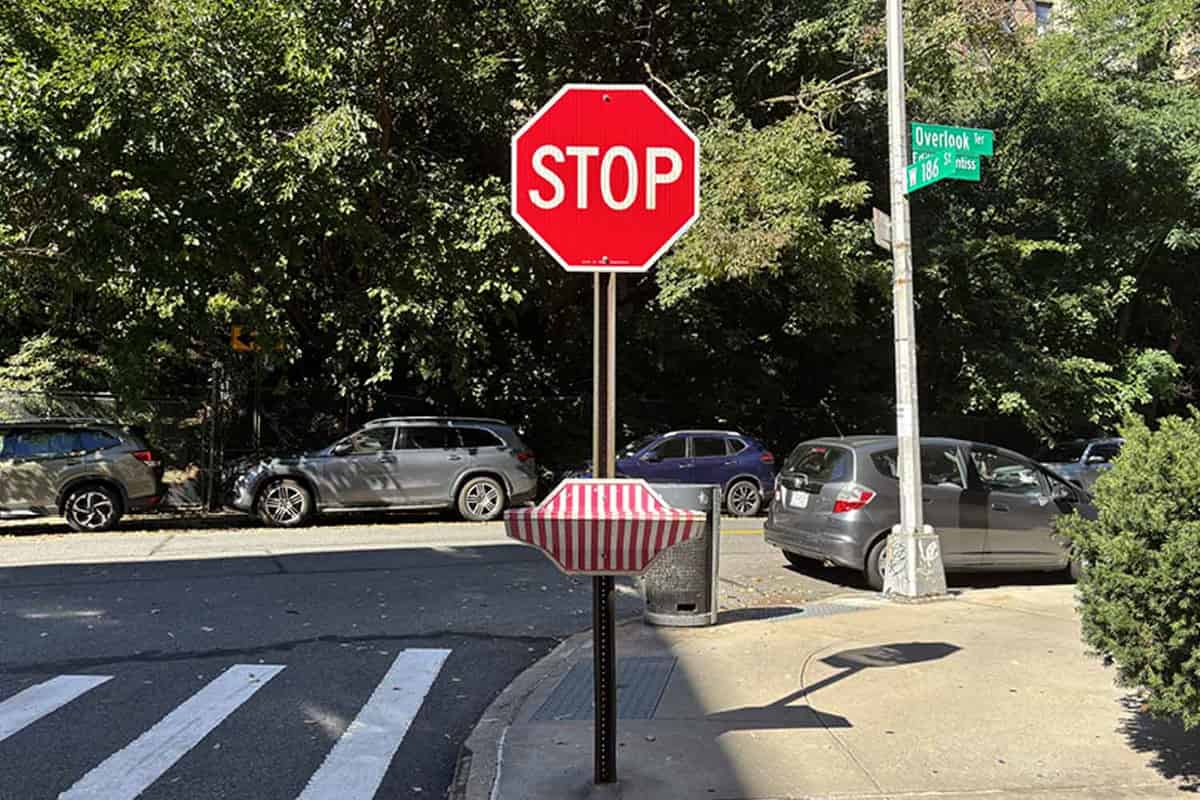
A STOP sign, some bolts and a pink and white checked tablecloth (painted directly on the metal). In New York, the architect Juan Fernández González has found a decidedly original way to give a second life to disused road signs, transforming them into small tables to be fixed to the sign poles already present on the pavements.
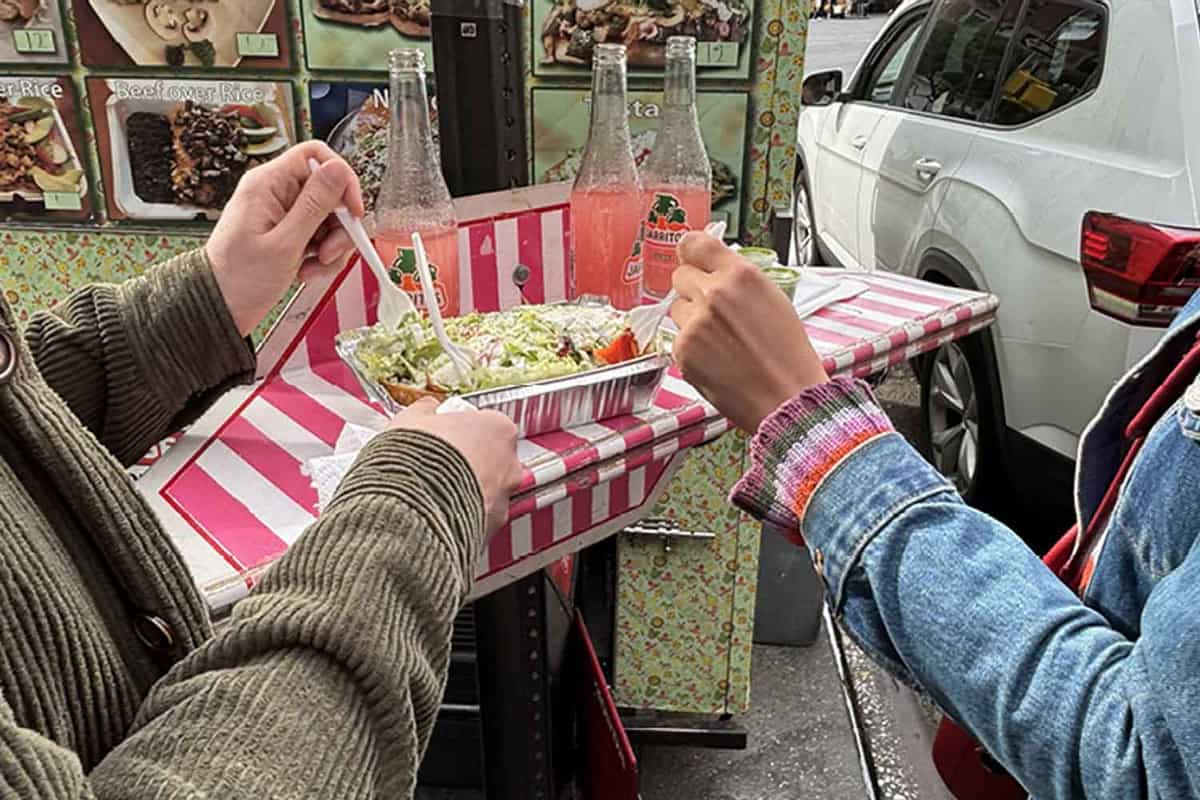
The project is called Traffic Sign Urban Tables and was born from a rather common need in large cities: finding a place to consume food purchased in open-air markets or from street vendors, without juggling a sandwich, a glass and the constant need to have a third hand.
From STOP signs to checkered tables
The New York Department of Transportation manages over one million traffic signs and produces more than 70,000 each year. Graffiti, wear and loss of legibility can spell the end of a sign’s operational life, when the aluminum plate it is made of is still recoverable.
Fernández González, who received a master’s degree in architecture from Harvard in 2025, thought of exploiting those very slabs. To make his tables he recovered disused signs made available by the Department of Transportation and Infrastructure of Mercer County, New Jersey.
©Designboom
The signs were machined with a press brake at Serett Corp., a Jersey City company, resulting in a horizontal surface to attach to the pole. The architect then painted them by hand, reproducing the checkered pattern typical of disposable tablecloths used for street food. A tablecloth that, in this case, will not end up in the garbage after lunch.
To install them, the poles already present in the city are enough
The ingenuity of the project also lies in the mounting system. U.S. U-profile sign poles have holes spaced about an inch apart. The architect exploited this feature to create a fastening system that requires only bolts, nuts and washers.
The tables are light, can be positioned at different heights and installed temporarily during markets, neighborhood parties and events. All without adding legs, bases or additional structures on the sidewalks. As also documented by MaterialDistrict, the first installations have already made their appearance at the Carnaval de la Cultura Latina, in Queens, in the farmers’ markets of Inwood and Union Square, in Washington Heights, near Lincoln Center and even in Times Square.
©Designboom
The spread of these standardized poles in several North American cities makes the project potentially replicable elsewhere. The beauty of this form of creative reuse is that it exploits two resources that large cities already have in abundance: discarded materials and existing infrastructure. And so, under a sign that requires cars to stop, there is finally also a good reason to stop pedestrians.
