
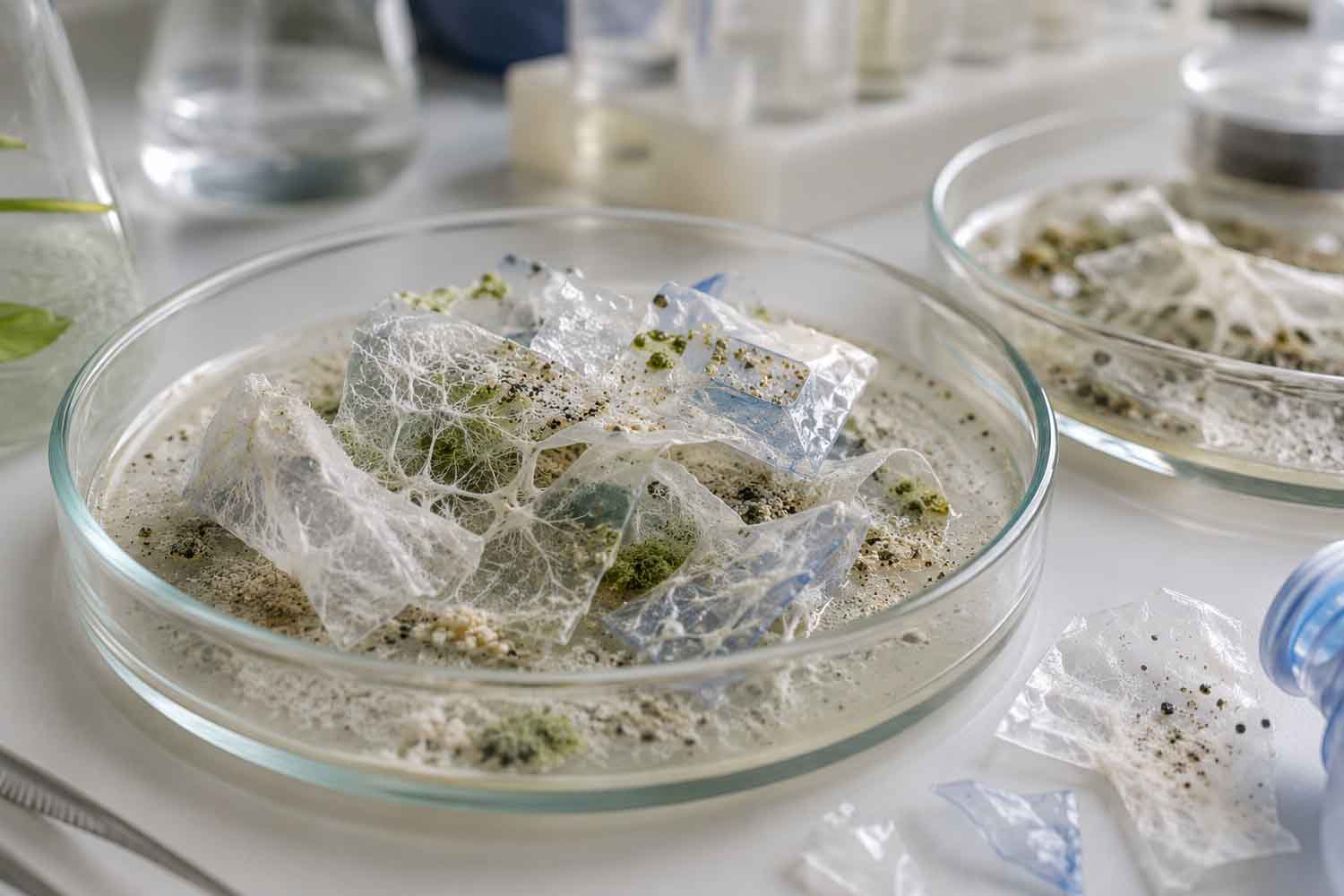
Plastic has this irritating ability to stick around. It ends up in bags, in plants, in landfills, in rivers, in seabeds, in increasingly smaller fragments which then return everywhere: in the water, in the soil, in the food chain. For years, research has tried to look at the problem from a less obvious, almost uncomfortable point: if some materials derive from chemical chains that are difficult to break, perhaps the answer can also come from organisms capable of affecting them.
Thus, plastic-eating organisms entered the scene: fungi, bacteria, larvae, intestinal microbes and enzymes designed or enhanced in the laboratory. Tiny names, often unpronounceable, placed before an enormous task. None of these, alone, can eliminate the plastic produced every year. However, some studies are showing something concrete: certain polymers can be degraded, transformed, broken into their components, perhaps recovered for new processes. The global dustbin remains there. Some, at least, have started gnawing at the edges.
Fungi that attack plastic
Even before bacteria designed in the laboratory, some fungi showed an interesting ability: to colonize plastic materials and modify their structure. They don’t work as a ready-made solution for landfills, but they point to a biological path that research is following carefully.
The Amazonian fungus that digests polyurethane
One of the most cited cases concerns the fungus discovered in the Amazon capable of “eating” plastic. The scientific name is Pestalotiopsis microspora and the interest arises from its ability, observed in the laboratory, to degrade polyurethane, a plastic used in many industrial objects and materials. The most interesting detail is that this mushroom is able to work even in oxygen-poor conditions, an aspect that makes it particularly studied for possible applications related to waste accumulated in closed or difficult environments.
The decisive step always remains the same: from the laboratory to the real plant. A culture controlled, nourished, isolated and followed step by step is one thing; a landfill or a heterogeneous mass of waste is another matter, much less tidy. However, the case of Pestalotiopsis microspora has had the merit of shifting the focus. Plastic, even when it seems eternal, can encounter organisms capable of damaging it.
Aspergillus tubingensis, the mushroom found in landfill
Among the most interesting plastic-eating fungi there is also Aspergillus tubingensis, identified in a landfill in Pakistan and studied for its ability to erode polyurethane. Tests have shown that the fungus mycelium is able to colonize the plastic material, causing surface degradation and visible alterations. In some experiments, after about two months, the material had degraded into smaller fragments.
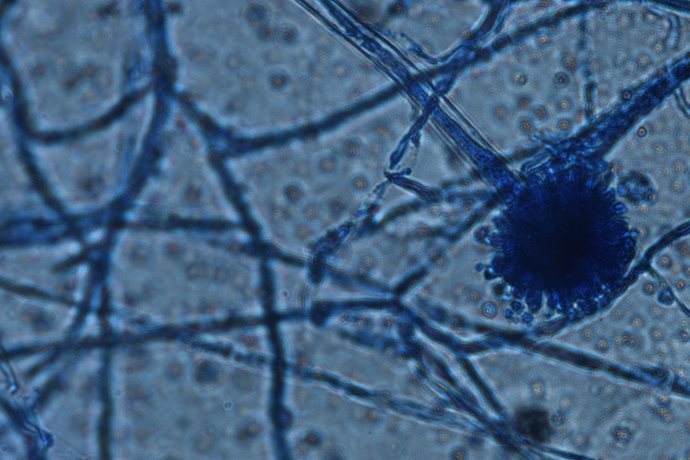
The data should be read with caution, because degrading a sample in the laboratory remains different from treating tons of mixed waste. But the mechanism matters: the fungus comes into contact with the plastic, colonizes it, modifies its surface and contributes to the breakage of the material. Here nature works slowly, without special effects. And that’s why it’s so interesting.
Parengyodontium album, the big plastic island fungus
In the North Pacific, Parengyodontium album, a marine fungus capable of degrading plastic, has been identified among the floating waste of the Great Pacific Garbage Patch. According to the study cited, it is the fourth known marine mushroom with this ability. It works in particular on polyethylene exposed to UV rays, therefore on material already “prepared” by sunlight and made more vulnerable to biological decomposition.
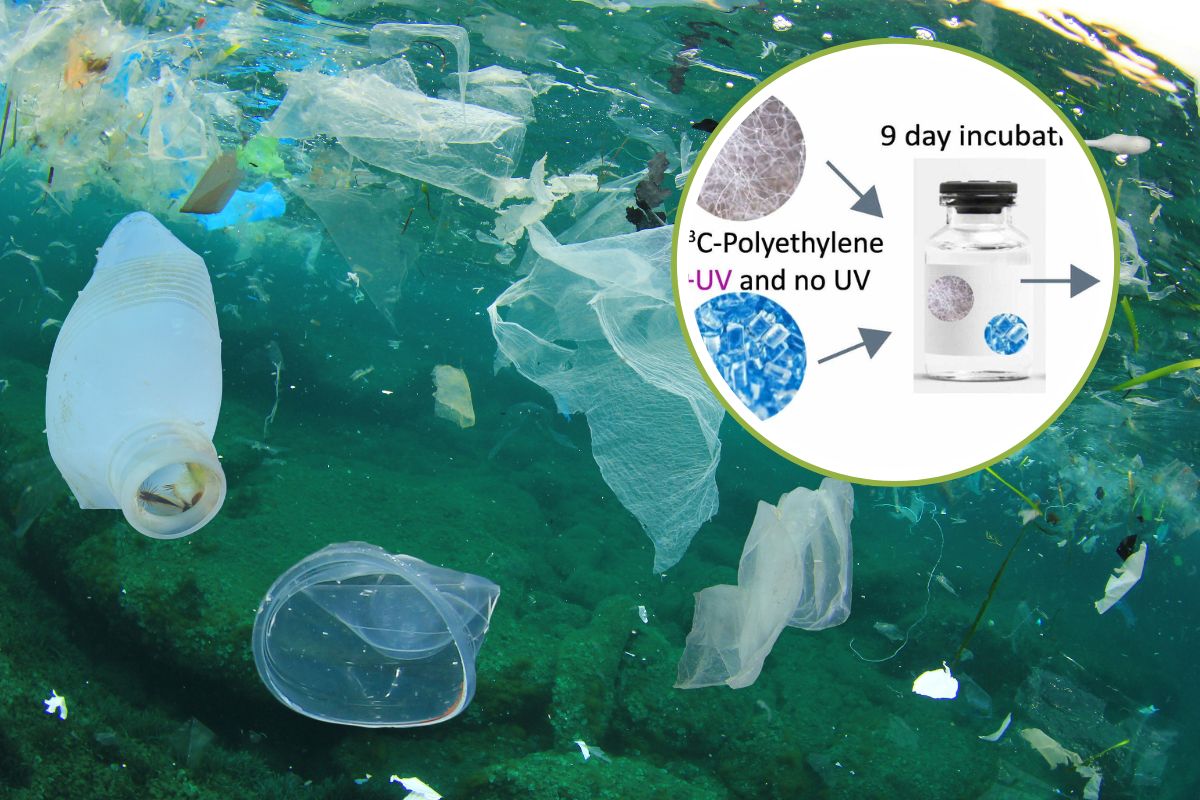
The observed rate remains low, approximately 0.05% per day on UV-treated plastic over a nine-day period. Translated: no oceanic miracle, no scavenger mushroom ready to clean up the Pacific while we continue to produce disposable products. But the discovery says something useful: even in marine environments there could be more organisms capable of contributing to the degradation of plastic. Very little, on a planetary scale. Enough, on a scientific scale, to keep looking.
Bacteria, larvae and enzymes
Here the field widens. There are not only fungi isolated in forests, landfills or marine environments, but also bacteria, larvae and molecules capable of accelerating the degradation of some plastics. It is the part closest to industrial applications, even if it remains full of checks to be done.
Italian bacteria to free moisture from polyethylene
The Micro-Val project on plastic-eating bacteria starts from a very concrete problem of separate waste collection: materials that shouldn’t be there often end up in the waste bin. Plastic residues, packaging, impurities that complicate the treatment of the organic fraction. The idea developed at the University of Milan-Bicocca aims to use microorganisms capable of biotransforming and biodegrading, at least in part, the polyethylene that contaminates urban organic waste.
The prospect is interesting because it is part of a real step in the waste supply chain. First the laboratory tests, then the verification of a possible biological treatment on a larger scale, in collaboration with a recovery and recycling company. Here plastic-eating organisms are thought of as a support for the systems, not as a substitute for good collection. The difference is significant: biology can help, plastic thrown in the wrong place is still our problem.
Black soldier fly larvae and the intestinal microbiota
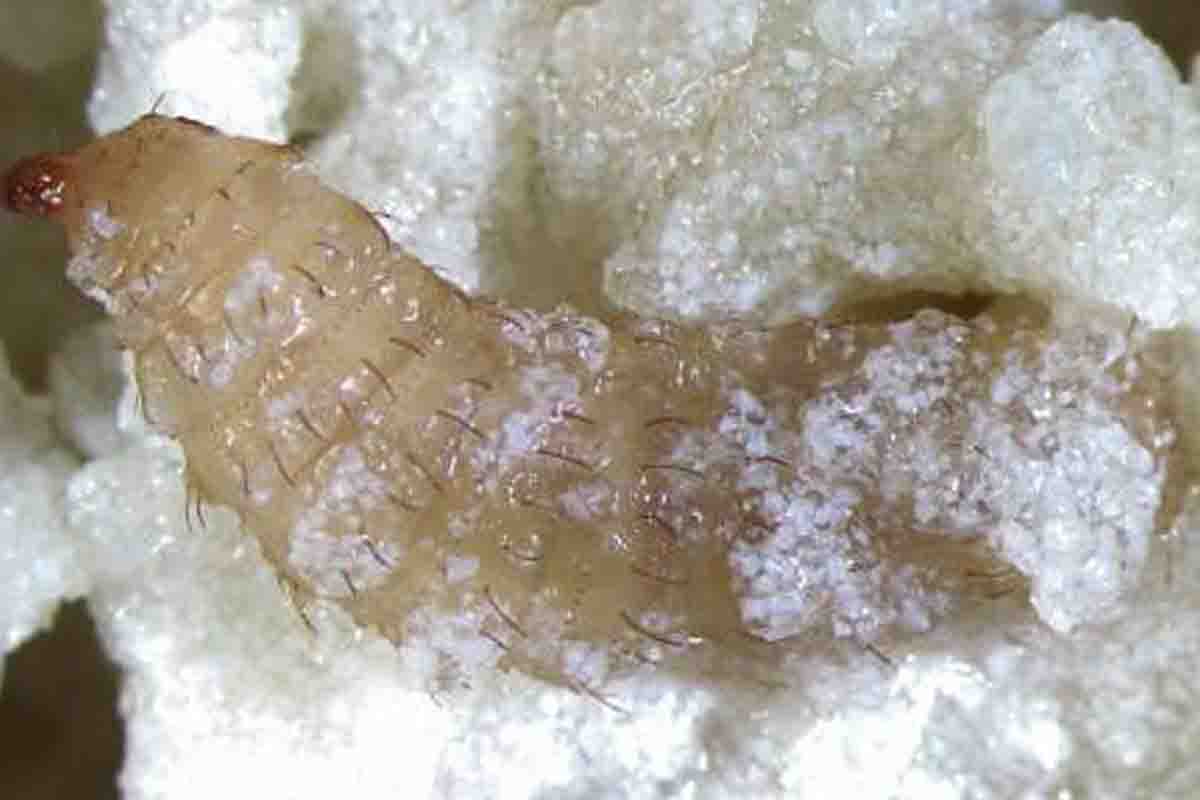
The larvae of the black soldier fly, Hermetia illucens, were already known for their ability to grow on organic waste and agri-food by-products. The new part concerns their intestines. Some Italian studies have shown that the microbiota of black soldier fly larvae can contribute to the degradation of difficult plastics, such as polyethylene and polystyrene.
©University of Naples Federico II
The work mainly concerns intestinal bacteria and the enzymes they produce, including laccases and peroxidases, capable of breaking some molecular chains of polymers. In this sense the larvae become a kind of bioincubator: an organism in which to identify microorganisms, genes and enzymes useful for new degradation processes. The larva, alone, does not become the solution to the problem of plastic waste. However, it can indicate which biological tools are worth isolating, studying and perhaps using better.
The wax moth and saliva that degrades polyethylene
The wax moth, Galleria mellonella, is one of the most curious protagonists of this story. Its larva was studied because saliva contains proteins capable of oxidizing and degrading polyethylene, one of the most widespread and resistant plastics. A study on wax moth saliva identified a mix of proteins belonging to the hexamerin/phenoloxidase family, with groups called Demeter, Cybele, Ceres and Cora.
The same line of research also returned in the case of two Vietnamese high school students awarded for a study on wax worms. The envisioned goal is to use these organisms or their enzymes to process difficult-to-dispose plastic waste. Important questions remain about degradation by-products, emissions and process safety. The moth does a remarkable thing. Research has yet to figure out how to turn it into a controlled, clean, sensible technology.
PETase, MHETase and FAST-PETase: when the enzyme becomes a laboratory
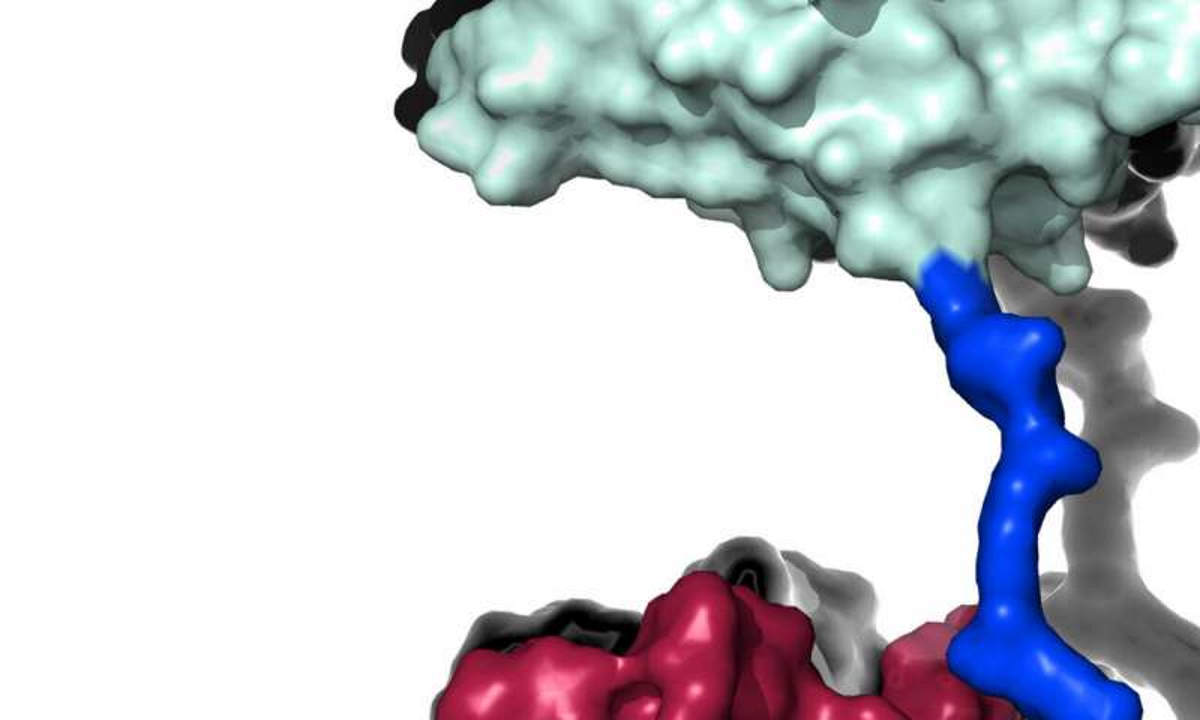
Alongside actual organisms there are enzymes, that is, molecules that make certain reactions possible or accelerate them. The story starts from PETase, the plastic-eating enzyme discovered almost by chance, studied for its ability to attack PET, the material used in many bottles. From there, research began to improve the mechanism, first with mutated versions, then with more powerful combinations.
The super-enzyme formed by PETase and MHETase showed faster degradation than previous versions, working at room temperature and opening new perspectives for PET recycling. A further step came with FAST-PETase, developed with the help of machine learning, capable of breaking down different PET products in times ranging from a week to a few hours, depending on the materials and conditions.
©Aaron McGeehan
This family of research also includes the mutant enzyme designed to recycle plastic bottles. The common point is clear: break the polymer into its basic elements and recover it, instead of simply shredding the plastic or burning it. Enzymatic recycling remains a technical path, still linked to costs, systems, temperatures, times and quality of the incoming material. However, it is one of the most concrete ways to imagine a plastic that returns to raw material, without continually losing value with each cycle.
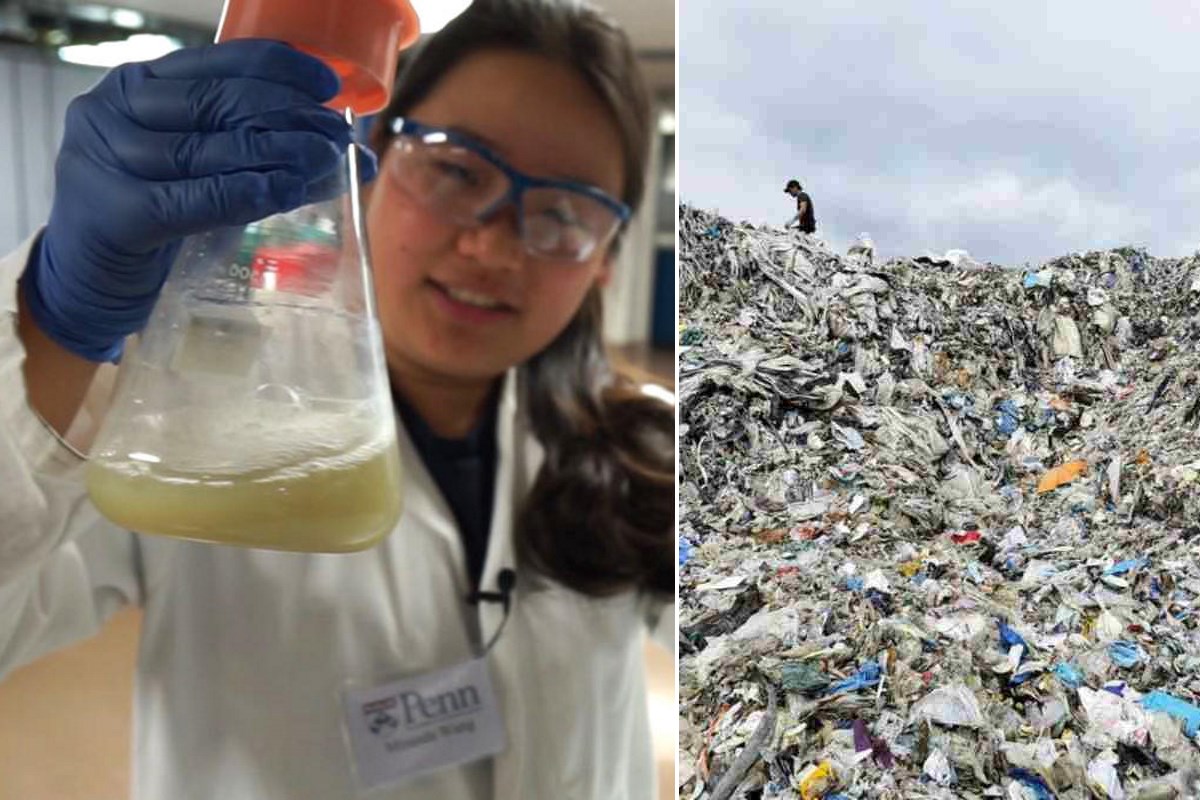
The Miranda Wang case and the cutting of polymer chains
The case of Miranda Wang and the technology for transforming plastic into reusable substances moves on similar ground, although more oriented towards chemical recycling. The idea is to act on long polymer chains, cutting them with catalysts more efficiently, at more manageable pressures and temperatures than many traditional processes.
The promise, in this case, concerns the recovery of compounds useful for new industrial applications, at least partially replacing raw materials of fossil origin. It is a different path than the fungus or larva that directly degrades plastic, but it belongs to the same family of attempts: to stop treating plastic waste as an inevitable end and start considering it as a material to be dismantled with more intelligence.
Plastic remains the starting point
Plastic-eating organisms have an immediate, almost narrative appeal: the fungus that devours polyurethane, the larva that works with saliva, the bacterium hidden in the intestine, the computer-enhanced enzyme. They also work well because they overturn the image of eternal rejection. Plastic remains, of course. But something, in precise conditions, manages to scratch it.
This research requires time, tests, facilities, controls on by-products and serious environmental assessments. Some only work on specific plastics. Others require pre-treated material, UV light, controlled temperatures or selected samples. Separate waste collection remains fundamental, the reduction of single-use plastic as well, and the design of materials that are easier to recycle even more so.
The good news is in the direction. Fungi, bacteria, larvae and enzymes are showing that plastic waste can become a biological and chemical target, not just an encumbrance to be moved elsewhere. For now we are between laboratory plates, prototypes and systems to be imagined better. Meanwhile, plastic continues to fill bags, beaches and animal stomachs. The research began to bite her. The rest depends on how much we stop putting around.
