
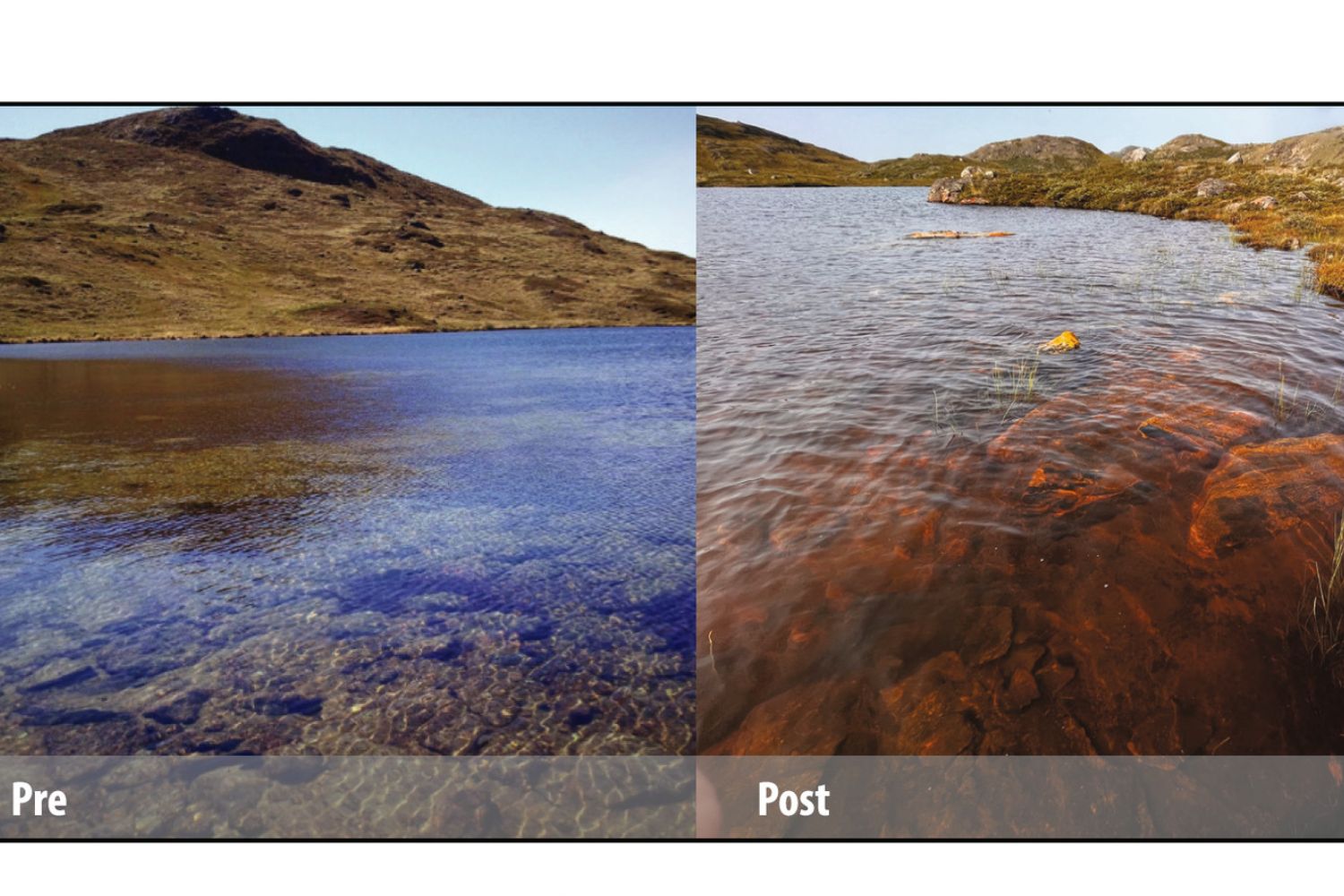
Imagine an expanse of sapphire lakes in the frozen landscape of Greenland. Now, imagine those same lakes transform, in less than a year, into pools of clipping water and brown. The explanation of the phenomenon provides us with a published study, on January 21, on Proceedings of the National Academy of Sciences (Pnas).
Between the autumn of 2022 and the beginning of the summer of 2023, thousands of lakes in the western region of the island they have changed color suddenly and drasticly. A phenomenon defined by “unprecedented” scientistswhich testifies the devastating effects of global warming.
What is going on? The answer is linked to a set of extreme events caused by global warming. According to the international team of researchers, led by the doctor Jasmine Sarosprofessor of paleolimnology and lake ecology at the Faculty of biology and ecology of the University of Mainethe combination between the Fusion of the Permafrost And the intensification of the rains He pushed these ecosystems “beyond the point of no return”.
New Publication: Abrupt Transformation of West #Greenland #lakes Following Compound Climate Extremes Associated with atmospheric #Rriversby @Suz_mcg ao #climatechange #carbonbyCling #rainfall #heat #lakebrowninghttps://t.co/hvehrzycw6 pic.twitter.com/90pnibxahs
– NL INST OF ECOLOGY (@yearsooknaw) Janogy 24, 2025
Typically, in Greenland, Precipitation during the autumn season is snowy. However, the heat wave recorded in 2022 meant that the snow turned into rain. The anomalous heat also accelerated the fusion of the permafrost, the perennially frozen soil that characterizes the arctic regions. This process has released large quantities of organic carbon, metals such as iron and magnesium and other elements in the soil. The rains, fallen in record quantities, then have transported these materials to the lakes, giving them brown coloring.
“The extent of this phenomenon and the speed of change have no precedent,” said Dr. Saros. “The flow of organic carbon and other nutrients it can encourage the growth of bacteria and produce an unpleasant flavor and smell in the waterin addition to altering the color. More exposure to metals issued by the Permafrost can also cause health problems “. Among the risks, Dr. Saros underlines the possible formation of trialometers, by -products of potentially carcinogenic chlorinationfollowing the interaction of the organic material dissolved with the processes of drinking water treatment.
But the consequences do not stop there. The lakes, which have become more turbid, allow less light to filter inside them. This determined a reduction in Placton’s biodiversity, with significant implications for the carbon cycle. The researchers have in fact observed a decrease in phytoplankton, which absorbs carbon dioxide from the atmosphere through photosynthesis, and an increase in plankton which, decomposing, releases carbon. In this way, the lakes affected by the transformation, instead of capturing CO2, have become a source, With an increase of 350% of the amount of this greenhouse gas released in the atmosphere during the summer.
The most probable explanation of this increase in the release of CO2 is always linked to the large amount of organic carbon poured into the lakes. “This organic carbon has become available for organisms living in these lakes,” added Saros. “However, having become brown, their waters have made less light filtered, tending to encourage organisms that use organic carbon paths instead of photosynthesis”.
Greenland, in particular, is in a critical position, with over 7,500 lakes affected by this phenomenon. The color change of lakes represents a concrete threat to biodiversity, the quality of the water and, more generally, for the environmental balance of the region.
